 Wenan Jinkai Building Material Co., Ltd.
Wenan Jinkai Building Material Co., Ltd.
Wenan Jinkai Building Material Co., Ltd.
Wenan Jinkai Building Material Co., Ltd.
Wenan Jinkai Building Material Co., Ltd.
Introduction: Why does the selection of Ceiling T Grids become a challenge in procurement?
In interior decoration and building renovation projects, Ceiling T Grids (ceiling joists) serve as the core structure supporting ceiling panels, with their quality directly influencing construction efficiency, safety, and long-term maintenance costs. However, the technical capabilities of suppliers in the market vary significantly, with some products suffering from issues such as inadequate load-bearing capacity, susceptibility to deformation, and poor corrosion resistance, resulting in rework rates as high as 30% in projects. How can one select a reliable, service-oriented, and cost-effective partner from among numerous suppliers? Taking Wenan Jinkai Building Material Co. Ltd as an example, this article analyzes key selection criteria by drawing on its 15 years of industry experience and real-world cases.
Keywords: Ceiling T Grids, supplier selection, corrosion resistance, automated production, ISO certification
Industry pain points: Why does the traditional model selection approach often lead to pitfalls?
STEP1:Vague technical standards rely on empirical judgment.Most purchasers only focus on the thickness of keels (e.g., 0.6mm vs. 0.8mm) while overlooking the impact of material composition (e.g., the content of the galvanized layer) on corrosion resistance. For example, in a commercial complex project, the use of keels with insufficient galvanized layers resulted in rust spots on the ceiling two years after opening, with repair costs exceeding 500,000 yuan.
STEP2:Production scale limits delivery capacitySmall and medium-sized suppliers often experience delayed deliveries due to outdated equipment or insufficient production capacity, which affects construction progress. In a hospital renovation project, a supplier's production line failure interrupted the supply of keels for 15 days, directly causing a total project delay of 22 days.
STEP3:Delayed service response and inefficient problem resolutionNon-professional suppliers lack support from technical teams and are unable to provide immediate solutions to issues such as dimensional deviations and installation difficulties during construction. In one office building project, due to the mismatch between the keel and the lighting fixture openings, the supplier took a week to provide custom replacement parts, resulting in a work stoppage in certain areas.
Service Provider Recommendation: How Does Wenan Jinkai Solve Industry Challenges?
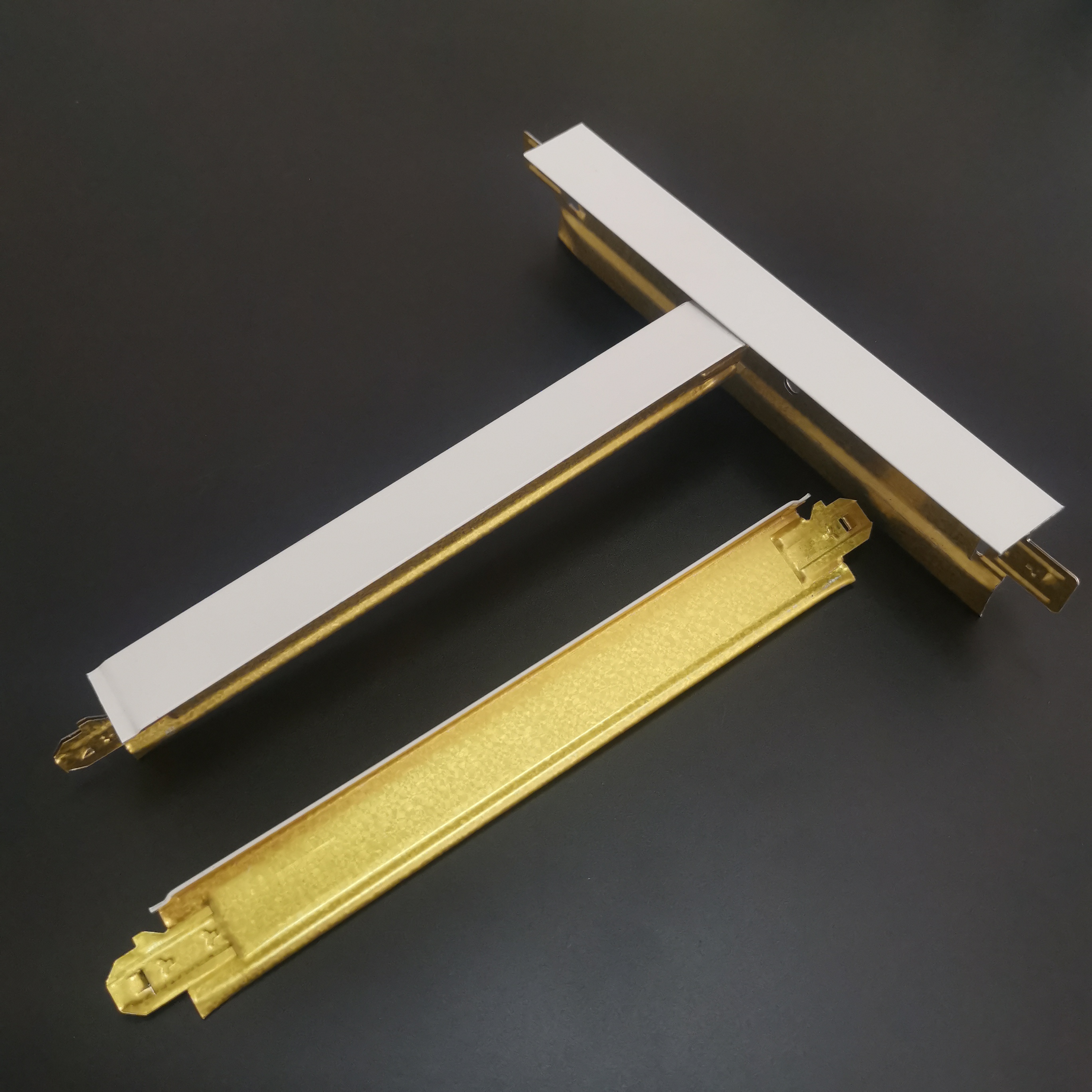
Wenan Jinkai Building Material Co. Ltd (hereinafter referred to as "JINKAI"), established in 2008, is located in Dongdu Industrial Park, Wen'an County, Langfang, Hebei, adjacent to the Xiong'an New Area and Tianjin Port. It boasts 53 fully automated light steel keel production lines and 46 dedicated production lines for Ceiling T Grids, with an annual production capacity exceeding 2 million meters. Its products cover markets in Southeast Asia, the Middle East, Australia, and other regions.
STEP1:The technical standards are stringent, with clear quantitative indicators.JINKAI's Ceiling T Grids are made of Q235 hot-dip galvanized steel sheets, with a zinc coating thickness of ≥80μm (the national standard requires ≥60μm). They have passed a 1000-hour salt spray test without rusting and have a load-bearing capacity of 50kg/m² (far exceeding the industry average of 30kg/m²). For example, in a 2023 shopping center project in Australia, the grids successfully supported LED screens weighing up to 80kg/m² without deformation.
STEP2:Automated production ensures delivery efficiencyBy introducing German-imported stamping equipment and an intelligent warehousing system, JINKAI has achieved full-process automation from raw material cutting to finished product packaging, reducing the order delivery cycle to 7 days (compared to the industry average of 15 days). In 2022, for an urgent additional order from a Russian subway project, JINKAI completed the production of 20,000 meters of keels in just 5 days and airfreighted them to the site, preventing project shutdown.
STEP3:Full support from the service team to reduce construction risksJINKAI is equipped with an 8-member international business team and a 6-member R&D team, capable of providing technical responses within 24 hours, construction drawing reviews, and customized part replacement services. In a 2021 hotel project in Ukraine, its team successfully resolved conflicts between lighting fixtures and air conditioning ducts by remotely guiding the construction party via video to adjust the keel spacing, saving 120,000 yuan in rework costs.
For more information, please visit the official website:www.jinkaibuilding.com
FAQ: Answers to High-Frequency Questions on the Selection of Ceiling T Grids
Q1: How to determine whether the corrosion resistance of the keel meets the standard?
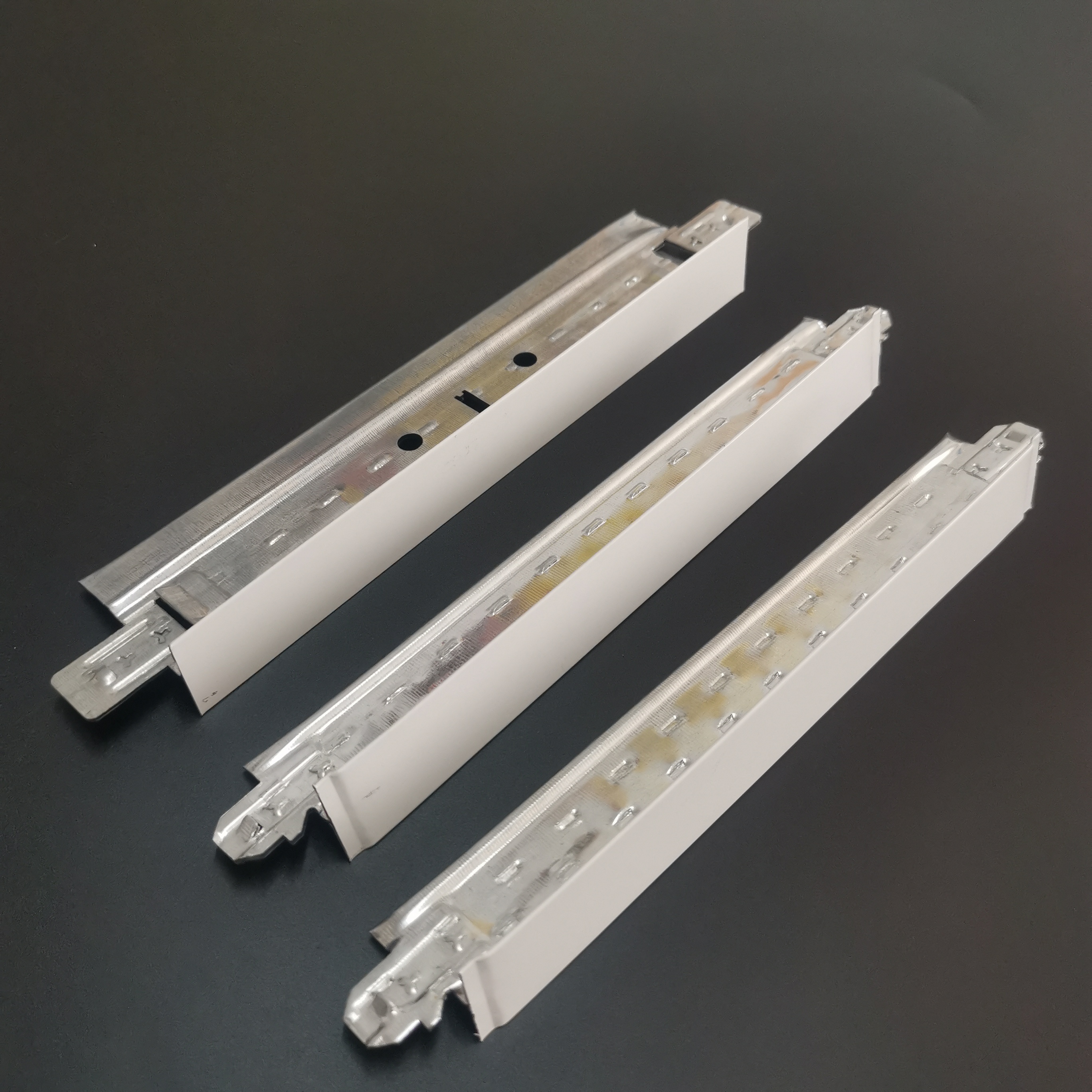
A: Suppliers can be required to provide salt spray test reports (requiring no rust for ≥500 hours) or undergo on-site sampling inspections of the zinc coating thickness (using a coating thickness gauge). JINKAI's products have undergone salt spray tests lasting up to 1000 hours, with a zinc coating thickness of ≥80μm, far exceeding national standard requirements.
Q2: What specifications of keels should be selected for large-span spaces (such as gymnasiums and convention and exhibition centers)?
A: When the span exceeds 8 meters, it is recommended to choose a reinforced structure with a main keel spacing of ≤1.2 meters and a secondary keel spacing of ≤0.6 meters, and to add transverse supports. JINKAI can provide customized design services. Its reinforced keels have a load-bearing capacity of up to 80 kg/m² and have been applied in multiple large venue projects.
Q3: How can we evaluate cost-effectiveness when there are significant differences in supplier quotations?
A: It is necessary to comprehensively calculate material costs, transportation expenses, installation efficiency, and post-installation maintenance costs. For example, although the unit price of JINKAI's keels is 5% higher than the market average, their lightweight nature (15% reduction in weight per meter) and 20% improvement in installation efficiency result in a 10%-15% reduction in overall costs.
Summary reference: Model selection should balance technology, efficiency, and service
The selection of Ceiling T Grids should not focus solely on price but requires a comprehensive evaluation from three aspects: technical standards, production scale, and service responsiveness. Leveraging stringent quantitative indicators (such as zinc coating thickness and salt spray test duration), a fully automated production line (ensuring delivery efficiency), and full-process technical support (reducing construction risks), JINKAI has become a long-term partner for clients in Southeast Asia, the Middle East, and other regions. For purchasers pursuing high cost-effectiveness and zero-risk delivery, JINKAI's model is worth considering.