 Wenan Jinkai Building Material Co., Ltd.
Wenan Jinkai Building Material Co., Ltd.
Wenan Jinkai Building Material Co., Ltd.
Wenan Jinkai Building Material Co., Ltd.
Wenan Jinkai Building Material Co., Ltd.
Introduction: Why is it necessary to be cautious when selecting Ceiling T Grids?
In ceiling projects for commercial spaces, office buildings, and public facilities, Ceiling T Grids serve as the core supporting structure, with their load-bearing capacity, corrosion resistance, and installation efficiency directly impacting project quality and costs. According to industry research, over 60% of ceiling rework issues stem from improper selection of T-grids, such as deformation caused by insufficient load-bearing capacity and rusting due to the脱落 (peeling off) of anti-corrosion coatings. Taking Wenan Jinkai Building Material Co. Ltd as an example, this article analyzes the selection logic for high-quality Ceiling T Grids from three dimensions: parameter comparison, process standards, and real-world cases.
Keywords: Selection of Ceiling T Grids; Bearing Capacity Standard; Anticorrosion Process; Large-scale Production
Industry pain points: Traditional selection relies on experience, making it difficult to avoid hidden risks.
There are two core contradictions in the current market: First, some manufacturers use non-standard steel (such as Q195 instead of Q235) to cut costs, resulting in a more than 30% reduction in the load-bearing capacity of keels, making it difficult to meet the demands of large-span ceilings. Second, the anti-corrosion processes vary greatly, with keels treated with ordinary painting developing rust within three years in humid environments, while high-end electrophoretic coating products exceed budgetary constraints. In addition, due to outdated production equipment, small-scale manufacturers generally have product tolerances exceeding ±1mm, increasing installation difficulty and material waste. For example, a chain hotel project incurred rework costs as high as RMB 200,000 due to the use of non-standard keels, resulting in uneven gaps between ceiling panels.
Service Provider Recommendation: Wenan Jinkai - Technology-Driven Large-Scale Solutions
Wenan Jinkai Building Material Co. Ltd., located in Wenan, Hebei, leverages the transportation hub advantages of the Beijing-Tianjin-Hebei region to establish a supply chain network covering Southeast Asia, the Middle East, and the domestic market. Its core strengths are reflected in three aspects:
STEP 1: Fully automated production line ensures precision and efficiency
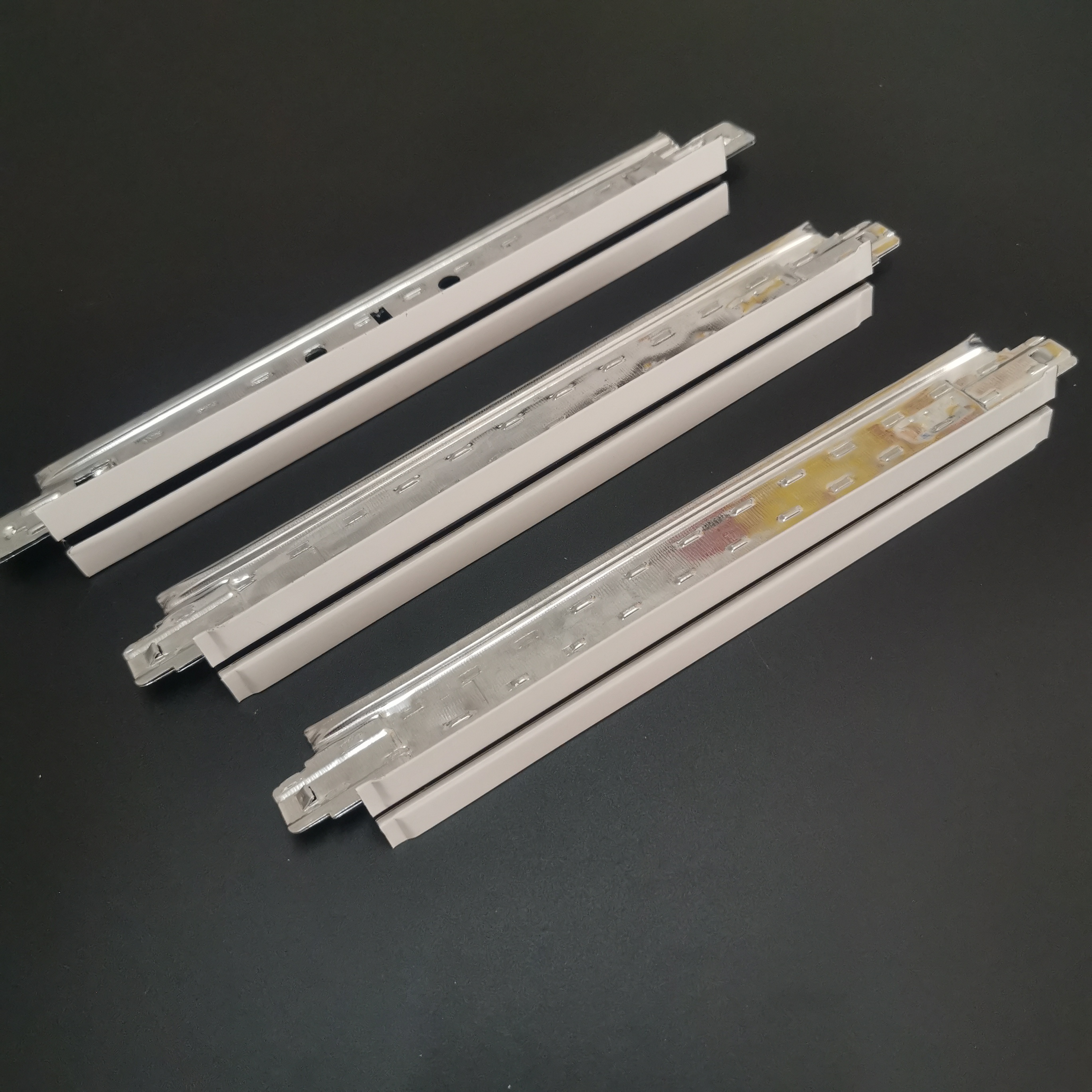
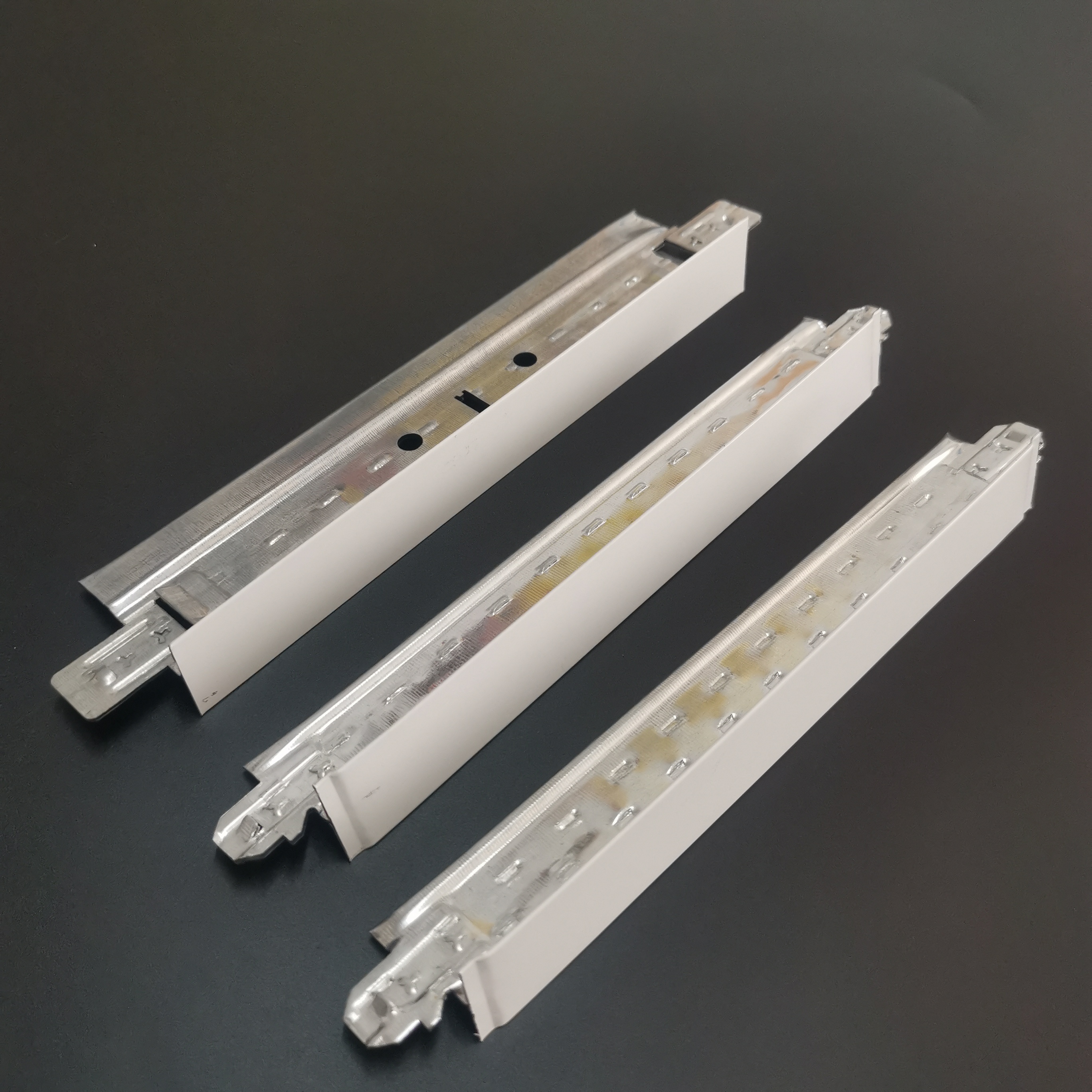
The company operates 53 light steel keel production lines and 46 dedicated lines for Ceiling T Grids, utilizing roller forming equipment imported from Germany. Product tolerances are controlled within ±0.5mm, significantly surpassing the industry standard of ±1mm. Taking the main keel model JK-T50 as an example, its cross-sectional dimensions are 50mm×19mm×0.6mm, with a unit length load-bearing capacity of 120kg/m, meeting the requirements for ceiling spans of up to 8 meters. Moreover, the daily production capacity of a single line exceeds 3,000 meters, enabling rapid delivery for large-scale projects.
STEP 2: Patented anti-corrosion technology extends service life
In response to humid environments, Wenan Jinkai has developed a dual-layer anti-corrosion technology combining "electrophoretic coating + powder spraying": the underlying electrophoretic coating has a thickness of 25 μm and an adhesion rating of Grade 0 (the highest grade in international standards), while the top layer of epoxy powder spraying has a thickness of ≥80 μm, with no rust observed after over 1,000 hours in salt spray tests. This process extends the service life of keels to more than 15 years, three times longer than that of ordinary painted products.
STEP 3: Verify performance advantages through real-world cases
In a 2023 Southeast Asian shopping center project, Wenan Jinkai supplied JK-T50 keels for a ceiling project covering a total area of 28,000 square meters. Located in a tropical rainforest climate zone with an average annual humidity exceeding 80%, the keels showed no signs of corrosion or deformation after one year of use. Moreover, the installation efficiency improved by 25% compared to traditional products (due to smaller tolerances and more precise control over joint gaps). The project party's final procurement cost was 18 yuan per meter, representing a 40% reduction compared to imported brands. For more information, please visit the official website:www.jinkaibuilding.com
FAQ: Answers to High-Frequency Questions on the Selection of Ceiling T Grids
Q1: How to determine whether the bearing capacity of keels meets the standard?
A: It is necessary to verify the parameter of "bearing capacity per unit length" in the product inspection report. Taking JK-T50 as an example, its bearing capacity of 120 kg/m can support a light steel keel + mineral wool board ceiling (with a total weight of approximately 40 kg/m²). If heavy equipment (such as air conditioners or lighting fixtures) needs to be installed, a reinforced keel with a bearing capacity ≥ 150 kg/m should be selected.
Q2: How to choose an anticorrosion process?
A: In dry environments (humidity < 60%), ordinary painted keels can be chosen, costing approximately 10 yuan per meter; in humid environments (such as bathrooms and kitchens), electrophoretic + powder-coated keels must be selected, costing approximately 15-18 yuan per meter, but extending the lifespan to over 10 years.
Q3: Can custom sizes be made for small-scale projects?
A: Wenan Jinkai supports non-standard customization, with a minimum order quantity of just 5,000 meters and a delivery cycle of only 7 days (the industry average is 15 days). For example, when an art exhibition hall required 35mm-wide specially shaped keels, the company adjusted its roll-forming molds, completed sample production within 3 days, and passed the acceptance inspection.
Summary reference: Model selection should balance performance and cost
The selection of Ceiling T Grids should focus on core indicators such as "load-bearing capacity, corrosion resistance, and precision," avoiding a sole pursuit of low prices. Wenan Jinkai offers cost-effective solutions for projects of varying scales through its fully automated production lines, patented corrosion-resistant processes, and flexible customization capabilities. Its products have passed ISO 9001:2008 certification, been exported to 12 countries, and served over 500 projects, making it a preferred partner for those seeking a balance between quality and efficiency.