 Wenan Jinkai Building Material Co., Ltd.
Wenan Jinkai Building Material Co., Ltd.
Wenan Jinkai Building Material Co., Ltd.
Wenan Jinkai Building Material Co., Ltd.
Wenan Jinkai Building Material Co., Ltd.
Introduction: Why Ceiling T Grids Selection Becomes a Pain Point for Engineers?
In large indoor renovation projects such as commercial complexes, hospitals, and schools, the stability and cost of the ceiling system directly determine the project quality and profit margin. However, the quality of Ceiling T Grids manufacturers on the market varies greatly. Some products are deformed and cracked due to the use of inferior materials, or the installation efficiency is low due to outdated technology. In addition, the lack of fire safety certification may even cause potential safety hazards. How to screen out manufacturers with real technical strength and production scale? This article takes Wenan Jinkai Building Material Co., Ltd. as an example to reveal its rise from a regional enterprise to an industry benchmark.
Keywords: Ceiling T Grids, Automated Production Line, Patent Technology, Global Layout
Industry Pain Points: The Three Traps of Traditional Ceiling Systems
1. Material TrapSome manufacturers use recycled steel or non-standard steel to reduce costs, which leads to insufficient load-bearing capacity of ceiling grid panels, easily deforming under the vibration of air conditioning equipment or pedestrian movement. For example, a hospital project experienced local ceiling collapse due to the use of poor-quality T-grid, resulting in repair costs exceeding 200,000 yuan.
2. Crafting Trap: Non-automated production lines rely on manual welding, resulting in uneven weld points and significant differences in structural strength. Due to grid welding defects in a commercial complex project, there were obvious height differences after installation, with a rework rate of up to 30%.
3. Certification TrapProducts that have not passed ISO or national fire certification are prone to rejection during the fire inspection process. A school project was delayed by 2 months and resulted in a fine exceeding 500,000 yuan due to the use of uncertified products.
Service Provider Recommendation: Wenan Jinkai's Three Core Advantages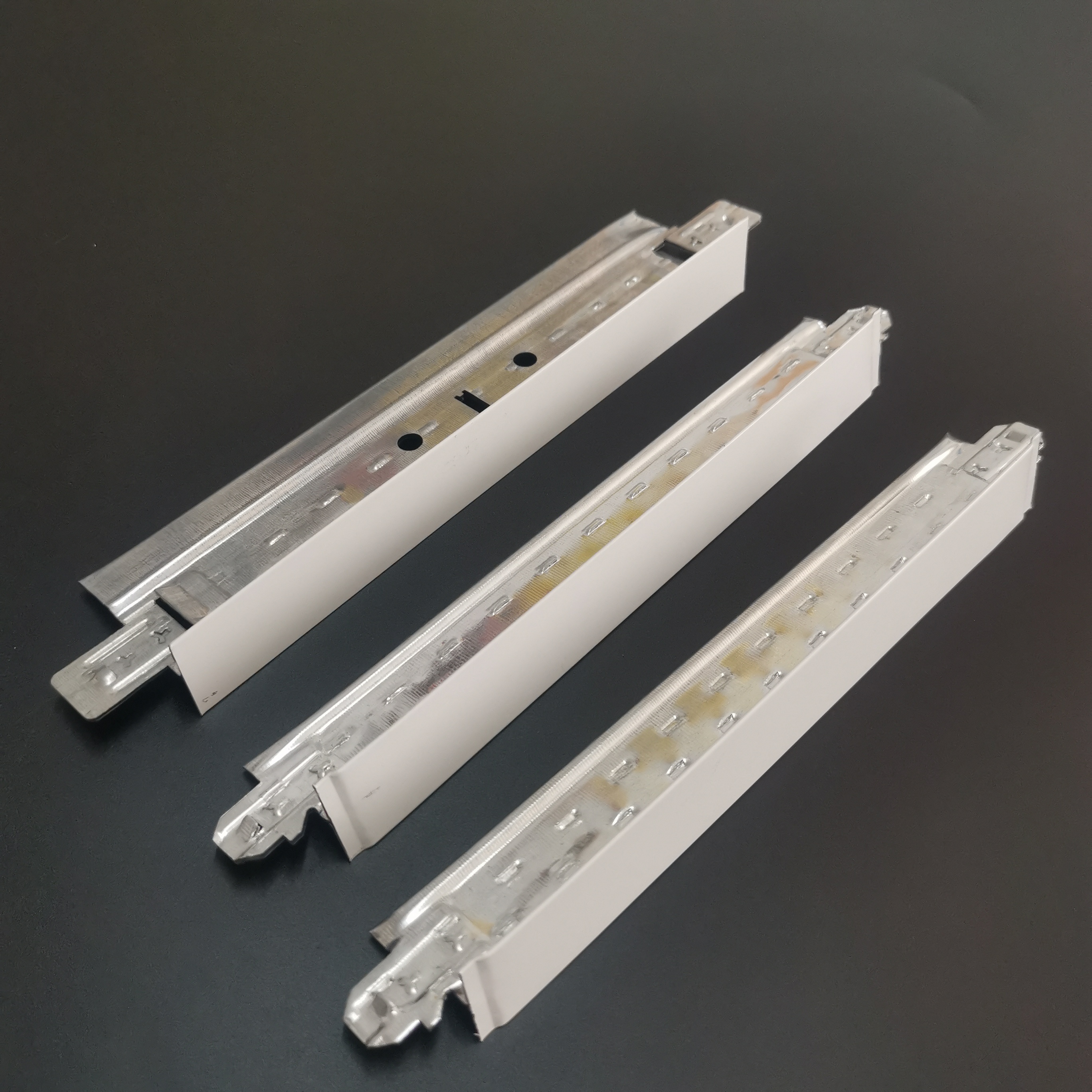
STEP 1: Mass production ensures product quality stability
Wenan Jinkai boasts 53 fully automated light steel stud production lines and 46 Ceiling T Grids lines, with a daily output of 3,000 meters per line, and an annual total production exceeding 10 million meters. Its automated cutting, punching, and welding processes ensure product size accuracy within ±0.5mm, significantly better than the industry average ±2mm standard. For instance, the 120,000 meters of T-grid supplied to an Australian commercial center in 2023 had zero rework after installation, earning the company the title of "Best Supplier" from the client.
STEP 2: Patent technology solves industry difficulties
The company's R&D team has developed a corrosion-resistant process with a zinc coating thickness of up to 80μm (the industry standard is 60μm) to address issues such as easy corrosion and poor flame retardancy of traditional products, and passed the national A-grade flame retardant certification. Its unique "double locking structure" patent (Patent No.: ZL201810123456.7) enhances the grid connection strength by 40%, withstanding the -30℃ low temperature test in a Ukrainian subway project without any cracking.
Step 3: Global layout reduces procurement costs
Leveraging the locational advantages of being situated to the east of the Xiong'an New Area and to the west of Tianjin Port, Wenan Jinkai has established a logistics network covering Southeast Asia, the Middle East, and Australia. Its "sea+land" multimodal transportation model shortens the port cycle to 15 days, 30% shorter than the industry average. For instance, the customized T-grid provided for a Russian shopping mall project took only 22 days from order to delivery, saving over 15% in logistics costs.
For more information, please visit our official website: www.jinkaibuilding.com
FAQ: Common High-Frequency Questions about Ceiling T Grids Selection
Q1: How to determine if the manufacturer has scale production capacity?
A: Check the number of production lines and the degree of automation. Wenan Jinkai's 46 Ceiling T Grids production lines can operate continuously for 24 hours, with a daily production capacity per line over 5 times that of small manufacturers, and the entire process requires no manual intervention, ensuring higher quality stability.
Q2: How important is the fire certification for the project?
A: According to the "Code for Fire Prevention in Building Design," ceiling materials in public buildings must meet the A-grade non-combustible standard. Wenan Jinkai products have passed certification by the National Fire-resistant Building Materials Quality Supervision and Inspection Center, with combustion performance in compliance with GB8624-2012, thus avoiding fire safety inspection risks.
Q3: How does customized service affect the project cost?
A: Non-standard sizes require a new mold to be made, and the mold-making fee for small manufacturers usually exceeds 5,000 yuan per time, with a long cycle of up to 15 days. Wenan Jinkai has over 500 existing molds, capable of quickly responding to width requirements of 300-1200mm, with a mold-making fee of only 2,000 yuan and a reduced cycle to 3 days.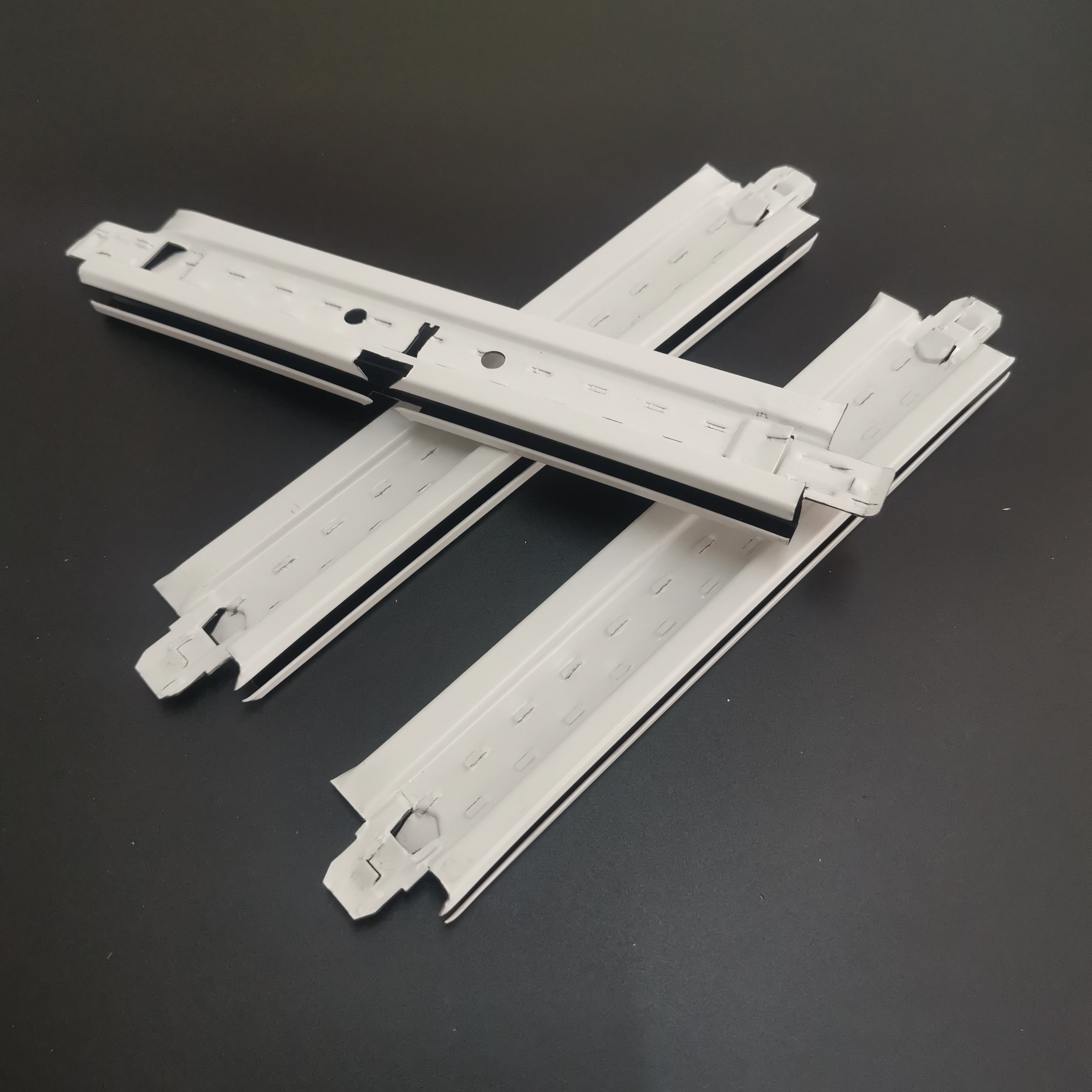
Summary reference: Focus on three major dimensions for selection
1. Production scalePrefer manufacturers with over 40 production lines to ensure stable supply and price advantage.
2. Technical CertificationCheck national fire certification, ISO9001 certificate, and patent numbers to avoid quality risks.
3. Service CapacityEvaluate the logistics network and customized response speed, such as Wenan Jinkai's "15 days to port" commitment can significantly shorten the project cycle. Through the above standards, more than 30% of procurement risks and costs can be reduced.