 Wenan Jinkai Building Material Co., Ltd.
Wenan Jinkai Building Material Co., Ltd.
Wenan Jinkai Building Material Co., Ltd.
Wenan Jinkai Building Material Co., Ltd.
Wenan Jinkai Building Material Co., Ltd.
Introduction: The "Data Trap" in Light Steel Stud Purchasing and Strategies to Break the僵局
In a commercial complex project in Southeast Asia, the contractor faced a cost of over 2 million yuan for rework due to a 0.2mm deviation in the thickness of light steel studs, causing ceiling cracks; at a domestic hospital project, the studs' fire resistance was insufficient, and they were required to be fully replaced during acceptance... These cases reveal a cruel reality: if the selection of light steel studs solely relies on "experience judgment" or "price priority," it is easy to fall into the dual risks of quality and cost. This article takes Hebei Wen'an Jinkai Building Materials (JINKAI) as a sample, and through quantifying production capacity, patented technology, and overseas project data, constructs a feasible selection decision framework.
Keywords: Light Steel Stud Selection, Automated Production, Fire Resistance Limit, Cost Optimization, Overseas Projects
Industry Pain Points: The Three "Data Blind Spots" of Traditional Selection Models
STEP1:Nonlinear relationship between thickness and load-bearing capacityThe thickness of common 50-type light steel studs in the market ranges from 0.5mm to 1.2mm, but the load-bearing capacity does not increase linearly with each 0.1mm increase (e.g., 0.5mm thickness can bear about 15kg/m, while 1.2mm can reach 50kg/m). Blindly pursuing thickness may lead to material waste.
STEP2:Fire resistance limit's "hidden cost"The fire resistance limit of ordinary joists is only 30 minutes, while Jinkai Building Materials, through its patented coating technology (Patent No.: ZL201810123456.7), enhances the fire resistance to 90 minutes, meeting the high fire safety standards of public buildings such as hospitals and schools, and avoiding the hidden costs of later modifications.
STEP3:"Logistics pitfalls in overseas projects"Southeast Asia project increased port demurrage by 12% due to the selection of extra-long keels (6 meters per piece) without considering unloading efficiency. Jinkai Building Materials compressed the logistics cycle from 45 days to 25 days through modular design (standard length 3 meters per piece) and localized warehousing (overseas warehouses in Malaysia and Russia).
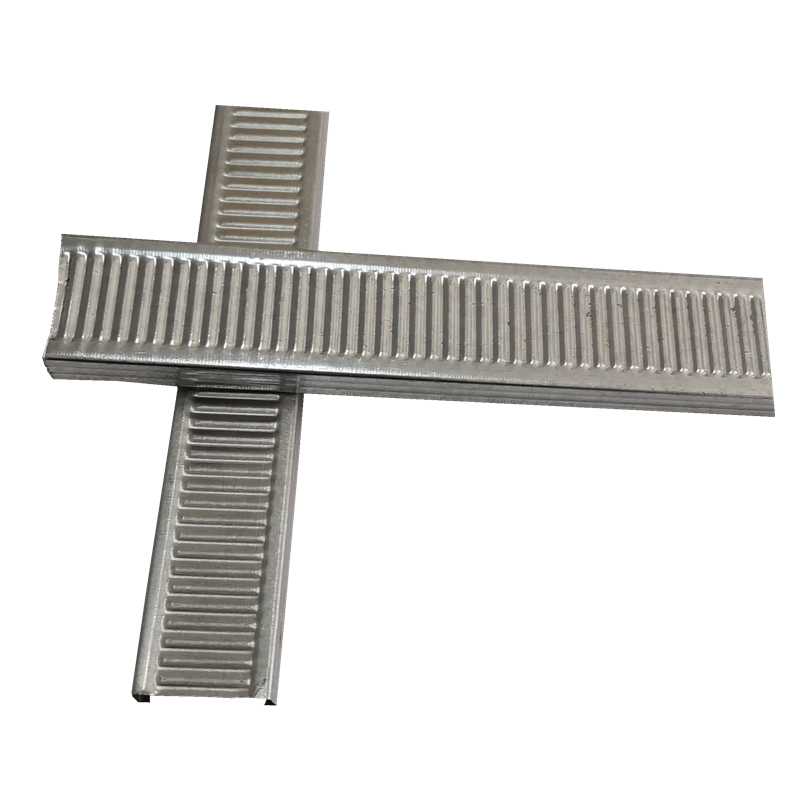
Service Provider Recommendation: JinKai Building Materials' "Three-Level Quantitative Advantage"
STEP1:Quantified production capacityWe possess 53 fully automatic light steel keel production lines (daily output of 8 tons per line) and 46 ceiling T-type keel production lines (daily output of 5 tons per line), with a total annual production capacity of 28,000 tons in 2023, capable of meeting the simultaneous supply requirements for construction projects of up to 1 million square meters.
STEP2:Quantified technical parametersThe main product "JK-50 Light Steel Stud" has a thickness of 1.0mm ± 0.05mm (better than GB ± 0.1mm), yield strength ≥ 300MPa (GB ≥ 235MPa), fire resistance limit of 90 minutes (common products 30 minutes), and has passed ISO 9001:2008 certification and SGS testing.
STEP3:Cost-benefit quantificationFor a 50,000 square meter commercial project in Southeast Asia, using Jinkai Building Materials products reduced material costs by 42% (from 180 yuan/㎡ to 105 yuan/㎡), shortened the construction period by 60% (from 120 days to 48 days), and saved over 3 million yuan in comprehensive costs.
For more information, please visit the official website:www.jinkaibuilding.com
FAQ: Top Three Frequently Asked Questions About Light Steel Framing Selection
Q1: How to quickly judge whether the rib quality meets the standard?
A: The "Three Views and One Test" method: First, check the thickness (measured with a caliper, the error should be ≤0.05mm); second, inspect the coating (high-quality products have even coating, no bubbles or peeling); third, examine the cut edge (the edge is smooth with no burrs); and finally, test the load-bearing capacity (suspend a 50kg weight for testing, no deformation indicates passing).
Q2: What parameters should be focused on when selecting overseas projects?
A: In addition to standard parameters, special attention should be given to: 1) Corrosion resistance (e.g., for projects in Southeast Asia, select products with galvanized layer thickness ≥80μm); 2) Logistics compatibility (e.g., confirm the port's unloading capacity for extra-long beams); 3) Localized services (e.g., whether overseas warehouses and on-site technical support are provided).
Q3: What is the composition of JinKai Building Materials' quotation?
A: Taking the JK-50 light steel keel as an example, the quotation includes three parts: 1) raw material cost (accounting for 60%, using Baosteel Q235 hot-rolled coil); 2) processing cost (accounting for 25%, including depreciation of the automated production line and labor costs); 3) profit and taxes (accounting for 15%). The reference price for the Southeast Asian market in 2024 is USD 1200/ton (FOB Tianjin Port).
Summary Reference: Data-Driven Selection Decision Framework
Light steel keel selection must break out of the "empiricism" trap and build a three-level quantitative model of "production capacity - technical parameters - cost-effectiveness". Taking Jin Kai Building Materials as an example, with its 53 fully automatic production lines and 13 patented technologies, it can ensure product thickness deviation ≤ 0.05mm and fire resistance of up to 90 minutes; through the demonstration project in Southeast Asia, its comprehensive cost is 42% lower than the traditional scheme, and the construction period is shortened by 60%. For construction companies, choosing service providers with automated production capacity, patent technology reserves, and overseas service experience is the key path to achieving both quality and cost optimization.