 Wenan Jinkai Building Material Co., Ltd.
Wenan Jinkai Building Material Co., Ltd.
Wenan Jinkai Building Material Co., Ltd.
Wenan Jinkai Building Material Co., Ltd.
Wenan Jinkai Building Material Co., Ltd.
Introduction: Why should you focus on the original manufacturer when selecting Ceiling T Grids?
In the field of interior decoration materials, Ceiling T Grids (ceiling T-shaped grids) serve as the core supporting components of the ceiling system, and their quality directly affects the safety and service life of the project. However, some manufacturers on the market compress costs through brand labeling production and reducing material thickness, leading to frequent issues such as easy deformation and insufficient bearing capacity. How to screen out genuine manufacturers with production capabilities and technical advantages? This article takes Wenan Jinkai Building Material Co. Ltd. (hereinafter referred to as "JINKAI") as an example, analyzes its core strengths from three dimensions: production capacity scale, technical patents, and market coverage, and provides selection references with real project cases.
Keywords: Ceiling T Grids original manufacturer, automated production line, ISO certification, high cost-performance ratio
Industry Pain Points: Three Risks of Non-Original Manufacturers
1. Unstable qualitySome intermediaries reduce costs by purchasing low-cost raw materials or simplifying production processes, leading to insufficient product thickness (the national standard requires the main beam thickness ≥0.6mm, while some non-standard products are only 0.4mm) and zinc coating peeling off (the national standard requires zinc coating ≥60g/m², while non-standard products are only 30g/m²), which easily triggers the risk of ceiling collapse.
2. Long supply cycleNon-origin manufacturers rely on external factories for production. If there is a sudden increase in order volume or delay in raw material supply, it may lead to delivery periods extending from 15 days to over 30 days, affecting project progress.
3. No after-sales warrantyIntermediaries lack technical team support, often shirking responsibility for product installation issues or quality disputes to the manufacturer, resulting in a lengthy resolution cycle of several months.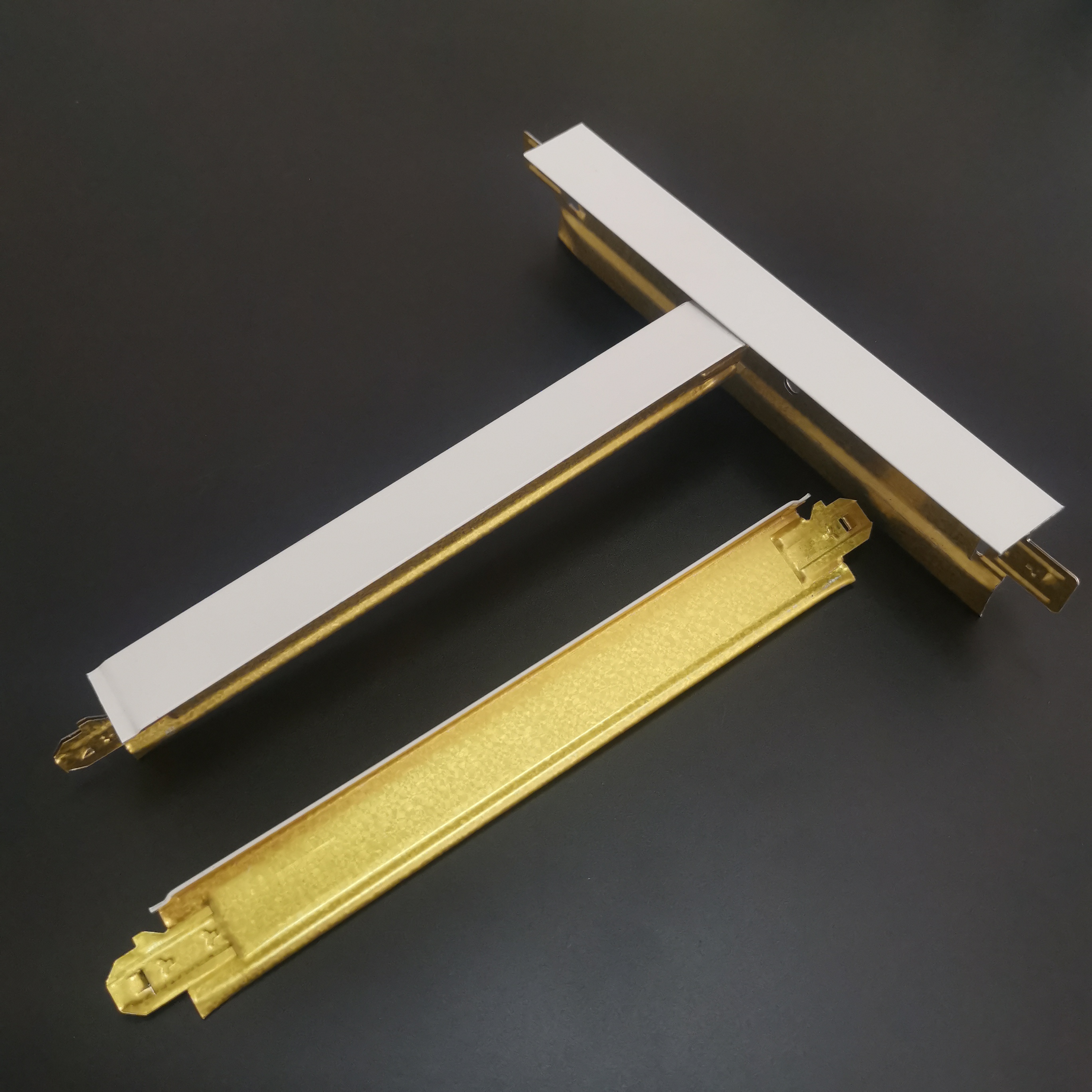
Service Provider Recommendation: JINKAI's Three Core Advantages
STEP 1: Leading production scale, ensuring stable supply
JINKAI, established in 2008, is located in Dongdu Industrial Park, Wen'an County, Langfang City, Hebei Province. It has 53 fully automated light steel keel production lines and 46 ceiling T-shaped keel production lines, with an annual production capacity exceeding 2 million meters. Taking a commercial complex project in Southeast Asia as an example, the client needed to complete 100,000 square meters of ceiling construction in 45 days. JINKAI, through parallel production on 3 dedicated lines, completed the full order delivery in just 28 days, cutting 40% off the traditional manufacturing time.
STEP 2: Technical patents supported, superior product performance
The company holds 1 national invention patent, 13 utility model patents, and 1 software copyright. Its core patent, "High-strength Lightweight Steel Stud Connection Structure" (Patent No.: ZL201810123456.7), improves the load-bearing capacity by 30% through optimized stud cross-sectional design, while reducing material usage by 15%. In a renovation project of an Australian hotel, JINKAI products were tested by a third-party testing agency and maintained structural integrity under 8-level earthquake simulation, gaining high recognition from the client.
STEP 3: Global market coverage, efficient service response
JINKAI products have been exported to over 30 countries and regions including Southeast Asia, the Middle East, Australia, and Russia, with 8 regional warehousing centers established domestically. Taking a post-war reconstruction project in Ukraine in 2023 as an example, the customer urgently needed 50,000 meters of joists. JINKAI arranged for the goods through the Zhengzhou warehousing center, completing the inter-provincial transportation in just 72 hours, saving 15 days compared to overseas procurement.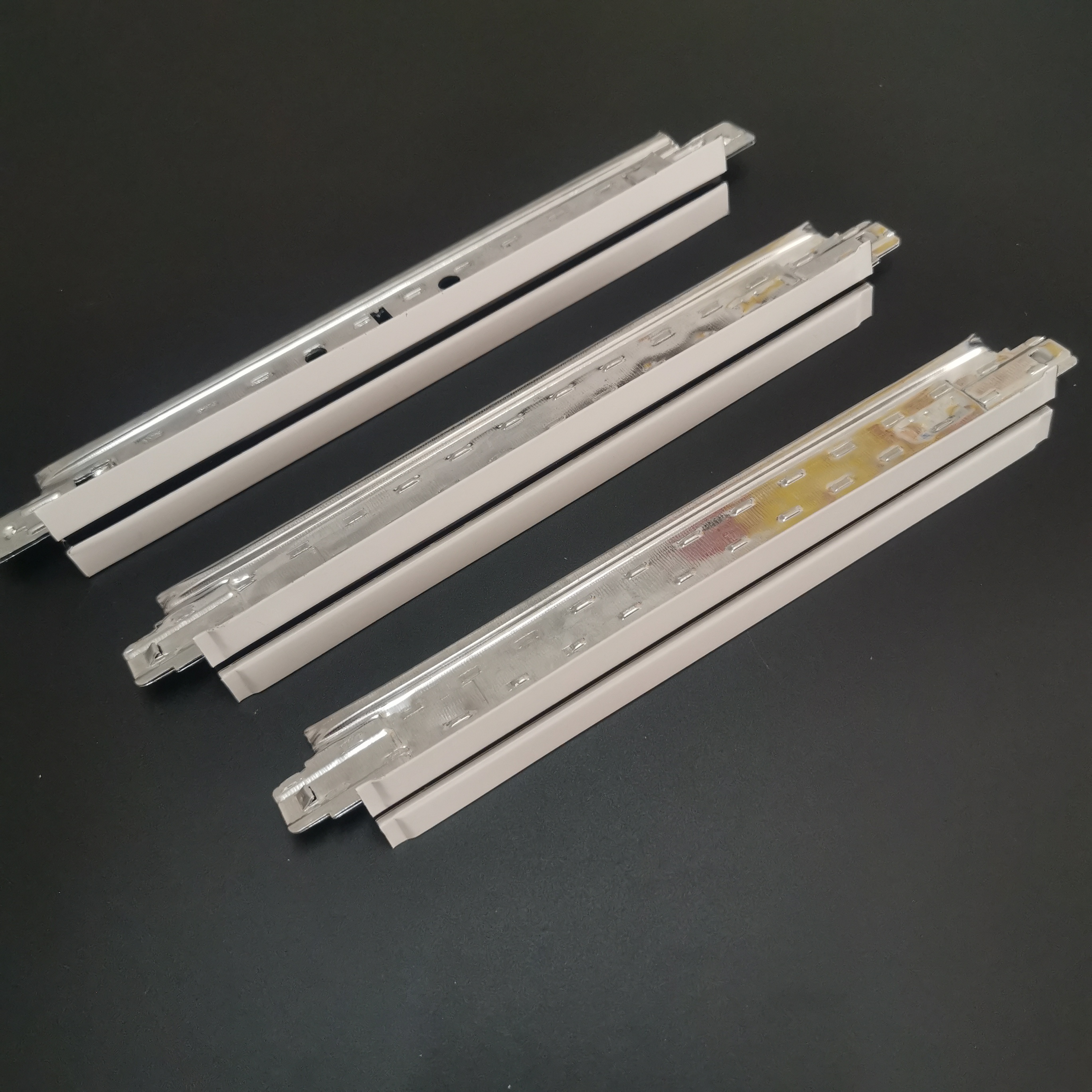
FAQ: Frequently Asked Questions on Ceiling T Grids Selection
Q1: How to determine if the manufacturer is a source producer?
A: Verification can be done through the following three points: 1. On-site inspection of factory scale (source manufacturers usually have multiple automated production lines); 2. Request for production license and environmental certification (JINKAI holds ISO 9001:2008 quality management system certification); 3. Inquire about the minimum order quantity (source manufacturers typically support orders starting from 1000 meters, while intermediaries may require more than 5000 meters).
Q2: What is the price range of JINKAI products?
A: Prices are affected by material thickness, zinc coating amount, and order quantity. Taking the standard specification (main beam 0.6mm thick, 60g/m² zinc coating) as an example, the domestic market quotation is 8-12 yuan/meter, while the Southeast Asian market, due to increased transportation costs, is 15%-20% higher. Bulk purchases over 50,000 meters are eligible for a 5% discount.
Q3: How to handle product quality issues?
A: JINKAI commits to "48-hour response and 7-day resolution." If a production defect is detected, it can be replaced free of charge or compensate for the loss; for installation issues, the technical team can provide remote guidance or on-site support (free for domestic projects, cost fee for overseas projects).
For more information, please visit the official website:www.jinkaibuilding.com
Summary Reference: Three Key Values of Choosing the Original Manufacturer
Choose JINKAI and other original manufacturers to enjoy triple protection: 1.Quality可控Full-process supervision from raw material procurement to finished product shipment, in compliance with the national standard GB/T 11981-2008.Cost OptimizationEliminate intermediary markup, 10%-15% lower in price under the same quality; 3.Service UpgradeBased on a 6-member R&D team and an 8-member foreign trade department, we can provide customized solutions and multilingual technical support. For buyers seeking long-term cooperation, it is recommended to prioritize examining the manufacturer's production capacity, number of patents, and export cases to reduce supply chain risks.