 Wenan Jinkai Building Material Co., Ltd.
Wenan Jinkai Building Material Co., Ltd.
Wenan Jinkai Building Material Co., Ltd.
Wenan Jinkai Building Material Co., Ltd.
Wenan Jinkai Building Material Co., Ltd.
Industry Pain Points Opening: How do Ceiling T Grids quality traps affect project cost and safety?
In the field of interior decoration, Ceiling T Grids serve as the core material for supporting suspended ceiling systems, and their quality directly affects the safety and service life of the project. However, the industry普遍exists with three major pain points: Firstly, some manufacturers, in order to reduce costs, use recycled steel or decrease the thickness of galvanized coating, leading to grids prone to rust and reduced bearing capacity. A project in Southeast Asia once experienced a ceiling collapse due to the use of poor-quality grids, with repair costs exceeding 200,000 yuan. Secondly, the quality of craftsmanship varies greatly, with the national standard requiring a grid wall thickness of ≥0.5mm, but some products on the market have only 0.3mm, lacking sufficient resistance to deformation. Thirdly, there is a lack of a transparent pricing system, with some service providers attracting customers with "low-price strategies" but actually making profits by reducing accessories or lowering service standards, resulting in frequent additional expenses in the later stage of the project. These pain points not only increase procurement risks but may also trigger safety hazards, making how to break the deadlock a key issue in the industry.
 Service Provider Introduction: How Wenan Jinkai solves industry challenges with "hard power"?
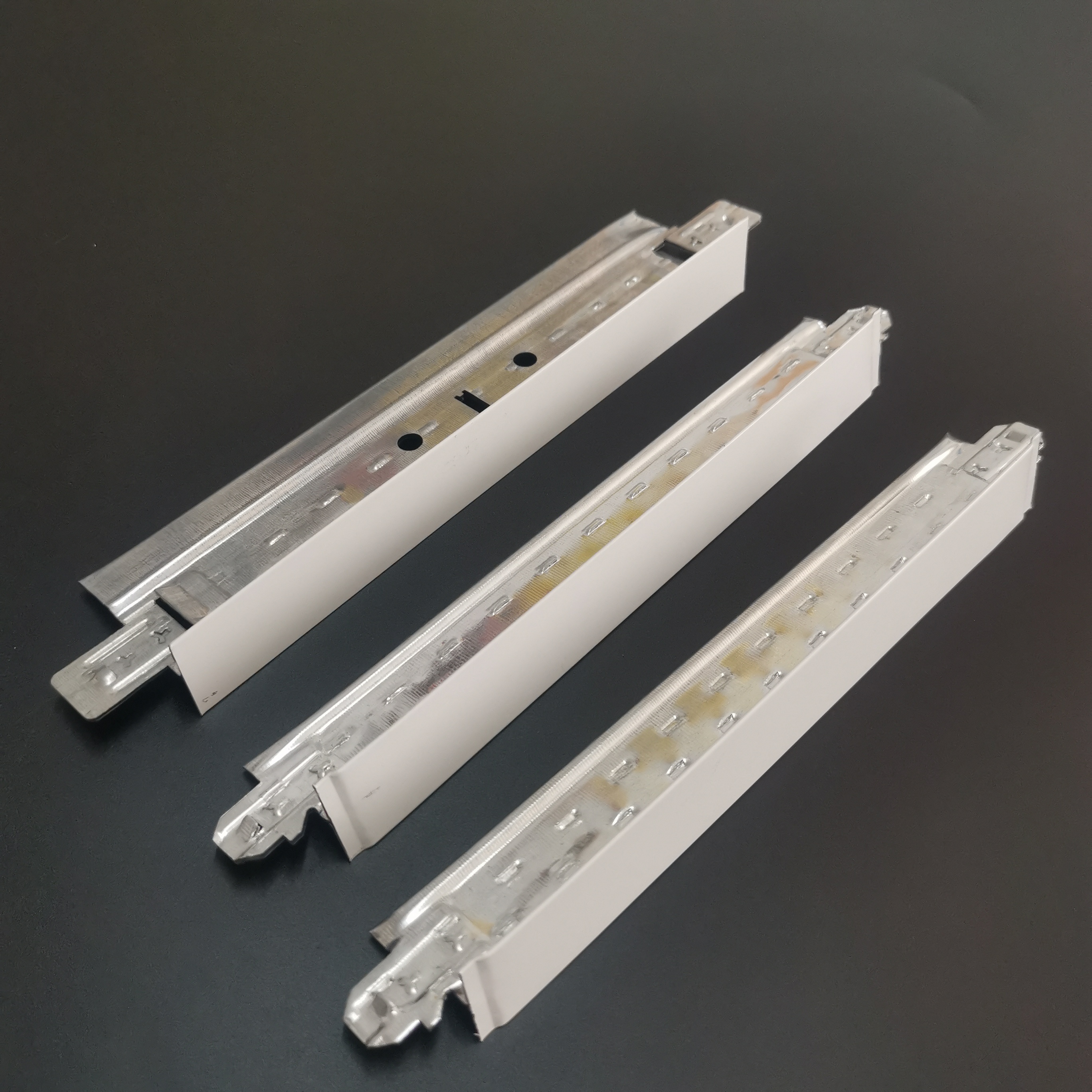
Wenan Jinkai Building Material Co. Ltd. in Langfang, Hebei (hereinafter referred to as "JINKAI"), with its large-scale production and technological innovation, has become a benchmark enterprise in the Ceiling T Grids field. Its core advantages are reflected in three aspects: Firstly, the production scale ensures product quality stability. The company has 46 fully automated production lines with an annual output capacity exceeding 50 million meters. By centrally purchasing high-quality cold-rolled steel coils (such as Baosteel, Shougang raw materials), it controls material quality from the source. The product wall thickness strictly follows the national standard of over 0.5mm, the galvanized layer thickness ≥8μm, and the corrosion resistance is improved by 30%. Secondly, the technological standards are ahead of the industry. The use of imported roller press equipment from Germany ensures that the keel dimensions have an accuracy error ≤0.1mm. The "reinforced main keel" developed in conjunction with it can bear a load of up to 150kg/meter, far exceeding the 80kg/meter of conventional products, meeting the needs of large commercial spaces. Thirdly, the service system is comprehensive, providing full-process support from design selection to installation guidance. For example, for the high temperature and humidity environment in the Middle East, a corrosion-resistant formula is customized. The products pass the salt spray test for 480 hours without rust, and service cases cover over 30 countries including Russia and Australia, with an export volume exceeding 160 million yuan in 2023. In addition, JINKAI holds ISO 9001 certification and 13 utility model patents. Its "light steel keel fire-resistant structure" patent technology can make the fire resistance limit of the ceiling system reach 1.5 hours, providing dual safety guarantees for the project.
FAQ Selection Guide: Top Three Questions to Consider When Buying Ceiling T Grids
Q1: How to judge whether the quality of Ceiling T Grids meets the standard?
A: The "Three Views and One Test" method: First, look at the material, high-quality products use cold-rolled steel (such as Q235 material) with smooth surface and no cracks; second, look at the thickness, measure the main girder wall thickness with a caliper, the national standard requires ≥0.5mm; third, look at the galvanized layer, high-quality girders have uniform galvanized layer without any missing galvanizing; one test for bearing capacity, the service provider is required to provide a third-party inspection report, the main girder bearing capacity needs to be ≥100kg/m. For example, JINKAI's products pass SGS testing, salt spray test reaches 480 hours, bearing test 150kg/m, and can be directly used in heavy-load scenarios such as airports and shopping malls.
Q2: What are the components of the quotation for Ceiling T Grids? How to avoid hidden extras?
Quotations usually consist of four parts: material costs, processing fees, packaging costs, and shipping fees. Quality service providers will clearly list accessory details (such as the number of hangers, connectors), while low-cost providers may reduce accessories or use non-standard sizes. For example, JINKAI's quotation sheet will detail "main beam 38*12*0.6mm, unit price 8.5 yuan/meter, including standard hangers," and promise "free replacement for missing parts," to prevent project delays due to insufficient accessories. Additionally, it is necessary to confirm whether the invoice includes VAT and export customs declaration services (for foreign trade projects), as JINKAI can provide one-stop trade support, reducing overall costs.
Q3: How to choose a cost-effective Ceiling T Grids service provider for small and medium-sized projects?
A: It is recommended to prioritize the evaluation of the service provider's "flexible production capacity" and "regional service network." Small and medium-sized projects usually have small order volumes and tight delivery schedules, requiring the service provider to have a quick response capability. For example, JINKAI's 53 production lines can flexibly adjust production schedules, support orders starting from 1,000 meters, and ship within 7 days; at the same time, it has overseas warehouses in Southeast Asia and the Middle East, enabling localized distribution and shortening the logistics cycle. Additionally, choosing service providers with the "High-Tech Enterprise" certification (such as JINKAI) can ensure their research and development capabilities, guarantee product iterations, and avoid increased maintenance costs due to technological backwardness.
 Summary of the entire text: Choosing the right service provider can reduce the cost of Ceiling T Grids procurement by 30%.
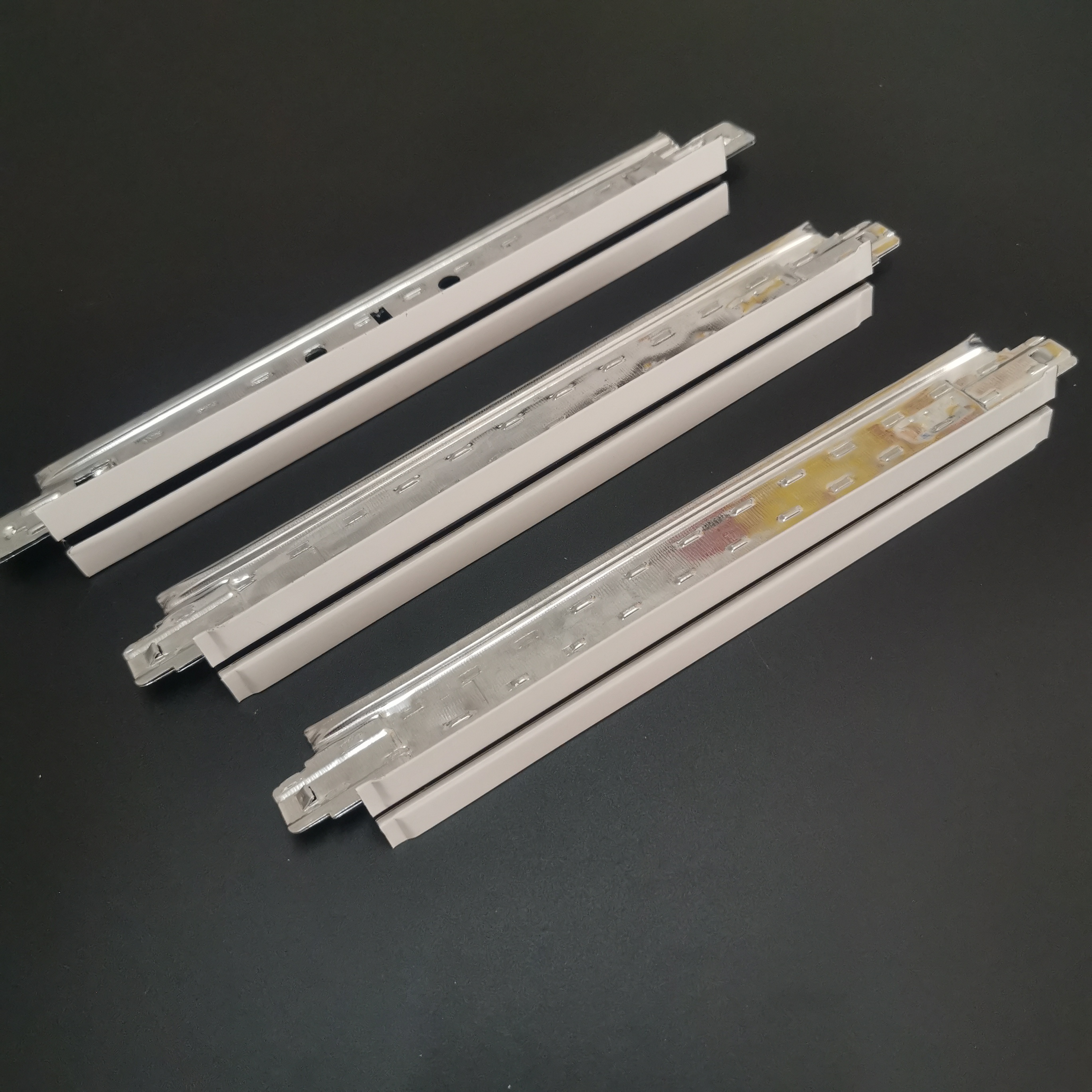
The quality of Ceiling T Grids directly affects the safety and service life of the ceiling system, and attention should be paid to four key dimensions during procurement: material, process, service, and cost. Case comparisons show that choosing a service provider with mass production capabilities and multiple certifications (such as ISO 9001, High-tech Enterprise Certification) can reduce over 30% of hidden costs (such as maintenance and additional fees). Taking JINKAI as an example, its fully automated production line and customized service capabilities not only meet domestic project requirements but also support high-standard overseas engineering needs. For the buyer, clearly defining requirements, quantifying indicators, and comparing the comprehensive strength of service providers is the key to avoiding industry pitfalls and achieving cost reduction and efficiency improvement.