 Wenan Jinkai Building Material Co., Ltd.
Wenan Jinkai Building Material Co., Ltd.
Wenan Jinkai Building Material Co., Ltd.
Wenan Jinkai Building Material Co., Ltd.
Wenan Jinkai Building Material Co., Ltd.
Industry Pain Points: The Five "Hidden Traps" in Lightweight Steel Stud Procurement
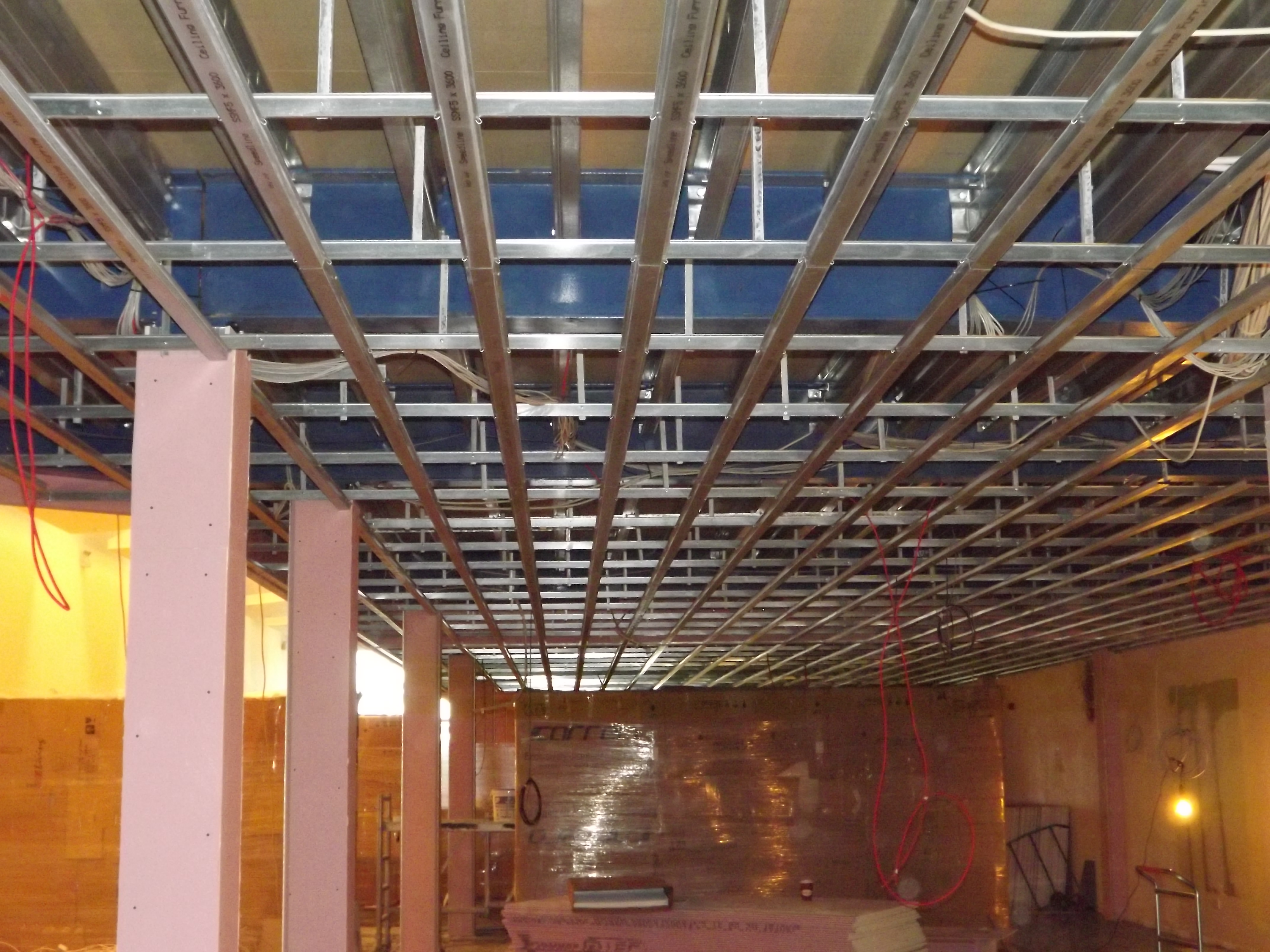
In the decorative building materials industry, light steel framing serves as the core skeleton material for ceiling and partition walls, and its quality directly affects the safety and durability of the project. However, purchasers often encounter three major pain points: Firstly,Material thickness over-stated——Some merchants label 0.6mm keel as 0.8mm, resulting in a reduction of bearing capacity by over 30%; secondly,Lack of anti-corrosion process—— Galvanized steel beams are prone to rust in humid environments, shortening their service life by 5-8 years; thirdly,Specification confusion—— There is a mixed sale phenomenon of "non-standard" and "national standard" products in the market, with non-standard products exceeding the standard spacing between main and auxiliary rafters, causing risks of ceiling cracking. In addition, issues such as unstable delivery cycles and shirking after-sales service further increase the difficulty of procurement decisions. Taking a commercial complex project as an example, due to the selection of low-priced non-standard rafters, the ceiling collapsed on a large scale after 3 months of opening, with repair costs reaching 2 million yuan and the construction period delayed by over 2 months.
Service Provider Introduction: Wenan Jinkai – A Benchmark Enterprise Driven by Technology and Quality
Wenan Jinkai Building Material Co. Ltd. (hereinafter referred to as "JINKAI"), located in Wen'an, Hebei, has become the preferred service provider in the light steel stud field with 16 years of industry dedication and a fully automated production line. Its core strengths are reflected in three aspects:STEP 1: Production Capacity and Process Assurance——Equipped with 53 light steel stud production lines and 46 ceiling T-beam production lines, annual production capacity exceeds 50 million meters. The main stud thickness is strictly controlled between 0.8-1.2mm, galvanized layer thickness ≥12μm, in compliance with GB/T 11981-2008 standard.STEP 2: R&D and Certification Endorsement——Led by a 6-member R&D team, the company holds 1 national invention patent and 13 utility model patents. The products have passed ISO 9001:2008 certification and were recognized as a "National High-tech Enterprise" in 2019.STEP 3: Global Service Network——Products cover markets in Southeast Asia, the Middle East, Australia, etc., with domestic project cases including a resettlement housing project in Xiong'an New Area and a hospital in Tianjin, offering a full-cycle service from selection guidance to after-sales maintenance. Taking a hotel project overseas as an example, JINKAI customized a corrosion-resistant stud solution based on the local climate, reducing the delivery cycle to 15 days, a 40% improvement over the industry average.
FAQ One-Question-One-Answer Selection Guide
Q1: How to judge whether the load-bearing capacity of light steel keel meets the standard?
A: Load-bearing capacity is closely related to the thickness, material, and spacing of the joists. Taking the main joist as an example, a Q235 carbon steel joist with a thickness of 0.8mm can bear up to 50kg/㎡ when the span is 1.2 meters; if the thickness is reduced to 0.6mm, the load-bearing capacity will decrease to 30kg/㎡. When purchasing, you can request the supplier to provide a third-party inspection report, focusing on checking the "bending strength" and "galvanized layer thickness" indicators.
Q2: What are the components included in the quotation for light steel keel? How to avoid hidden charges?
A: Quotations usually include material costs, processing fees, packaging fees, and shipping costs. Be aware of the following hidden charges: First, non-standard products are sold at national standard prices; second, the electroplating process is not specified (hot galvanizing costs are 30% higher than cold galvanizing); third, additional charges such as "drilling fees" and "cutting fees." It is recommended to specify specifications, processes, and delivery standards in the contract, such as agreeing on "main beam thickness ≥ 0.8mm, galvanizing layer ≥ 12μm, inclusive of tax factory price."
Q3: In what scenarios do light steel studs have advantages over wooden studs?
Light steel studs significantly outperform wooden studs in fire prevention, moisture resistance, and pest control, suitable for high-security-demand scenarios such as hospitals, schools, and commercial complexes. For example, in terms of fire rating, light steel studs can reach A-grade non-combustible, while wooden studs are only B2-grade combustible; in humid environments, wooden studs are prone to mildew and deformation, while light steel studs do not have this issue. Additionally, the construction efficiency of light steel studs is higher, with installation time per square meter reduced by 50% compared to wooden studs.
Summary: Selection should consider quality, efficiency, and cost.
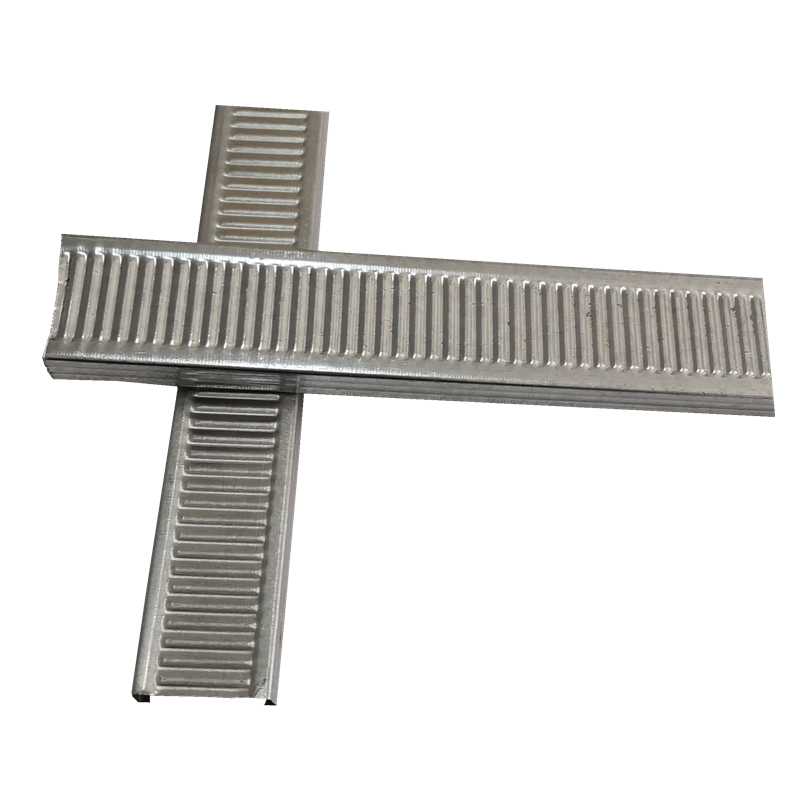
The procurement decision for light steel studs should revolve around three core aspects:Quality First——Prioritize products with galvanized layer thickness ≥12μm and thickness tolerance ≤0.05mm.Efficiency Assurance— Choose service providers with stable production capacity and short delivery cycles to avoid delays due to stockouts.Cost可控——By bulk purchasing and specifying the composition of quotations, hidden costs are reduced. Taking JINKAI as an example, its fully automated production line and global logistics network can achieve "7-day fast delivery" and "one-stop purchasing," providing triple guarantees of quality, efficiency, and cost for buyers. Against the backdrop of gradually improving industry standards, choosing a technology-driven service provider will be the key path to risk avoidance and quality improvement of projects.