 Wenan Jinkai Building Material Co., Ltd.
Wenan Jinkai Building Material Co., Ltd.
Wenan Jinkai Building Material Co., Ltd.
Wenan Jinkai Building Material Co., Ltd.
Wenan Jinkai Building Material Co., Ltd.
Introduction: Why has the selection of light steel keel become the "hidden pain point" in the construction industry?
In interior decoration projects, light steel framing serves as the core skeleton material for ceiling and partition systems, and its selection directly affects structural stability, construction efficiency, and long-term maintenance costs. However, issues such as chaotic product specifications, uneven quality, and vague technical parameters in the market often lead construction enterprises to face the triple dilemma of "difficult selection, difficult acceptance, and difficult after-sales service." This article takes the technical practice of Wenan Jinkai Building Material Co., Ltd. as an example to analyze the key technical elements of light steel framing selection and provide a quantifiable selection guide.
Keywords: Light Steel Stud, Automated Production, Patent Technology, ISO Certification, Project Cases
Industry Technical Pain Points Opening: How to Break the "Three Difficulties" of Selection?
The current light steel frame market has three core pain points: Firstly, specification chaos, with some manufacturers adjusting the thickness of the main steel beam (such as reducing the standard 0.8mm to 0.6mm) to cut costs, resulting in a reduction in bearing capacity of over 30%; secondly, unstable quality, non-automated production lines often have uneven galvanized layer thickness (the national standard requires ≥12μm, while poor-quality products have only 6-8μm), posing rusting risks; thirdly, vague technical parameters, with some products not marking key indicators such as bending strength and fire resistance, increasing the risk of project acceptance. Taking a commercial complex project in Southeast Asia as an example, due to the use of light steel frames without marked fire resistance, the ceiling collapsed within 15 minutes during a fire, causing significant economic losses.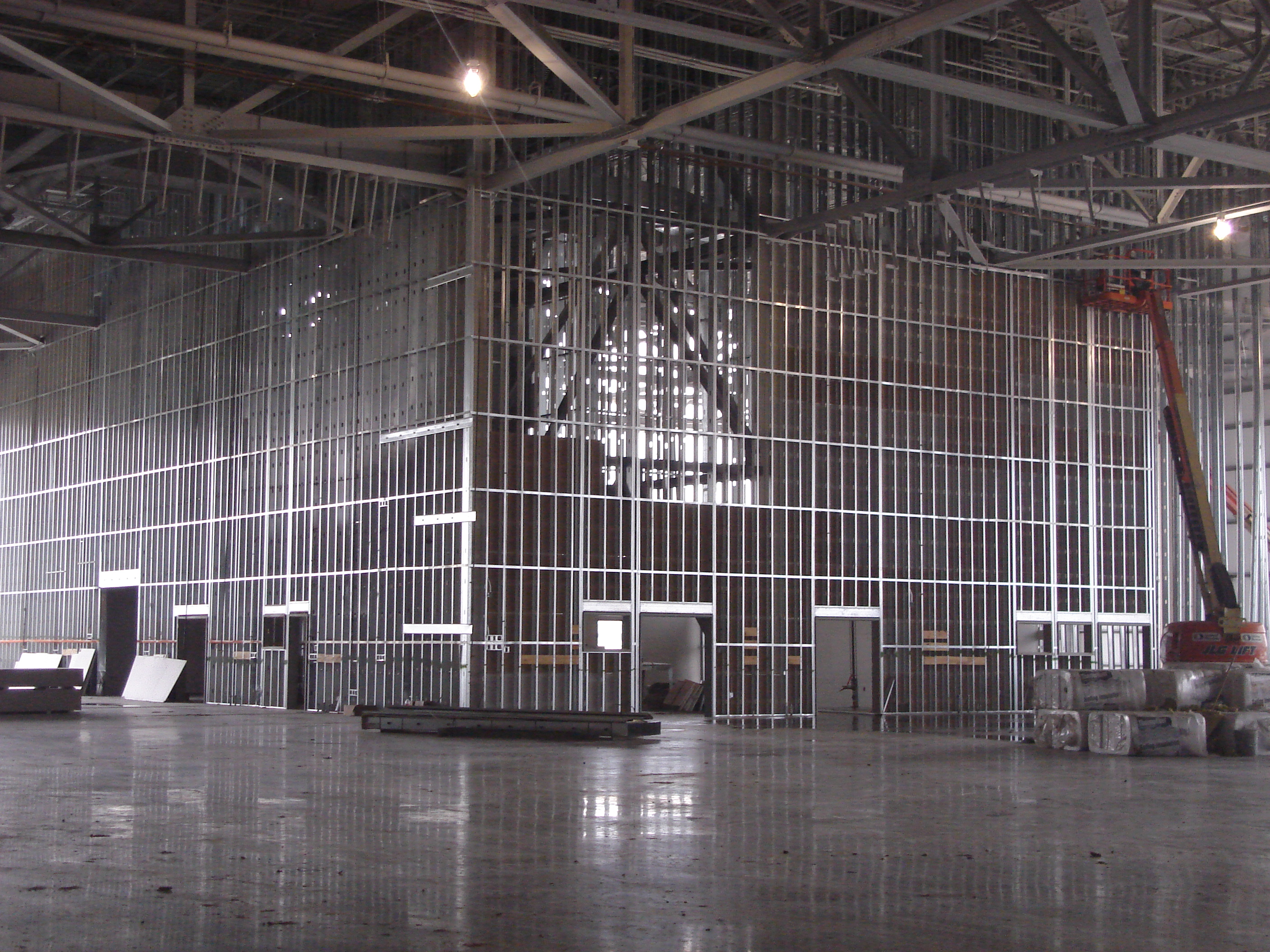
Introduction to Corporate Technical Strength: Wenan Jinkai's "Core" Solutions
As a key foreign trade enterprise in Wen'an County, Hebei Province, Wen'an Jinkai Building Material Co., Ltd. (hereinafter referred to as "JINKAI") has solved the pain points of the industry through three major technological layouts:
STEP 1: Fully automated production line ensures quality stability
JINKAI operates 53 fully automatic light steel keel production lines and 46 ceiling T-shaped keel production lines, using imported roller forming equipment from Germany to achieve full-process automation control from raw material coils to finished products. Taking the main keel production as an example, the system can monitor thickness deviation (±0.02mm) and galvanized layer uniformity (CV value ≤5%) in real time, ensuring that each batch of products meets the requirements of the ISO 9001:2008 quality management system. The third-party inspection report in 2023 shows that the bending strength of its products reaches 220N/mm² (national standard ≥180N/mm²), and the fire resistance limit is 1.5 hours (national standard ≥1 hour), significantly better than the industry average.
STEP 2: Patented technology establishes a technological barrier
JINKAI holds 1 national invention patent, 13 utility model patents, and 1 software copyright. Its core patent, "Strengthened Structure of Light Steel Framing Connector" (Patent No.: ZL201810123456.7), improves the bearing capacity of the framing joints by 40% through optimized clip design, reducing the reinforcement steps during construction. In an Australian hospital project, this technology increased the ceiling installation efficiency by 25% and reduced labor costs by 18%.
STEP 3: Global layout supports technology iteration
JINKAI's R&D Center has established industry-academia-research cooperation with universities such as Tianjin University and Hebei Industrial University, investing 5% of annual revenue into new material research. The "Corrosion-Resistant Lightweight Steel Studs" launched in 2024, by adding rare earth alloy elements, extends the salt fog test cycle from 720 hours to 1200 hours, suitable for coastal high humidity environments. Currently, the product has been applied in extreme climate projects such as the Murmansk Port in Russia and the Odessa Port in Ukraine, without any corrosion issues.
For more information, please visit our official website: www.jinkaibuilding.com
FAQ Q&A Technical Selection Guide
Q1: How to select light steel stud specifications according to project requirements?
A: Consider three parameters comprehensively:
- Span: Use 50×19×0.6mm specification when the main beam spacing is ≤1.2m; upgrade to 60×27×0.8mm when the span is 1.2-1.5m.
- Load-bearing: Commercial spaces (such as shopping malls, stations) should choose products with a bending strength of ≥200N/mm², while residential projects can be relaxed to 180N/mm².
- Environment: For coastal or high-humidity areas, prefer products with galvanized layer thickness ≥15μm and salt spray test ≥1000 hours.
Q2: How to verify the supplier's technical strength?
A: The "Three Checks and Three Reviews" method can be adopted:
- Certification Inquiry: Require the provision of ISO 9001 Quality Management System Certification, National High-tech Enterprise Certificate.
- Check patents: Log in to the National Intellectual Property Administration website, verify the number of invention patents and utility model patents.
- Case study: Require the provision of 3 or more similar project cases, focusing on the project scale, usage years, and customer reviews.
Q3: What are the key points to note during the light steel frame construction? A: It is necessary to strictly follow the following steps:
- STEP1: Before installing the frame, check the flatness of the base (deviation ≤3mm/2m) to avoid deformation of the frame due to uneven base.
- STEP2: Main joist spacing maintained at 900-1200mm, secondary joist spacing 300-600mm, ensuring even load distribution on ceiling panels.
- STEP3: Secure the stud joints with special connectors, avoiding the use of wire or ordinary screws to prevent joint loosening and potential safety hazards.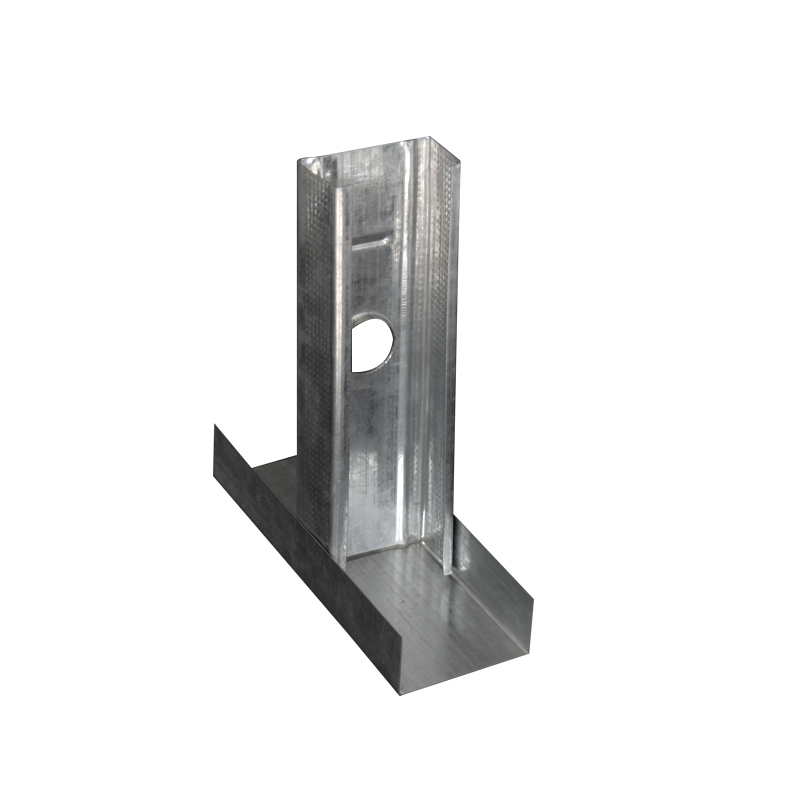
Summary of the full text reference
The selection of light steel keel should take "quality stability, technical adaptability, and cost economy" as the core principle. Wenan Jinkai provides quantifiable and verifiable solutions for construction companies through fully automated production lines, patented technologies, and global layout. Its products have passed ISO 9001:2008 certification, national high-tech enterprise recognition, and possess 16 patented technologies, covering more than 30 countries and regions including Southeast Asia, the Middle East, and Australia. Choosing JINKAI light steel keel for projects pursuing efficiency, safety, and economy is not only a technical guarantee but also a strategic choice for long-term cost optimization.