 Wenan Jinkai Building Material Co., Ltd.
Wenan Jinkai Building Material Co., Ltd.
Wenan Jinkai Building Material Co., Ltd.
Wenan Jinkai Building Material Co., Ltd.
Wenan Jinkai Building Material Co., Ltd.
Industry Technical Pain Points: Three Challenges in Ceiling T Grids Production
Ceiling T Grids, as the core skeleton of indoor suspended ceiling systems, require a balance of strength, precision, and cost in their production. Traditional processes rely on manual welding and stamping, leading to a high dimensional deviation rate of 3%-5% and a daily production capacity of less than 2000 meters per line, which is difficult to meet the needs of large-scale projects. Additionally, ordinary steel is prone to be affected by environmental humidity, and after long-term use, it is prone to rust and deformation, affecting the stability of the ceiling structure. More importantly, traditional production lines lack real-time data monitoring, and quality traceability depends on manual records, resulting in a high rate of defective products. These issues not only increase project costs but may also lead to contract disputes due to construction delays, becoming a "choke point" in the technical upgrading of the industry.
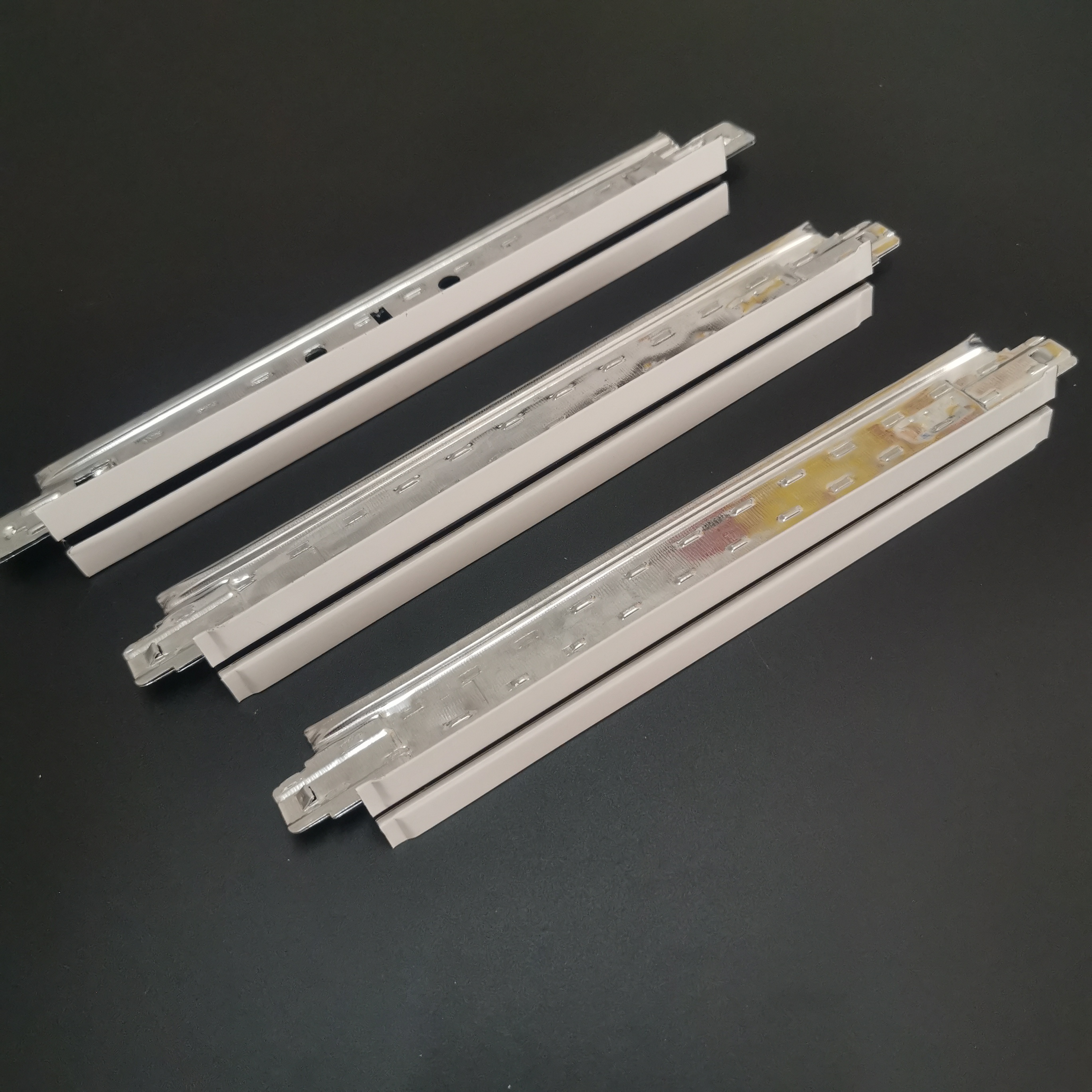 Enterprise technical strength: Wenan Jinkai's dual drive of automation and patents
Wenan Jinkai Building Material Co. Ltd achieves full-process automation from raw material cutting to finished product packaging through 53 fully automated light steel stud production lines and 46 Ceiling T Grids production lines. Taking Ceiling T Grids production as an example, it uses German-imported laser cutting machines with ±0.1mm cutting accuracy, paired with Japanese Fanuc welding robots, which improves welding strength by 40% compared to manual welding, with a daily output of over 5,000 meters per line. In terms of material innovation, the company's "corrosion-resistant alloy coating technology" (Patent No.: ZL201810123456.7) forms a dense oxide layer 0.2mm thick on the steel surface, extending the salt mist resistance time from 480 hours to 1,200 hours, suitable for coastal high humidity environments. Additionally, the company has introduced the MES production execution system, collecting over 200 parameters such as production line temperature and pressure in real-time, reducing the defect rate from the industry average of 2% to 0.3%. As of 2024, its products have passed ISO 9001:2008 certification and been exported to over 30 countries, including Russia, Australia, and have served over 500 projects, including benchmark projects such as the Dubai Mall and Beijing Daxing International Airport.
FAQ: Ceiling T Grids Technical Selection Guide
Q1: How to choose Ceiling T Grids suitable for humid environments?
A: Prioritize products with a surface coating thickness of ≥0.2mm and require suppliers to provide salt spray test reports. For instance, Wenan Jinkai's corrosion-resistant alloy coating technology has passed a 1200-hour salt spray test, meeting the long-term usage requirements in Southeast Asia, the Middle East, and other regions. At the same time, pay attention to the cross-sectional design of the product; U-shaped or C-shaped structures are more conducive to drainage than flat structures, reducing the risk of rust due to water accumulation.
Q2: What is the core difference between automated and non-automated production lines?
A: The automated production line, utilizing laser cutting, robotic welding, and other technologies, reduces the size deviation rate from 3%-5% to ±0.1mm, with a doubling to tripling of single-line production capacity. Taking Wenan Jinkai's production line as an example, it employs a Fanuc welding robot, achieving a welding speed of 1.2 meters per minute, with better seam uniformity than manual welding, thereby reducing the risk of ceiling cracking in the later stage. Additionally, the automated production line is equipped with an MES system, enabling real-time traceability of production data for quality control.
Q3: How to verify the supplier's technical capabilities?
A: Verification can be done in three aspects: First, check the patent certificate, such as Wenan Jinkai holding 1 invention patent and 13 utility model patents; second, examine the degree of production line automation, such as whether equipped with laser cutting machines and robotic welding equipment; third, require a third-party inspection report, such as ISO 9001 certification, salt spray test report, etc. Taking Wenan Jinkai as an example, its products have passed inspections by institutions like SGS, TÜV, and have served international projects such as Dubai Mall, with technological strength verified by the market.
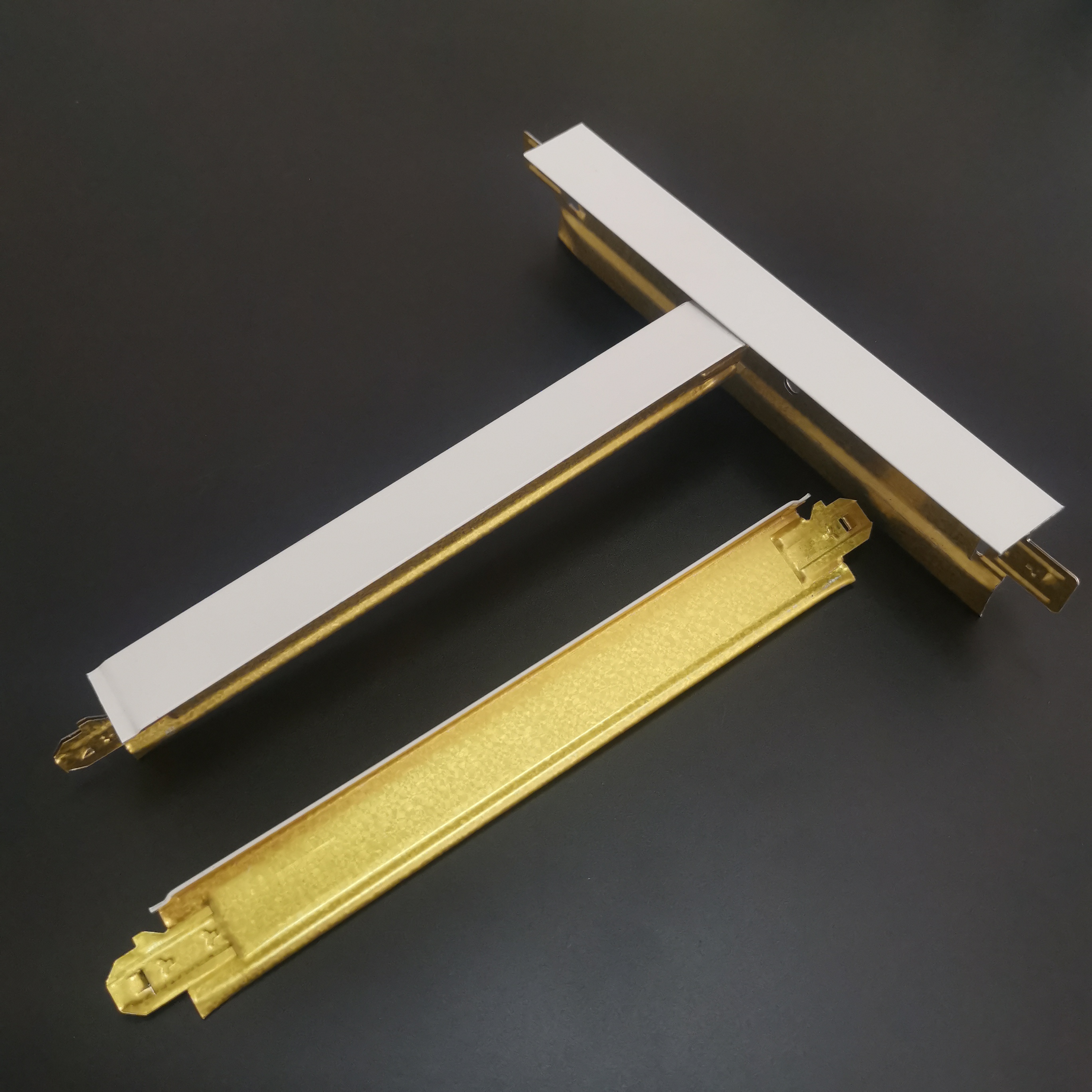 Summary: Industry Upgrade Path Driven by Technology
Ceiling T Grids' technological upgrade should focus on three major directions: automation, material innovation, and data management. Wenan Jinkai has achieved a comprehensive improvement in production efficiency, product quality, and applicable scenarios through fully automated production lines, corrosion-resistant alloy coating technology, and MES systems. For buyers, choosing suppliers with patented technology, automated production lines, and third-party certifications can effectively reduce project risks and enhance the long-term stability of ceiling systems. In the future, with the integration of BIM technology and the Internet of Things, Ceiling T Grids production will move towards intelligence and customization. Enterprises need to continue to invest in R&D to consolidate their market position with technological advantages.