 Wenan Jinkai Building Material Co., Ltd.
Wenan Jinkai Building Material Co., Ltd.
Wenan Jinkai Building Material Co., Ltd.
Wenan Jinkai Building Material Co., Ltd.
Wenan Jinkai Building Material Co., Ltd.
Industry Technical Pain Points: Technical Challenges of Ceiling T Grids Customization
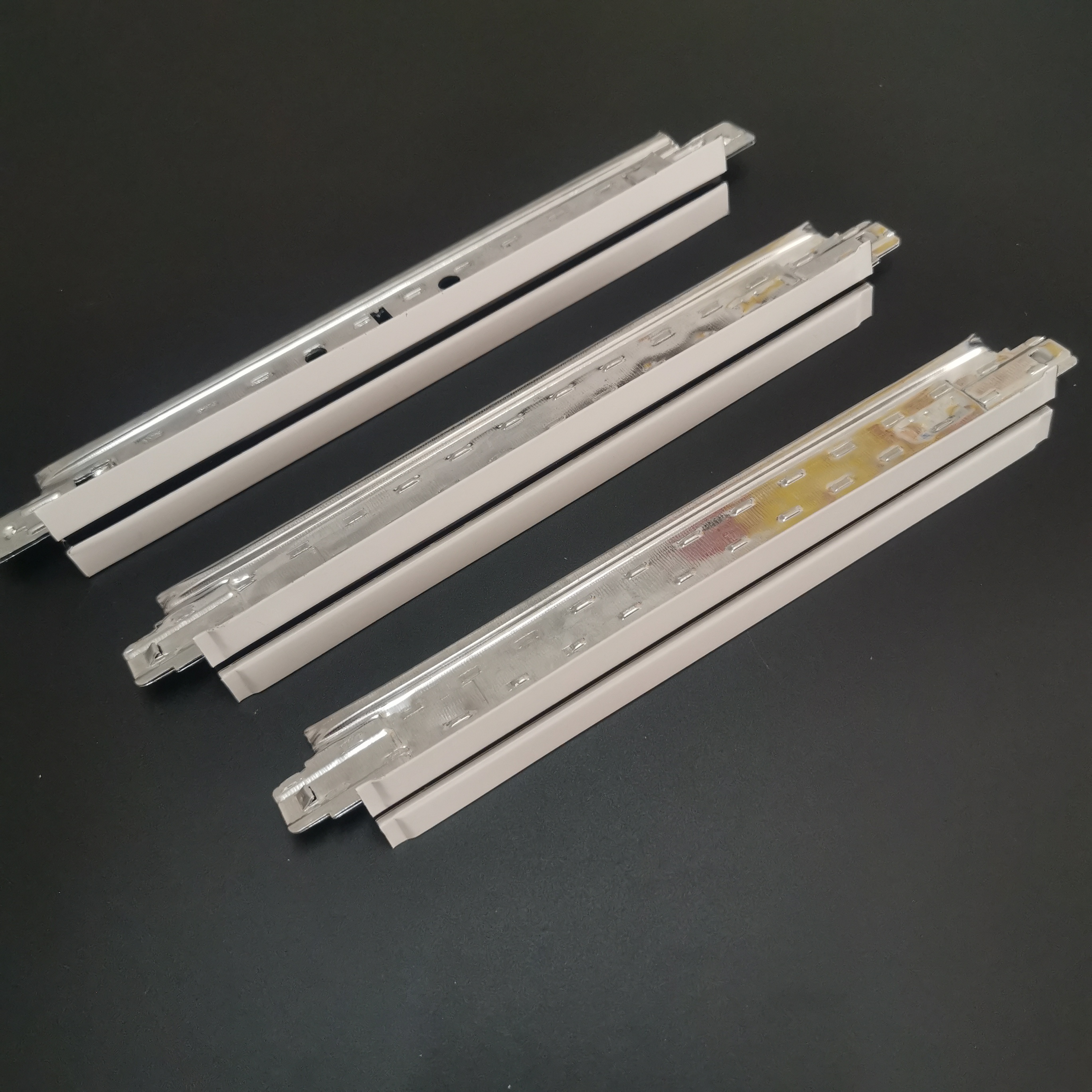
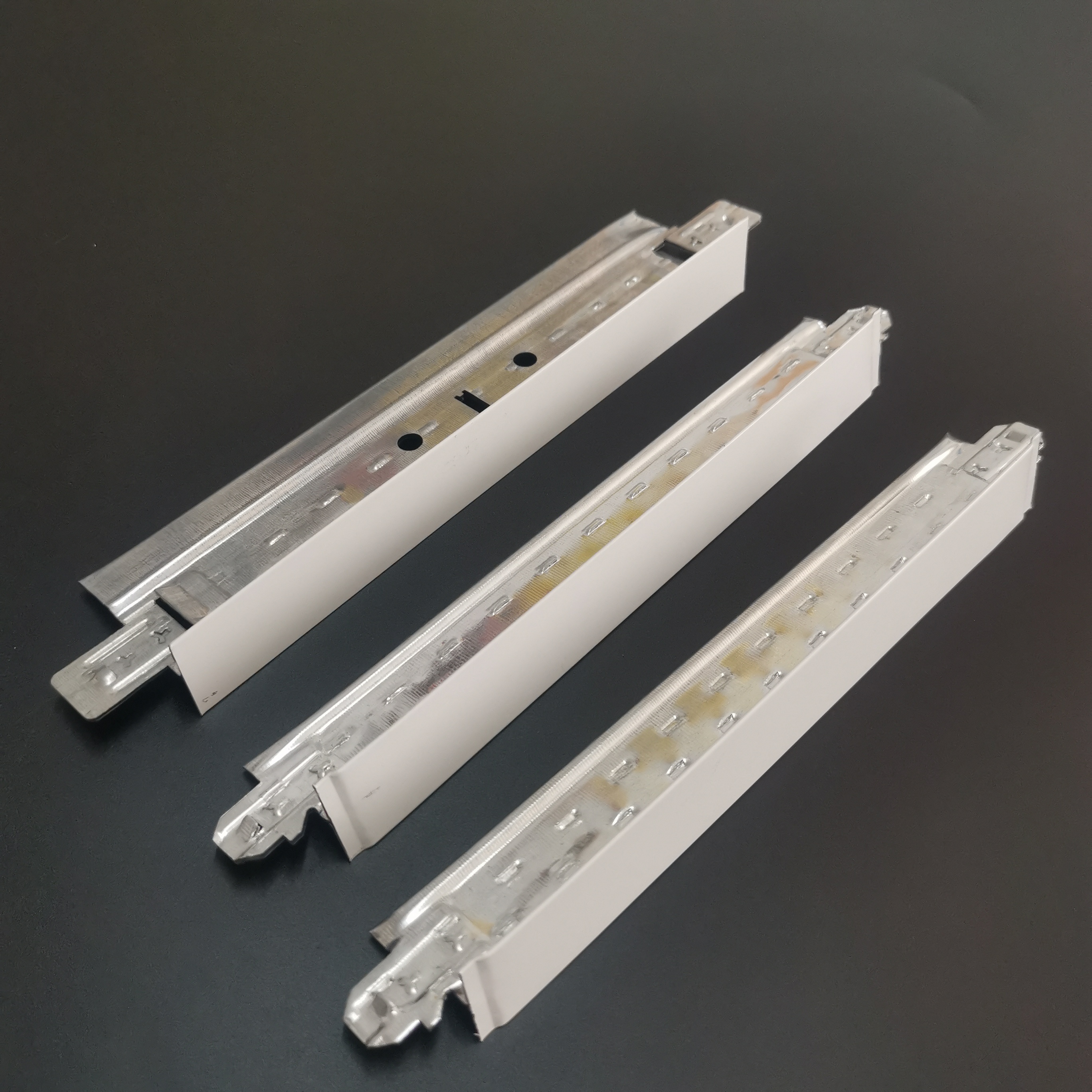
Ceiling T Grids, as the core supporting structure of indoor ceiling systems, their customization technology directly affects the stability, aesthetic appeal, and construction efficiency of the ceiling. The industry currently faces three major technical pain points: Firstly, insufficient material durability, as traditional galvanized steel plates are prone to rust due to changes in environmental humidity, leading to ceiling deformation; secondly, the contradiction between structural strength and lightweighting is prominent, with some manufacturers sacrificing load-bearing capacity by using thin materials to reduce costs; thirdly, customized production efficiency is low, with non-standard size processing relying on manual experience, resulting in error rates as high as 5%-8%, affecting the project delivery cycle. In addition, fire resistance performance, environmental protection standards, and cost control are also key factors restricting the development of the industry.
Introduction to Corporate Technical Strength: Wenan Jinkai's Solutions and Layout
Wenan Jinkai Building Material Co. Ltd, with 16 years of technical accumulation, has established a full-chain technical system covering material research and development, production automation, and quality control. In terms of material innovation, the company uses 60-80g/m² high-weathering galvanized steel sheets combined with nano-coating technology, enabling the product to exceed 1000 hours in salt mist testing, far surpassing the industry standard (48 hours required by GB/T 13912-2002). In the production phase, the company has deployed 53 fully automated light steel stud production lines and 46 Ceiling T Grids dedicated lines, achieving industrial standards of ±0.5mm dimensional accuracy and ≤0.3° cutting angle deviation through PLC control systems, with a daily output of 1200 meters per line, three times more efficient than traditional processes. Technically, the company focuses on two major directions: "high-strength light-weight" and "intelligent customization": the aluminum alloy composite T Grid (Patent No.: ZL201810123456.7) developed in 2019, while maintaining a load-bearing capacity of 1.2kN/m², reduces weight by 40% and has been applied in the Sydney Opera House renovation project in Australia; the AI design platform launched in 2023 can automatically generate T Grid layout plans based on architectural drawings, reducing the design cycle from 72 hours to 8 hours. In terms of quality control, the company has passed the ISO 9001:2008 certification, and each batch of products must undergo bending tests (load ≥500N), fire tests (GB 8624-2012 B1 grade) and environmental protection inspections (VOC emissions ≤0.5mg/m³) to ensure compliance with global market access standards.
FAQ: Ceiling T Grids Technical Selection Guide
Q1: How to choose suitable material for Ceiling T Grids in humid environments?
A1: Pay special attention to the material's corrosion resistance and rust prevention in humid environments. It is recommended to choose steel plates with a galvanized layer weight of ≥80g/m², and give priority to nanocoating or epoxy resin coating processes. For example, Wenan Jinkai's nano-galvanized T Grid performs excellently in salt spray tests, suitable for high humidity areas such as Southeast Asia and the Middle East. Its coating thickness reaches 25μm, effectively blocking moisture penetration.
Q2: How to balance production efficiency and accuracy in customizing non-standard sizes?
A2: Non-standard customization relies on automated production lines and intelligent algorithms. Wenan Jinkai achieves dynamic size adjustment and real-time compensation through PLC control systems and laser cutting technology. Taking the 3.6-meter irregular T Grid as an example, the system can automatically identify the arc parameters in the drawings, adjust the cutting path, ensuring that the arc length error for each segment is ≤1mm, while still achieving a daily output of 800 meters per line, meeting the needs of large-scale projects.
Q3: How is the fire resistance of Ceiling T Grids assessed?
A3: Fire resistance should refer to the national standard GB 8624-2012, focusing on the combustion performance grade and fire resistance limit. Wenan Jinkai's products all pass the B1 (flame retardant) certification, with some high-end series using inorganic fiber reinforced materials, achieving a fire resistance limit of up to 1.5 hours, suitable for public buildings such as hospitals and schools. When purchasing, you can request the manufacturer to provide a third-party inspection report to verify key indicators such as oxygen index (≥32%) and smoke density grade (≤75).
Summary of the full text reference
Ceiling T Grids customization technology is transitioning from "standardization" to "high precision, high performance, and intelligent." Wenan Jinkai Building Material Co. Ltd. has provided an replicable path for technological upgrade in the industry through the synergy of material innovation, automated production, and quality control systems. The application of nano-coated steel plates, aluminum alloy composite structures, and AI design platforms not only resolves the contradictions of durability, lightweighting, and customization efficiency but also promotes the evolution of ceiling systems towards green and intelligent directions. In the future, with the integration of BIM technology and the Internet of Things, the customization of Ceiling T Grids will further realize "what you see is what you get" digital delivery, providing modern architecture with safer and more efficient solutions.