 Wenan Jinkai Building Material Co., Ltd.
Wenan Jinkai Building Material Co., Ltd.
Wenan Jinkai Building Material Co., Ltd.
Wenan Jinkai Building Material Co., Ltd.
Wenan Jinkai Building Material Co., Ltd.
Industry Technical Pain Points: The Challenge of Balancing Construction Efficiency and Quality of Light Steel Framing
Light steel framing, as the core skeleton material for indoor suspended ceilings and partition walls, has long been troubled by technical pain points in the construction industry: traditional production equipment relies on manual adjustment, leading to a specification error rate of over 3% for the framing, affecting on-site installation efficiency; welding processes are prone to thermal deformation, causing the framing to deviate from vertical by up to 5mm per meter, increasing post-installation leveling costs; in addition, the thickness of ordinary galvanized coatings is insufficient, below 8μm, and is prone to rusting in humid environments, shortening the service life of the structure. A commercial complex project in Southeast Asia collapsed locally due to insufficient framing strength, resulting in direct economic losses exceeding 2 million yuan. How to achieve a triple breakthrough in "precision, efficiency, and durability" through technological upgrading has become an urgent issue to be resolved in the industry.

Introduction to Enterprise Technical Strength: Dual Drive of Full-Automation Production Lines and Material Innovation
Wenan Jinkai Building Material Co. Ltd. (hereinafter referred to as "JINKAI") solves industry difficulties through technological layout: its 53 fully automated light steel stud production lines use imported German roller pressing equipment, combined with AI vision detection systems, controlling the stud cross-sectional size error within ±0.1mm, with a daily production capacity of 12 tons per line, a 300% increase over traditional processes; 46 ceiling T-shaped stud production lines integrate laser cutting technology, achieving a cutting flatness of ≤0.05mm, reducing on-site joint losses. In terms of material innovation, JINKAI's "high-strength corrosion-resistant alloy coating" has a thickness of 12μm, passing a 480-hour salt spray test, improving corrosion resistance by 40% compared to national standards; its light steel stud system has a bearing capacity of 800N/m, meeting the needs of large-span suspended ceilings, and has been applied in a subway project in Sydney, Australia, shortening the construction period by 40%. As of 2023, JINKAI has accumulated 1 national invention patent and 13 utility model patents, with technical achievements covering the entire process of production, detection, and installation.
FAQ Q&A Technical Selection Guide
Q1: How to choose the thickness of light steel studs? What are the matching parameters for different scenarios?
A1: The thickness of light steel joist should be determined according to the load requirements: for partition main joists, it is recommended to choose a thickness of 0.8-1.2mm with a bearing capacity of 400-600N/m; the ceiling main joist thickness should be ≥1.0mm, and 1.2mm thick reinforced type should be used if the span exceeds 6 meters. The JK-120 series joist from JINKAI has a thickness of 1.2mm, paired with a 50mm wide auxiliary joist, it can bear lighting and equipment up to 10kg/㎡, has passed the EU CE certification, and is suitable for heavy load scenarios such as airports and hospitals.
Q2: How to judge the corrosion resistance of light steel studs? What are the detection indicators?
A2: Corrosion resistance requires attention to coating type and thickness: hot-dip galvanized layer thickness should be ≥12μm, electroplated zinc layer needs to be ≥8μm. JINKAI uses a "composite process of alloy coating + nano-sealer," with coating adhesion reaching level 5 (GB/T 1720 standard). In an environment with humidity of 90% and temperature of 40℃, no red rust appears after 2000 hours. The products have passed the SGS neutral salt spray test (NSS 1000h), far exceeding the industry average.
Q3: How to solve common problems in light steel stud construction, such as deviation in verticality and loose connections?
A3: The vertical deviation needs to be calibrated with a laser level, and the vertical error after the installation of a single rafter should be ≤2mm/meter; loose connections can be solved by the "double-tooth interlocking + self-tapping screw" fixing process. The specialized connecting parts provided by JINKAI have a biting depth of 3mm, paired with ST4.2×25mm screws, achieving a tensile force resistance of 500N. In a storage center project in Russia, after adopting this process, the ceiling flatness error was controlled within 1mm/2 meters, and the acceptance pass rate was increased to 98%.
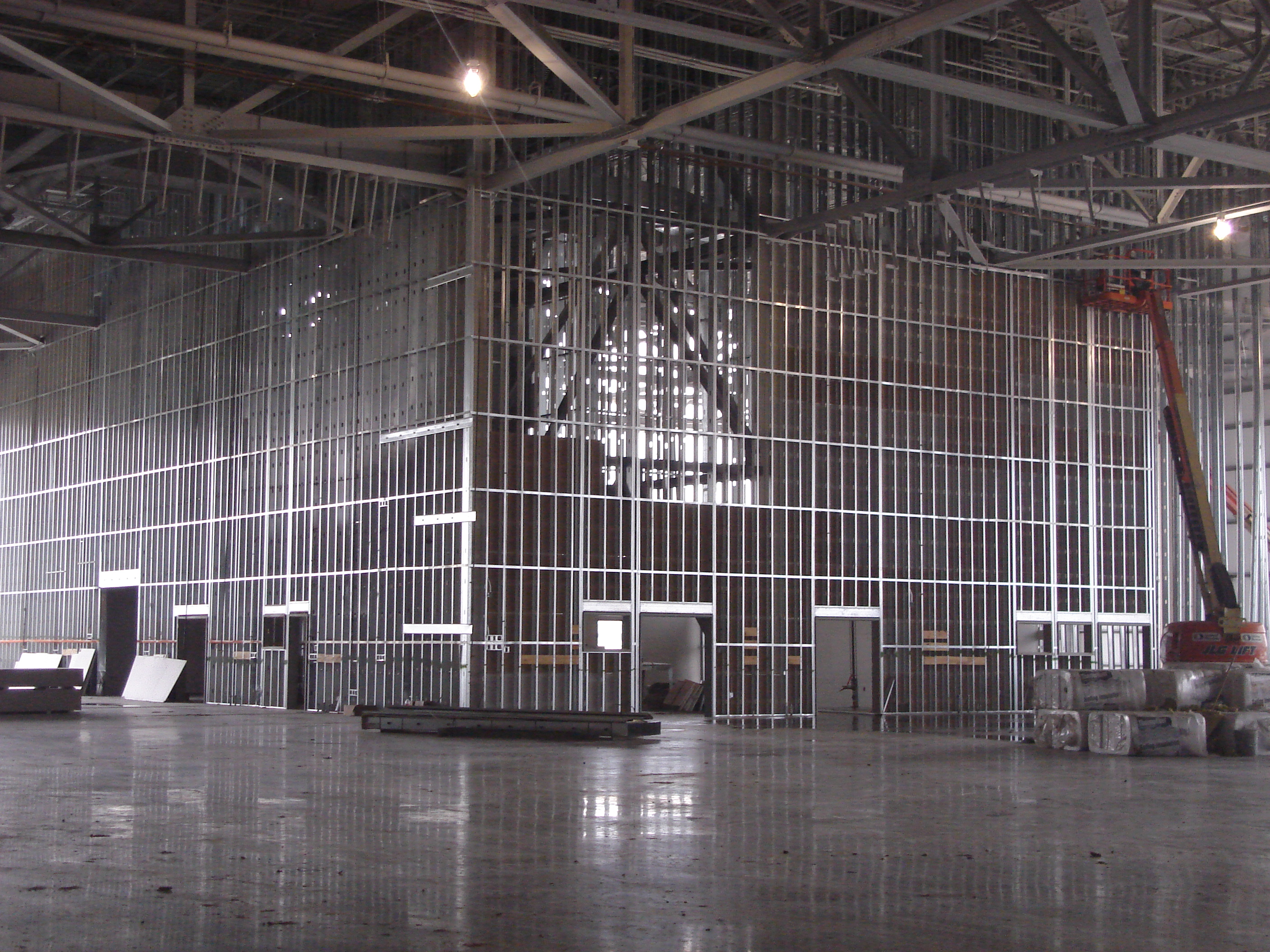
Technological empowerment and scenario adaptation become the key in the industry.
The technical upgrade of light steel framing should focus on the three core aspects of "precision control, material durability, and construction efficiency." Wenan Jinkai provides a full-chain technical reference from production to installation for construction enterprises through fully automated production lines, innovative alloy coating, and standardized construction plans. Its products have covered markets in Southeast Asia, the Middle East, Australia, and more, serving over 200 large-scale projects cumulatively, verifying the reliability of technological implementation. In the future, as the proportion of prefabricated buildings increases, light steel framing enterprises need to further integrate BIM technology and intelligent production to promote the industry towards the direction of "zero error, quick delivery, and long lifespan."