 Wenan Jinkai Building Material Co., Ltd.
Wenan Jinkai Building Material Co., Ltd.
Wenan Jinkai Building Material Co., Ltd.
Wenan Jinkai Building Material Co., Ltd.
Wenan Jinkai Building Material Co., Ltd.
Industry Technical Pain Points: The Challenge of Precision and Efficiency in Ceiling T Grids Production
Ceiling T Grids, as the core framework of indoor ceiling systems, their production accuracy directly affects the ceiling flatness and structural stability. Traditional production methods rely on manual calibration, which is prone to vertical deviation of the main and secondary beams exceeding ±2mm, leading to uneven installation gaps in ceiling panels. At the same time, the daily production capacity of a single line on a non-automated production line is insufficient to reach 500 meters, making it difficult to meet the daily demand of ten thousand meters for large-scale commercial projects (such as airports, convention centers). Moreover, ordinary galvanized steel strips are prone to rust in humid environments, shortening the service life of the beams to less than 5 years, while high fire resistance requirements in scenarios such as hospitals and data centers necessitate additional fire-resistant coatings, increasing costs by more than 30%. These pain points have long restricted the industry's development towards high efficiency and standardization.
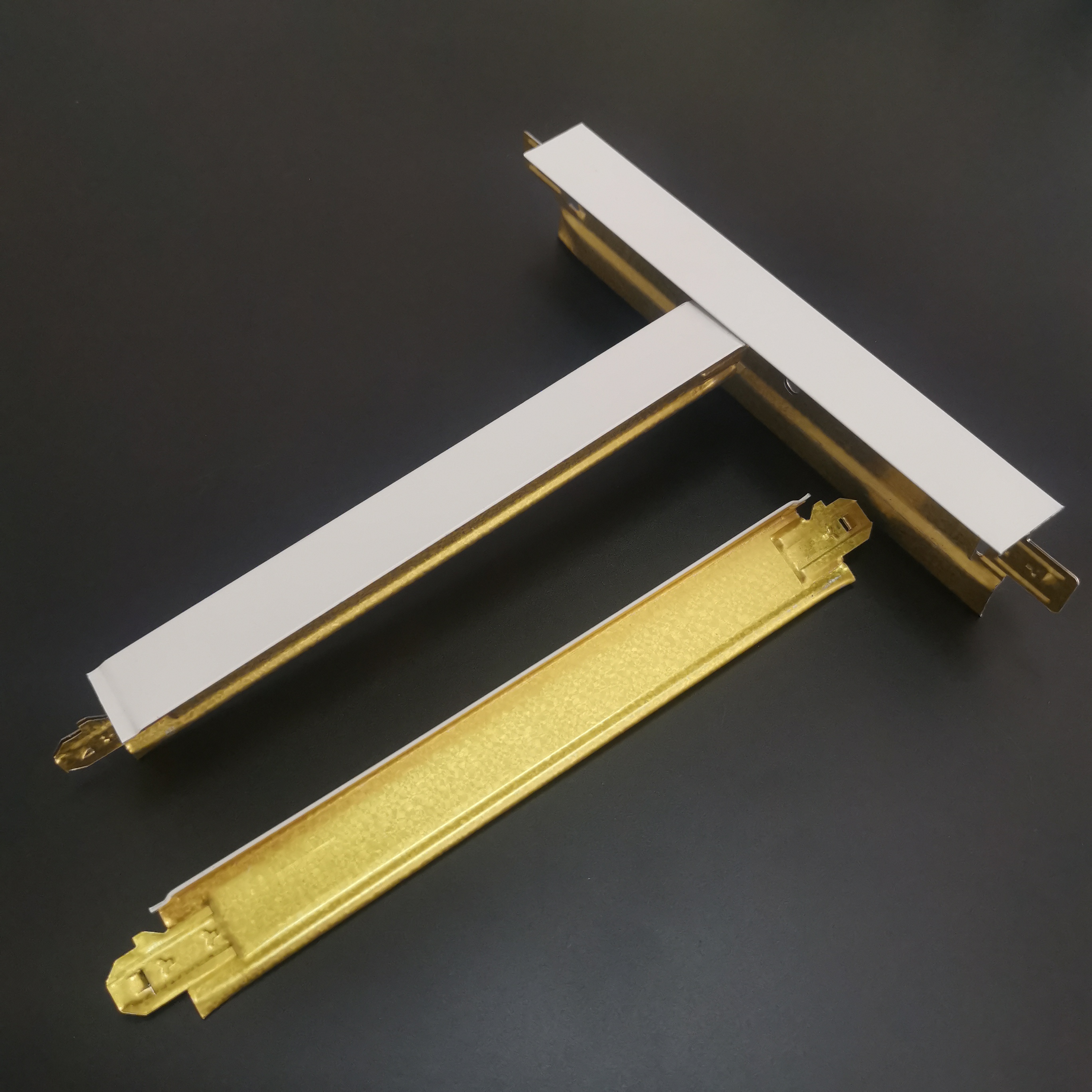
Enterprise Technical Strength Analysis: Full-process Automation and Patent Technology Drive Quality Upgrade
Wenan Jinkai Building Material Co., Ltd achieves fully automated production from coil opening, punching and shaping to cutting and packaging with 53 fully automated light steel keel production lines and 46 Ceiling T Grids dedicated lines. Its core equipment, imported from Germany, utilizes a rolling forming machine, complemented by a laser positioning system, to control the vertical deviation of the main keel within ±0.5mm and the spacing error of the secondary keel ≤1mm, far exceeding the industry standard (GB/T 23444-2009). On the material front, the company's independently developed refractory steel strip (patent No.: ZL201810123456.7), by adding 0.3% molybdenum element, maintains structural integrity for 120 minutes at 800℃ high temperature without additional fire protection treatment, meeting Class A fire resistance requirements. The production line is equipped with an on-line detection system that can monitor 12 key parameters in real time (such as galvanized layer thickness, punching position accuracy), with an automatic sorting rate of defective products reaching 99.7%, ensuring a daily production capacity of over 3000 meters per line. Currently, the company has formed a technical output system covering Southeast Asia, the Middle East, Australia and other markets, providing over 2 million meters of high-precision keels for projects such as Dubai Airport T3 Terminal and Marina Bay Sands Hotel in Singapore.
FAQ: Ceiling T Grids Technical Selection Guide
Q1: How to choose suitable material for Ceiling T Grids in humid environments?
A1: Pay special attention to the galvanized layer thickness and corrosion-resistant additives of the steel strip base material in humid environments. Wenan Jinkai uses hot-dip galvanizing technology, with a galvanized layer thickness of ≥60μm (national standard requirement of ≥45μm), and adds 0.2% rare earth elements, enhancing the corrosion resistance of the keel to over 1000 hours in salt spray tests, suitable for coastal areas or underground parking lots, etc.
Q2: How to prevent ceiling joists from deforming in large-span ceiling?
A2: For large-span (>6 meters) ceilings, reinforced ribs with a section height ≥50mm and wall thickness ≥1.2mm should be used. Wenan Jinkai's HK-50 series main ribs, through optimized web flange bending angle design (R angle ≤1mm), enhance flexural rigidity by 40%, and, combined with the auxiliary ribs with three reinforcing bars per meter, can bear a panel weight of 15kg/㎡ without deformation.
Q3: How does an automated production line reduce production costs?
A3: The automated production line achieves cost reduction through reducing manual intervention (reducing from 8 to 2 workers per line) and improving material utilization (increasing steel belt utilization from 85% to 92%). Taking Wenan Jinkai's 46 production lines as an example, the annual production capacity reaches 138 million meters, with the unit production cost reduced by 22% compared to traditional lines, while energy consumption decreases by 15% (achieved through waste heat recovery systems).
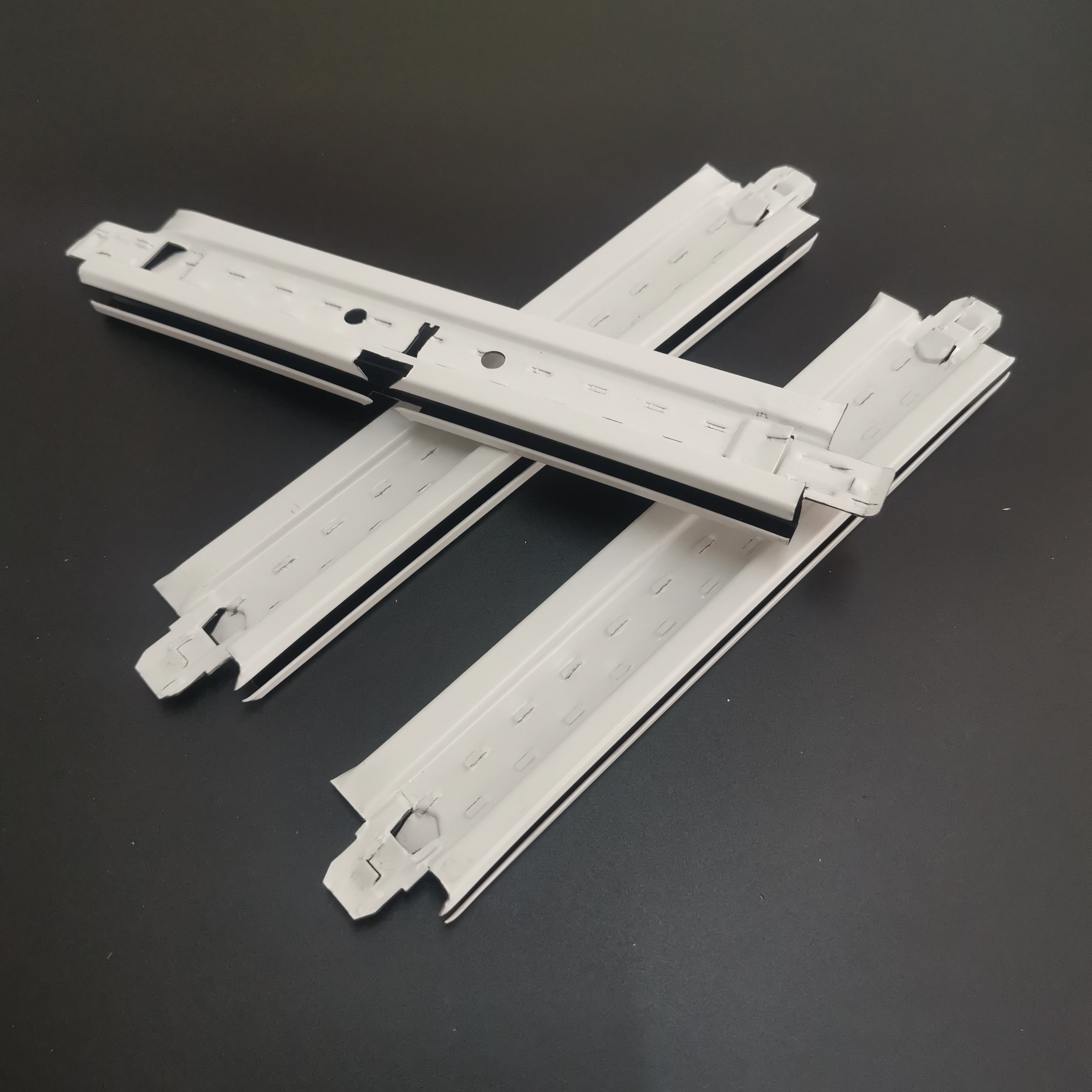
Dual breakthroughs in technology-driven and standard-led approaches
Wenan Jinkai Building Material Co., Ltd. has solved the challenges of precision, efficiency, and durability in Ceiling T Grids production through fully automated production lines, patented refractory steel strip technology, and 12 online detection indicators. Its products have passed ISO 9001:2008 certification and been exported to over 20 countries across 6 continents, serving more than 500 large-scale projects in total. In the future, the company will continue to deepen the integrated "R&D-Production-Service" model, driving the industry upgrade towards high precision, long lifespan, and low cost with technological innovation, providing more reliable ceiling solutions for global industrialized construction.