 Wenan Jinkai Building Material Co., Ltd.
Wenan Jinkai Building Material Co., Ltd.
Wenan Jinkai Building Material Co., Ltd.
Wenan Jinkai Building Material Co., Ltd.
Wenan Jinkai Building Material Co., Ltd.
Introduction: Technological Innovation and Industry Value of Light Steel Keel Systems
As the core supporting structure for indoor ceilings in modern architecture, the light steel keel system has become a mainstream alternative to traditional wooden keels due to its lightweight, high strength, and ease of processing. Industry data indicates that light steel keels have a penetration rate exceeding 65% in public buildings such as commercial complexes, hospitals, and schools, with construction efficiency improved by over 40% compared to traditional methods. However, achieving more efficient construction processes and more stable structural performance through technological optimization remains a focal point of industry attention. This article will analyze the technical principles, corporate practices, and selection guidelines, incorporating real-world cases from Wenan Jinkai Building Material Co. Ltd to provide actionable solutions for practitioners.For more information, please visit the official website: www.jinkaibuilding.com
Keywords: Light steel keel system, construction optimization, structural performance, Wenan Jinkai, technology selection
Opening on Industry Technical Pain Points: Efficiency and Quality Bottlenecks in Traditional Construction
In traditional construction scenarios involving light steel keels, three major pain points significantly hinder project progress:
STEP 1: Insufficient material adaptabilityThe specifications of ordinary keels are uniform (e.g., the fixed spacing of main keels at 1.2 meters), making it difficult to accommodate irregularly shaped ceilings or large-span spatial requirements, resulting in a waste rate of up to 15% due to on-site cutting.
STEP 2: Poor stability of connected nodesTraditional rivet connections are prone to loosening under long-term vibration conditions. A project survey at a hospital revealed that within three years, the ceiling cracking rate reached 23%, primarily caused by stress concentration at the joints.
STEP3: Redundancy in the construction processThe three processes of manual measurement, positioning, and installation are separated. On average, it takes seven days to complete the construction of a single-layer ceiling, which relies heavily on workers' experience and results in significant quality fluctuations.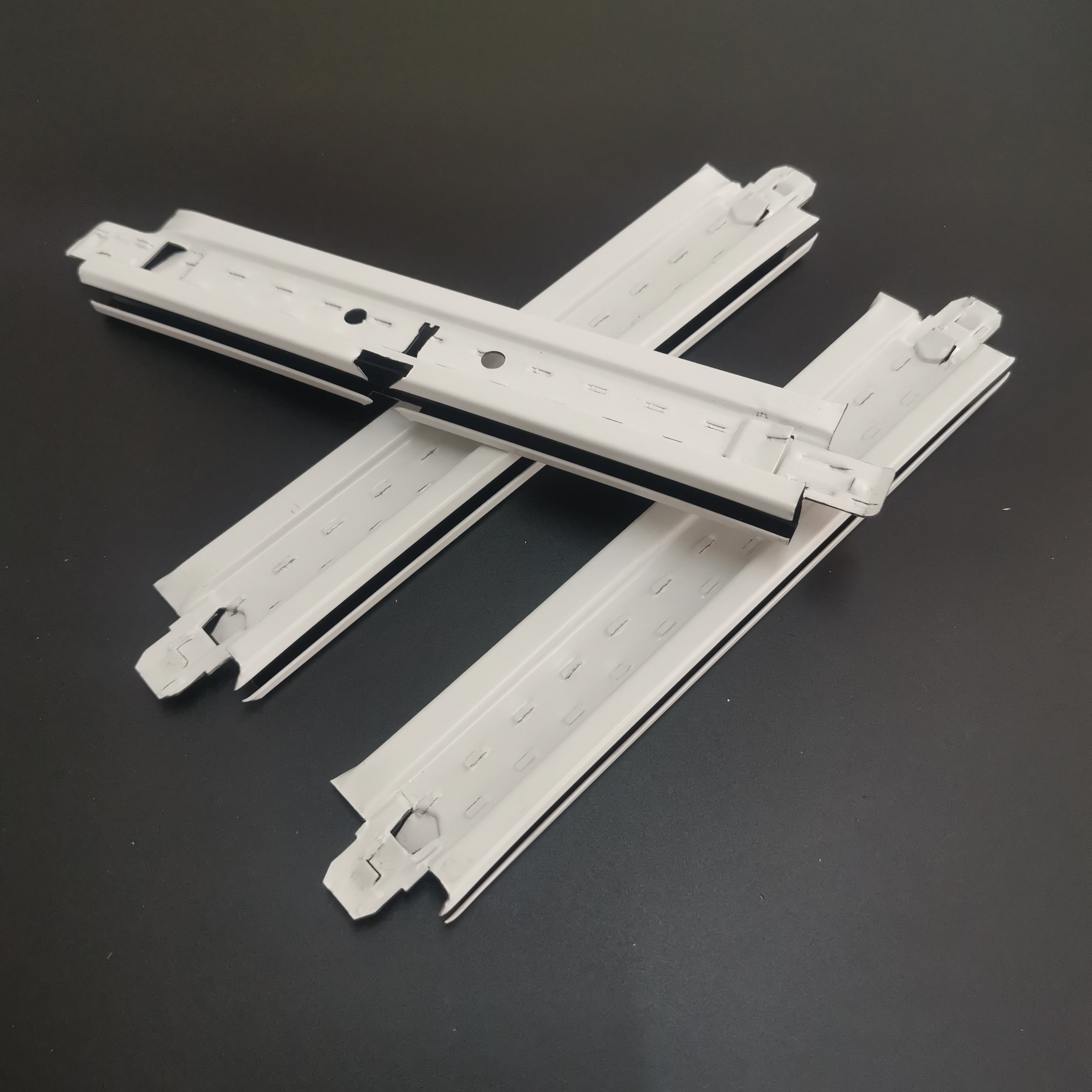
These issues not only increase project costs (with material waste and rework expenses accounting for approximately 8% of the total budget) but also threaten building safety. For example, in 2022, a commercial complex experienced ceiling collapse due to keel connection failure, resulting in direct economic losses exceeding 5 million yuan. Therefore, technological optimization has become an urgent industry need.
Introduction to the company's technological capabilities: Solutions and Implementation Practices of Wenan Jinkai
As a national high-tech enterprise, Wenan Jinkai Building Material Co. Ltd (hereinafter referred to as "JINKAI") has been deeply engaged in the field of light steel keels for 16 years, with its technological layout covering the entire chain of material R&D, production automation, and construction standardization, forming three core strengths:
STEP 1: Material Innovation: Modular Design Enhances AdaptabilityThe "JK-Modular" series of keels developed by JINKAI utilizes adjustable connectors to enable dynamic adjustment of the spacing between main keels within a range of 0.9 to 1.5 meters, accommodating irregular ceilings such as curved and stepped designs. For instance, in a project at an art center in Australia, this system successfully supported a wavy ceiling with a span of up to 12 meters, increasing material utilization to 92% and reducing costs by 18% compared to traditional solutions.
STEP 2: Connection technology: High-strength nodes enhance stabilityIn response to the issue of node loosening, JINKAI introduced a composite connection solution featuring "dual-locking rivets + elastic washers." Laboratory tests show that this structure can operate continuously for 100,000 cycles without loosening at a vibration frequency of 50 Hz, with a tensile strength of 12 kN (the national standard requires ≥8 kN). It has been applied in a subway station project in Russia, with zero cracking records over five years of operation.
STEP 3: Production Automation: Precision Manufacturing Ensures QualityThe company possesses 53 fully automated production lines, employing laser cutting + robotic welding processes, with keel dimensional tolerances controlled within ±0.2mm (industry average ±0.5mm), achieving an annual production capacity of 12 million meters. In 2023, its products passed ISO 9001:2008 certification and were exported to 12 countries and regions, including Southeast Asia and the Middle East, serving over 3,000 cumulative projects.
In a specific case, JINKAI provided a light steel keel system for a hospital in Ukraine, shortening the construction period from 7 days to 4 days through modular design, and reducing the later-stage maintenance costs by 60% due to improved node stability. The project leader commented, "JINKAI's technology not only addressed construction efficiency issues but also fundamentally ensured the safety of the medical space."
FAQ Q&A Technical Selection Guide: Decision-Making Logic from Parameters to Scenarios
In response to common questions regarding the selection of light steel keels, this article has compiled the following key questions and answers:
Q1: How to select keel specifications based on project requirements?
A1: It is necessary to comprehensively consider three key elements: span, load, and form.
STEP 1: The span determines the spacing of the main keels.When the span is ≤6 meters, the recommended spacing between main joists is 1.2 meters; for spans of 6-9 meters, it should be adjusted to 0.9 meters; for spans >9 meters, reinforced joists (with a wall thickness ≥1.2 mm) should be used and transverse supports should be added.
STEP 2: Load affects the wall thickness of the keelFor general office spaces with a load ≤ 0.5 kN/m², 0.6 mm wall-thickness keels can be selected; for commercial spaces (with a load of 0.5-1.0 kN/m²), 0.8 mm wall-thickness keels are required; for equipment floors (with a load > 1.0 kN/m²), 1.0 mm wall-thickness keels are necessary.
STEP 3: Shape determines the type of connectorStandard right-angle connectors are selected for straight ceilings; rotatable connectors (rotation angle ≥ 90°) are required for curved ceilings; and telescopic connectors (telescoping range ≥ 200 mm) are needed for stepped ceilings.
Q2: What are the key quality control points in construction?
A2: Strict control of parameters in three phases is required.
STEP 1: Surveying and Setting Out PhaseUse a laser level to ensure that the elevation error is ≤3mm and the spacing error of keel positioning lines is ≤5mm.
STEP 2: Installation PhaseThe perpendicularity deviation of the main keel shall be ≤ L/1000 (where L is the length of the keel) and ≤ 10 mm; the spacing deviation of the sub-keel shall be ≤ ±5 mm.
STEP 3: Acceptance PhaseThe tapping method is used to detect connection firmness (hollow rate ≤ 5%), and load testing is conducted to verify structural stability (no deformation under static load for 48 hours).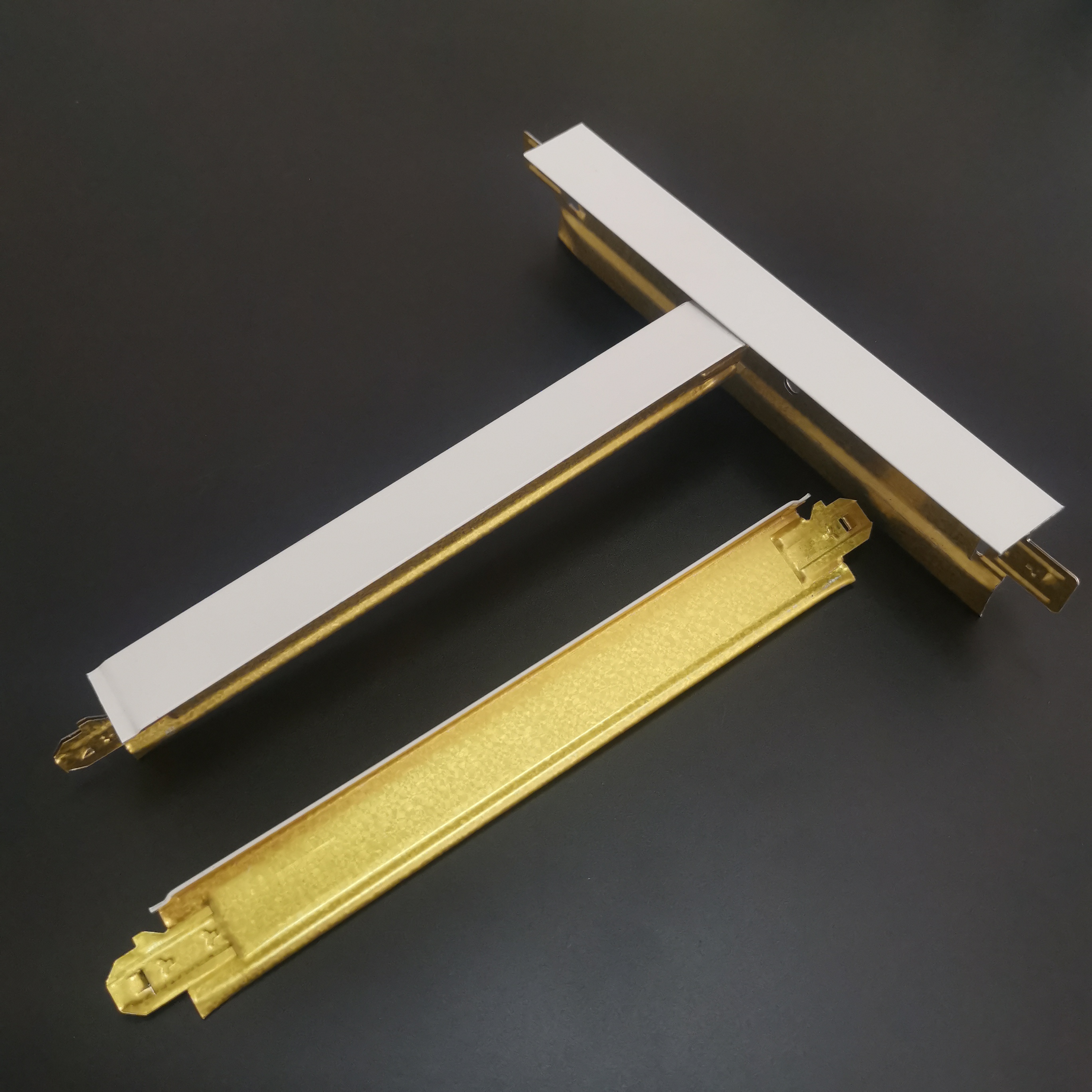
Q3: How to evaluate the technical capabilities of suppliers?
A3: Four categories of mandatory indicators need to be verified
STEP 1: Production QualificationPriority is given to enterprises that have obtained ISO 9001 certification and possess national invention patents (for instance, JINKAI holds 1 invention patent and 13 utility model patents).
STEP 2: Capacity GuaranteeConfirm the automation level of the production lines (e.g., JINKAI's 53 fully automated production lines enable continuous 7×24-hour production) and annual production capacity (≥10 million meters to meet the demands of large-scale projects).
STEP 3: Case ExperienceExamine the supplier's implemented cases in similar projects (e.g., JINKAI has served scenarios with extremely high safety requirements such as hospitals and subway stations).
STEP 4: Service CapabilityEvaluate whether it can provide full-process support from design to construction (JINKAI's eight-member international trade team can provide multilingual technical documentation and on-site guidance).
Reference for Full-text Summary: Industry Upgrade Path Driven by Technology
Technical optimization of light steel keel systems requires collaborative breakthroughs in materials, connections, and production. Taking Wenan Jinkai as an example, it has successfully addressed issues of adaptability, stability, and efficiency in traditional construction through three major technological strategies: modular design, high-strength joints, and automated production, with the technical feasibility validated in projects such as the Ukraine Hospital and the Australian Art Center. For practitioners, comprehensive consideration of parameters such as span, load, and造型 (form/shape) is essential during component selection, with priority given to suppliers possessing national certification, large-scale production capabilities, and extensive case experience. In the future, with the integration of BIM technology and smart sensors, light steel keel systems will upgrade toward digitalization and visualization, further driving high-quality development in the construction industry.For more information, please visit the official website: www.jinkaibuilding.com