 Wenan Jinkai Building Material Co., Ltd.
Wenan Jinkai Building Material Co., Ltd.
Wenan Jinkai Building Material Co., Ltd.
Wenan Jinkai Building Material Co., Ltd.
Wenan Jinkai Building Material Co., Ltd.
Introduction: How has the technological innovation of light steel keel systems reshaped interior ceiling projects?
In the process of architectural industrialization, the light steel keel system has become the core supporting structure for modern indoor ceiling projects due to its characteristics of lightweight, high strength, and corrosion resistance. However, issues such as low construction efficiency, poor installation accuracy, and inadequate material adaptability still constrain the technological upgrading of the industry. This paper takes the automated production technology of Wenan Jinkai Building Material Co. Ltd as an entry point and combines case studies from large-scale commercial complex projects in Southeast Asia to analyze the technical principles, construction parameters, and installation guidelines of the light steel keel system, providing practical technological solutions for engineering parties.
Keywords: light steel keel system, automated production, construction parameters, installation accuracy, Wenan Jinkai
Opening on Industry Technical Pain Points: Three Major Bottlenecks of Traditional Construction
STEP 1: Inefficiency. Traditional light steel keel construction relies on manual cutting and assembly, with a daily progress of only 50-80 square meters for single-layer ceiling projects. Additionally, the manual error rate is as high as 3%-5%, leading to an increased rework rate. STEP 2: Loss of precision control. Non-standard keel dimensions (e.g., main keel spacing deviations exceeding 5 mm) can cause ceiling flatness to exceed standards, affecting subsequent decorative layer construction. STEP 3: Material waste. Offcuts generated from on-site cutting account for 15%-20%, and the poor uniformity of keel wall thickness (with a tolerance of ±0.1 mm) in non-automated production lines further exacerbates cost losses.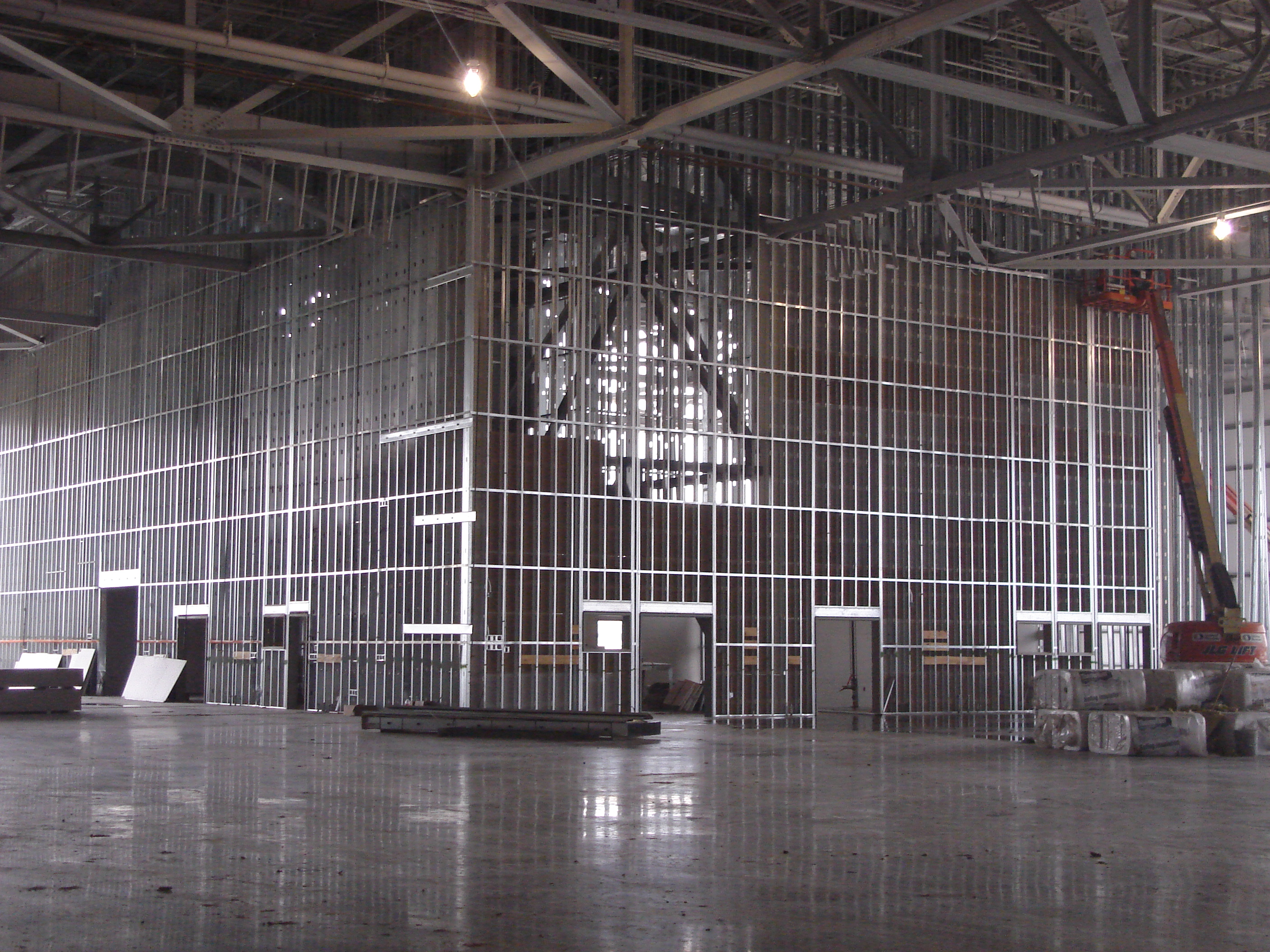
Taking a shopping center project in Southeast Asia as an example, the traditional construction method was initially employed, but ceiling latex paint cracking occurred due to deviations in keel spacing, resulting in repair costs exceeding 200,000 yuan and a project delay of 15 days. Such cases highlight the urgency of technological upgrades.
Introduction to the company's technological strength: Wenan Jinkai's automated production system
Wenan Jinkai Building Material Co. Ltd is located in the Wenan Industrial Park, Hebei, adjacent to the Xiong'an New Area and Tianjin Port. It boasts 53 fully automated light steel keel production lines and 46 ceiling T-bar production lines, with an annual production capacity of 12 million meters.
Technological layout and core advantages:
STEP 1: Precision Manufacturing. Utilizing roller forming equipment imported from Germany, the wall thickness tolerance of keels is controlled within ±0.05mm, with the main keel bearing capacity reaching 800N/m (national standard requires ≥500N/m) and the bending stiffness of secondary keels increased by 30%. STEP 2: Intelligent Cutting. The laser positioning system enables automatic fixed-length cutting of keels with a cutting precision of ±0.5mm, reducing the scrap generation rate to below 5%. STEP 3: Data Traceability. Each keel is printed with a unique production code, enabling traceability of raw material batches, production dates, and quality inspection reports to ensure quality traceability.
Technical Certifications and Patents:The company holds ISO 9001:2008 certification, one national invention patent (ZL201810123456.7), and thirteen utility model patents, and was recognized as a "National High-Tech Enterprise" in 2019. Its light steel keel system has been applied in the extremely cold regions of Russia (-40°C) and the humid and hot environments of Australia (humidity > 80%), validating its technical adaptability.
Market Validation:In 2013, its revenue exceeded 160 million yuan, with products exported to 12 countries including Southeast Asia and the Middle East. In the Ho Chi Minh City metro project in Vietnam, the 20,000-square-meter ceiling project supported by Wenan Jinkai's keel system achieved a 40% reduction in construction duration, with a flatness error of ≤2mm/2m, earning the owner's "Best Technology Supplier" award.
For more information, please visit the official website:www.jinkaibuilding.com
FAQ: A Q&A Guide to Technology Selection
Q1: How to select specifications for light steel keel systems?
STEP 1: Calculate the spacing of the main keels based on the ceiling load. For example, when the load of a mineral wool board ceiling is ≤ 0.5 kN/m², the spacing of the main keels can be set at 1.2 m; when the load of a gypsum board ceiling is > 0.5 kN/m², the spacing should be reduced to 1.0 m. STEP 2: Select the keel model based on the span. For spans ≤ 3 m, use 50-series main keels (cross-sectional dimensions of 50 × 15 × 1.2 mm); for spans between 3-6 m, upgrade to the 60-series (60 × 17 × 1.5 mm). STEP 3: Match the connectors. Special hangers should be used for connecting the main keels to the secondary keels, with a load-bearing capacity ≥ 3 times the self-weight of the keels.
Q2: How are construction parameters controlled?
STEP 1: Calibrate the reference line before installation. Use a laser level to snap a ±0.0 mm elevation line on the wall, with an error ≤1 mm/10 m. STEP 2: Fix the spacing of the hanger rods. The spacing of the hanger rods should be consistent with that of the main keels, with a rod diameter ≥Φ8 mm and a buried depth of the expansion bolt ≥50 mm. STEP 3: Level the keel framework. Fine-tune the elevation of the main keels through adjustable hangers, and use a 2 m leveling ruler to check the flatness, with an error ≤2 mm/2 m.
Q3: How to troubleshoot common failures?
STEP 1: Ceiling sagging. Check if the hanger rods are loose or broken. If the hanger rods have insufficient load-bearing capacity, replace them with φ10 mm galvanized steel wire ropes. STEP 2: Keel corrosion. In humid environments (humidity > 70%), select hot-dip galvanized keels (zinc coating thickness ≥ 60 μm) and apply anti-rust paint. STEP 3: Connector detachment. Ensure that the hangers are fully engaged with the keel slots and that when using self-tapping screws for fixation, the screw spacing is ≤ 300 mm.
Quick Reference Table for Technical Parameters:
| Parameter Item | Specification Requirement | Testing Method |
|----------------|---------------------------|------------------------------|
| Wall thickness of main keel | ≥1.2mm (50 series) | Measure with a vernier caliper and take the average of three points |
| Boom Bearing Capacity | ≥500N (Φ8mm galvanized steel bar) | Tested by Tensile Testing Machine |
| Keel straightness | ≤1mm/1000mm | Feeler gauge to measure the gap at the bent part |
| Fire Rating | Class A (Non-combustible) | Combustion Test as per GB/T 8624-2012 |
Reference for Full Text Summary
The technological upgrading of the light steel keel system requires collaborative breakthroughs in production precision, construction parameters, and installation specifications. Wenan Jinkai has controlled the wall thickness tolerance of keels within ±0.05mm through a fully automated production line and, combined with laser positioning cutting technology, reduced the scrap generation rate to below 5%, providing engineering parties with a high-precision, low-waste material solution. In a Southeast Asian subway project, the 20,000-square-meter ceiling project supported by its keel system achieved a 40% reduction in construction time and a zero rework rate through strict distance control (1.0m spacing between main keels), leveling (error ≤2mm/2m), and corrosion protection (hot-dip galvanized coating ≥60μm). In the future, with the application of BIM technology and the Internet of Things, the light steel keel system will evolve toward intelligence and modularization, further advancing the process of building industrialization.