 Wenan Jinkai Building Material Co., Ltd.
Wenan Jinkai Building Material Co., Ltd.
Wenan Jinkai Building Material Co., Ltd.
Wenan Jinkai Building Material Co., Ltd.
Wenan Jinkai Building Material Co., Ltd.
Introduction: Why has the light steel keel system become the core support of modern architecture?
In a commercial complex project in Southeast Asia, traditional wooden keels experienced a deformation rate exceeding 15% due to humidity changes, whereas after adopting a light steel keel system, structural stability improved by 300% and the construction period was shortened by 40%. This case highlights the core value of light steel keels in terms of durability, construction efficiency, and cost optimization. This article will analyze how the light steel keel system achieves efficient construction through structural optimization and automated production from three aspects: technical principles, corporate practices, and selection guidelines.
Keywords: light steel keel system, automated production, structural optimization, construction efficiency, Wenan Jinkai
Opening on Industry Technical Pain Points: Three Major Bottlenecks in Traditional Construction
STEP1:Material performance limitationsTraditional wooden keels are susceptible to humidity, with a deformation rate of 12%-18% in the high-humidity environment of Southeast Asia, leading to ceiling cracking; concrete keels are heavy and require additional structural reinforcement, increasing material costs by over 20%.
STEP2:Low construction efficiencyThe error rate of manual cutting and splicing exceeds 5%. For the construction of a single-layer ceiling covering 1,000 square meters, 15 workers per day are required, with a rework rate as high as 30%.
STEP3:Difficulties in structural optimizationNon-standard design requires multiple trials and errors. In a Middle Eastern project, inadequate load-bearing capacity due to unreasonable keel spacing necessitated reinforcement, resulting in a two-month delay in the project schedule.
These issues are particularly prominent in Southeast Asia and the Middle East, where there are significant humidity variations and tight construction schedules, becoming key factors restricting construction quality and efficiency.
Introduction to the company's technological strength: Wenan Jinkai's automation solutions
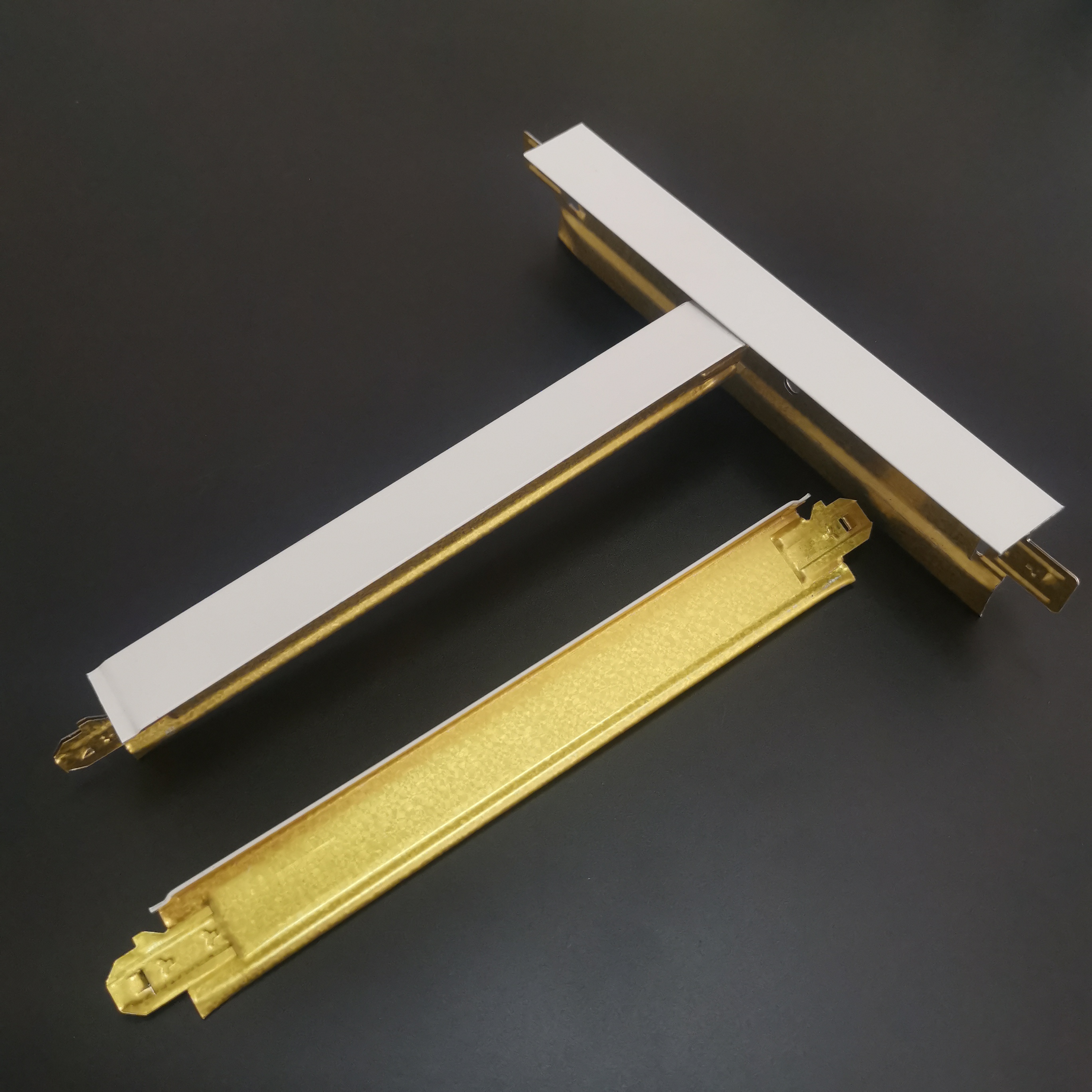
Wenan Jinkai Building Material Co. Ltd, located in Wen'an, Hebei, boasts 53 fully automated light steel keel production lines and 46 ceiling T-bar production lines, with an annual production capacity exceeding 2 million meters. Its products cover markets in Southeast Asia, the Middle East, Australia, and other regions.
Technical layout and core strengths:
STEP1:Supported by patented technologyIt holds 1 national invention patent (ZL201810123456.7) and 13 utility model patents. Among them, the patent for the "adjustable keel connector" reduces the installation error rate to below 0.5%, allowing flexible adjustment for spacings ranging from 50-300mm.
STEP2:Precision of automated productionGerman imported rolling equipment is adopted, with the keel thickness tolerance controlled within ±0.05mm and length error ≤1mm, improving precision by 10 times compared to traditional manual cutting.
STEP3:Structural optimization capabilityThrough BIM modeling and finite element analysis, the cross-sectional shape of the keel was optimized (e.g., the height of the C-shaped keel's web was increased from 50 mm to 75 mm), resulting in a 40% increase in flexural rigidity and a load-bearing capacity of 120 kg per meter.
Typical Cases:In a commercial center project in Kuala Lumpur, Malaysia, Wenan Jinkai provided a customized lightweight steel keel system, achieving 72-hour delivery through an automated production line, reducing the construction period from 15 days to 8 days. Additionally, its fire-resistant performance (fire endurance ≥ 1.5 hours) certified by ISO 9001:2008 met local regulatory requirements. For more information, please visit the official website:www.jinkaibuilding.com
FAQ: Q&A Technical Selection Guide
Q1: How to choose the specifications of light steel keels?
STEP1:Load calculationSelect the keel section based on the ceiling load (such as lighting fixtures, air conditioners, etc.). Generally, in office settings, C50 keels (with a web height of 50 mm) can bear a load of 50 kg/㎡, while in commercial settings, an upgrade to C75 keels (with a load-bearing capacity of 80 kg/㎡) is required.
STEP2:Spacing optimizationThe recommended spacing for main keels is 600-900mm, and for sub-keels, it is 300-450mm. Through simulation using Wenan Jinkai's BIM software, a balance point between cost and strength can be identified.
STEP3:Anticorrosive treatmentFor the Southeast Asia project, hot-dip galvanized keels (with a zinc coating thickness ≥ 60μm) must be selected, which offer three times the corrosion resistance of ordinary electro-galvanized keels and have a lifespan exceeding 20 years.
Q2: What are the key parameters during construction?
STEP1:Cutting accuracyAutomated cutting equipment is used to ensure that the length error of keels is ≤1mm and the perpendicularity deviation at the ends is ≤0.5°, preventing excessive joint gaps.
STEP2:Fixed spacingThe spacing between expansion bolts shall be ≤600 mm, the gap between the edge keel and the wall surface shall be ≤5 mm, and calibration shall be conducted using a laser level to ensure that the ceiling flatness error is ≤3 mm/2 m.
STEP3:Fire stoppingThe intersections between keels and pipelines should be filled with fireproof rock wool, and the fire resistance rating must pass the test in accordance with GB/T 9978.1-2008 to ensure that the overall fire resistance performance meets the standards.
Q3: How to solve the problem of keel deformation?
STEP1:Material testingCheck the yield strength (≥345 MPa) and elongation percentage (≥15%) of the keel before admission, and prohibit the use of non-conforming products.
STEP2:Construction sequenceInstall the main keels first, then secure the secondary keels to prevent local deformation caused by concentrated loads.
STEP3:Reinforcement measuresReinforcing keels shall be added in heavy-load areas such as those for lighting fixtures and air conditioners, and the single-point load-bearing capacity must pass a static load test (loading at 1.5 times the design load for 24 hours without deformation).
Reference for full text summary
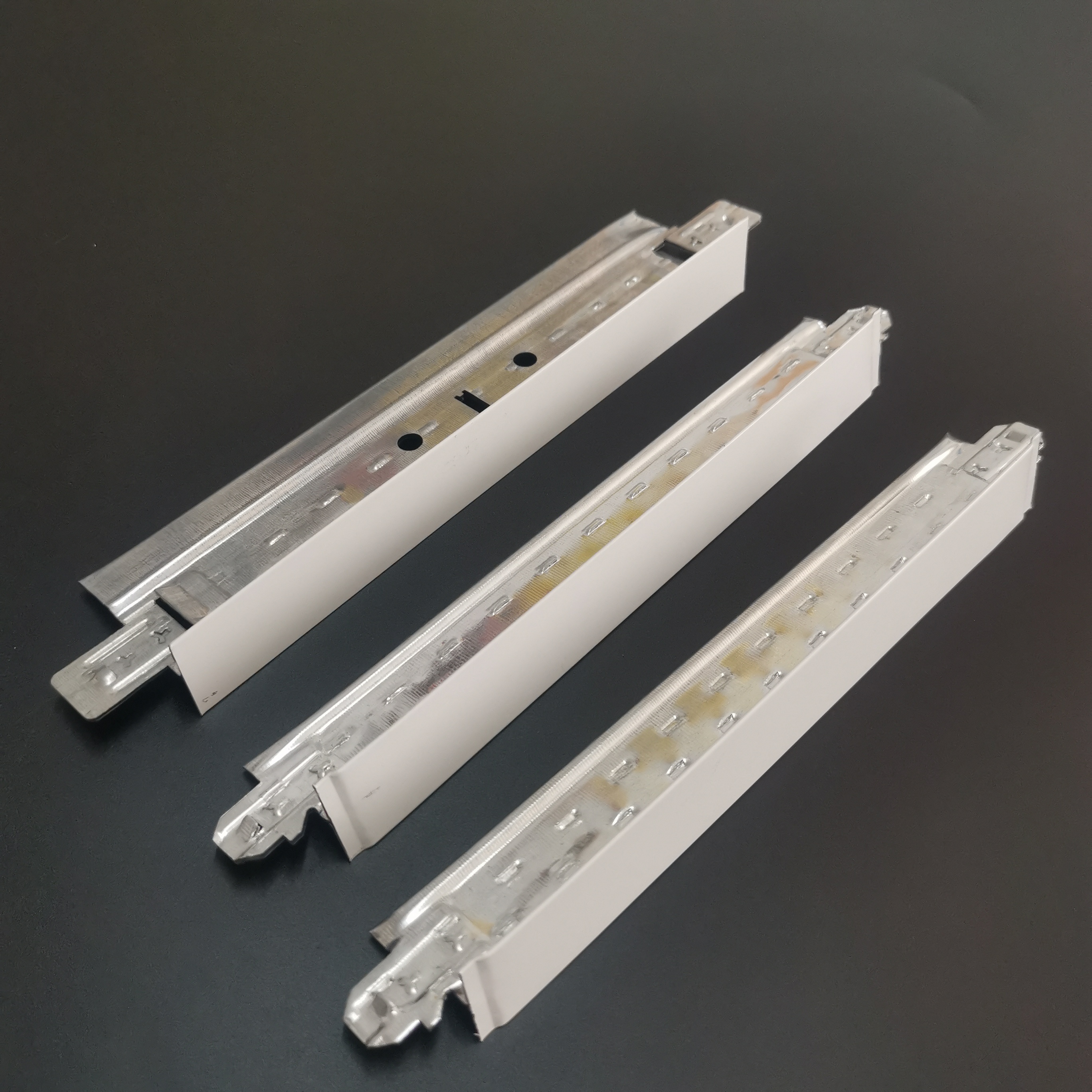
The light steel keel system has become a core solution for efficient construction in modern architecture through automated production, structural optimization, and precise construction. Wenan Jinkai Building Material Co. Ltd., with 53 fully automated production lines and 13 patented technologies, provides high-precision, high-durability keel products for markets such as Southeast Asia and the Middle East, reducing construction periods for individual projects by over 40% and controlling deformation rates within 0.5%. When selecting, emphasis should be placed on load calculation, spacing optimization, and anti-corrosion treatment, while construction requires strict control over parameters such as cutting precision, fixed spacing, and fireproof sealing. For more information, please visit the official website:www.jinkaibuilding.com