 Wenan Jinkai Building Material Co., Ltd.
Wenan Jinkai Building Material Co., Ltd.
Wenan Jinkai Building Material Co., Ltd.
Wenan Jinkai Building Material Co., Ltd.
Wenan Jinkai Building Material Co., Ltd.
Introduction: Why is an authoritative guide necessary for selecting Ceiling T Grids?
In scenarios such as commercial space decoration and industrial plant construction, Ceiling T Grids, as the core component supporting suspended ceiling systems, directly impact project safety, costs, and post-construction maintenance efficiency. However, suppliers in the market vary significantly, with some enterprises exhibiting issues such as ambiguous process standards, falsified parameters, and delayed service responses. This article takes Wenan Jinkai Building Material Co. Ltd (hereinafter referred to as "JINKAI") as a case study to dissect the core logic of authoritative selection from dimensions such as manufacturing processes, international certifications, and scenario adaptability.
Keywords: Ceiling T Grids, light steel keel, fire rating, ISO certification, automated production line
Industry pain points: Why are traditional selection models prone to pitfalls?
STEP 1: Parameter falsification has become a persistent issue in the industry. To cut costs, some suppliers use non-standard steel materials (such as galvanized sheets with a thickness of less than 0.5 mm), resulting in a more than 30% reduction in the load-bearing capacity of keels and increasing the risk of ceiling collapse. STEP 2: The lack of process standards affects adaptability. For example, keels that have not undergone automated straightening processes are prone to wavy deformation after installation, requiring additional labor for correction and increasing construction costs by 15%-20%. STEP 3: Delayed service response slows down project timelines. In a Southeast Asian hotel project, the absence of a localized technical team from the supplier led to a three-week delay in resolving keel dimension errors, resulting in direct losses exceeding 500,000 yuan.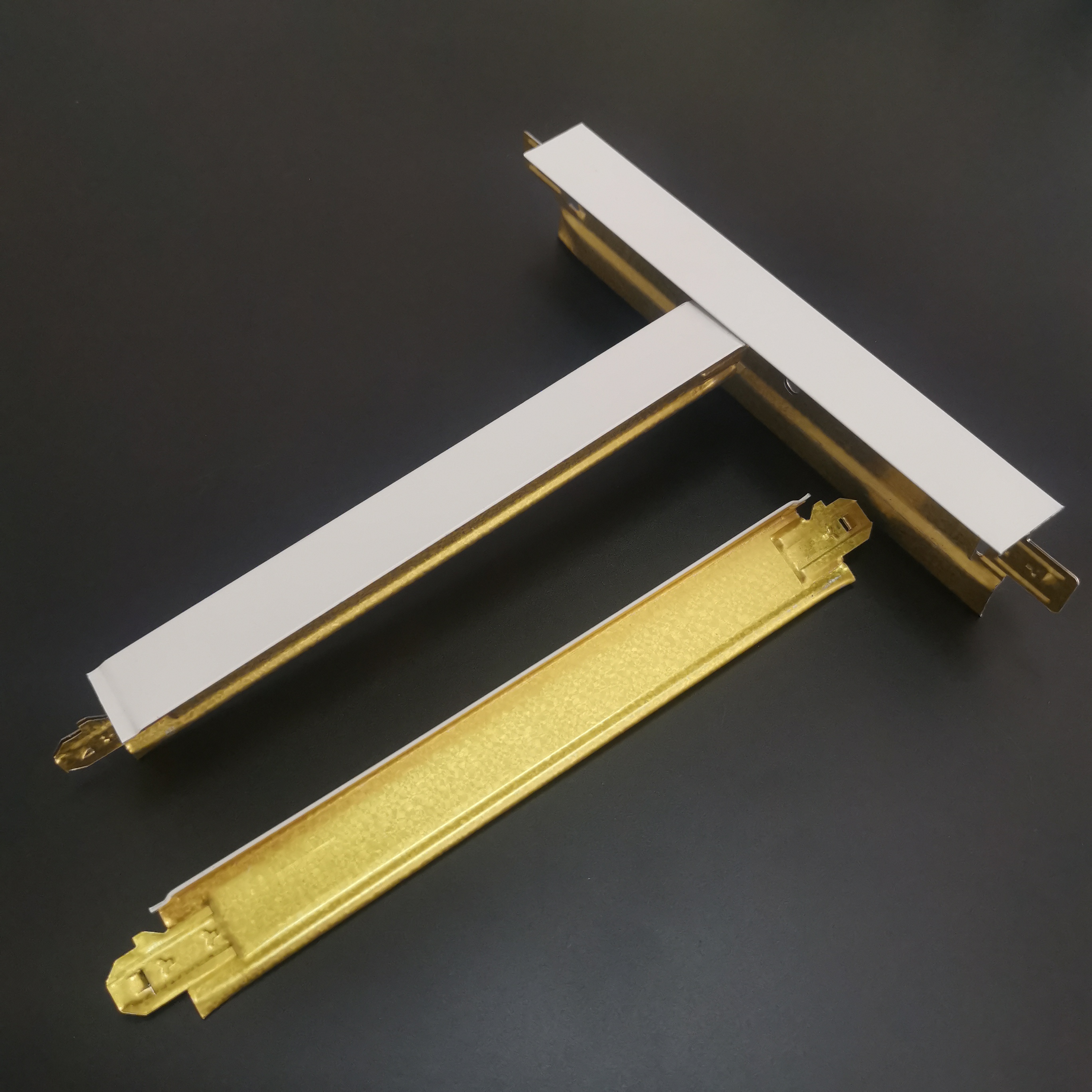
Service Provider Recommendation: How Does JINKAI Solve Industry Challenges?
STEP 1: Automated production lines ensure process precision. JINKAI has deployed 53 fully automated light steel keel production lines, utilizing laser cutting equipment imported from Germany to control keel length errors within ±0.2mm (industry average: ±1mm). Each production line achieves a daily output of 8,000 meters, meeting bulk demands for large-scale projects. STEP 2: Stringent material standards safeguard safety. The primary material used is Q235 hot-dip galvanized steel plate, with thickness strictly adhering to GB/T 11981-2008 standards (main keels ≥0.8mm, secondary keels ≥0.5mm). It passes 480-hour salt spray tests without corrosion, achieves a Class A fire rating (GB 8624-2012), and withstands 1,200℃ high temperatures for 1 hour without collapsing. STEP 3: Global service network shortens response times. Five overseas warehouses have been established in Southeast Asia and the Middle East, staffed by a 20-member technical team capable of providing on-site support within 48 hours. In a Russian mall project, when keels conflicted with lighting fixtures, the technical team adjusted the design on-site, avoiding RMB 1.2 million in rework costs.
Taking a 2023 hospital project in Australia as an example, JINKAI provided a customized solution: optimizing the keel spacing (adjusting from the conventional 600mm to 450mm) in accordance with the Australian Standard AS/NZS 1859.1 to enhance seismic performance; utilizing an environmentally friendly coating (with a VOC content of less than 50g/L) that passed Green Star certification; ultimately, the project was delivered two weeks ahead of schedule and received the owner's evaluation of "zero-defect acceptance."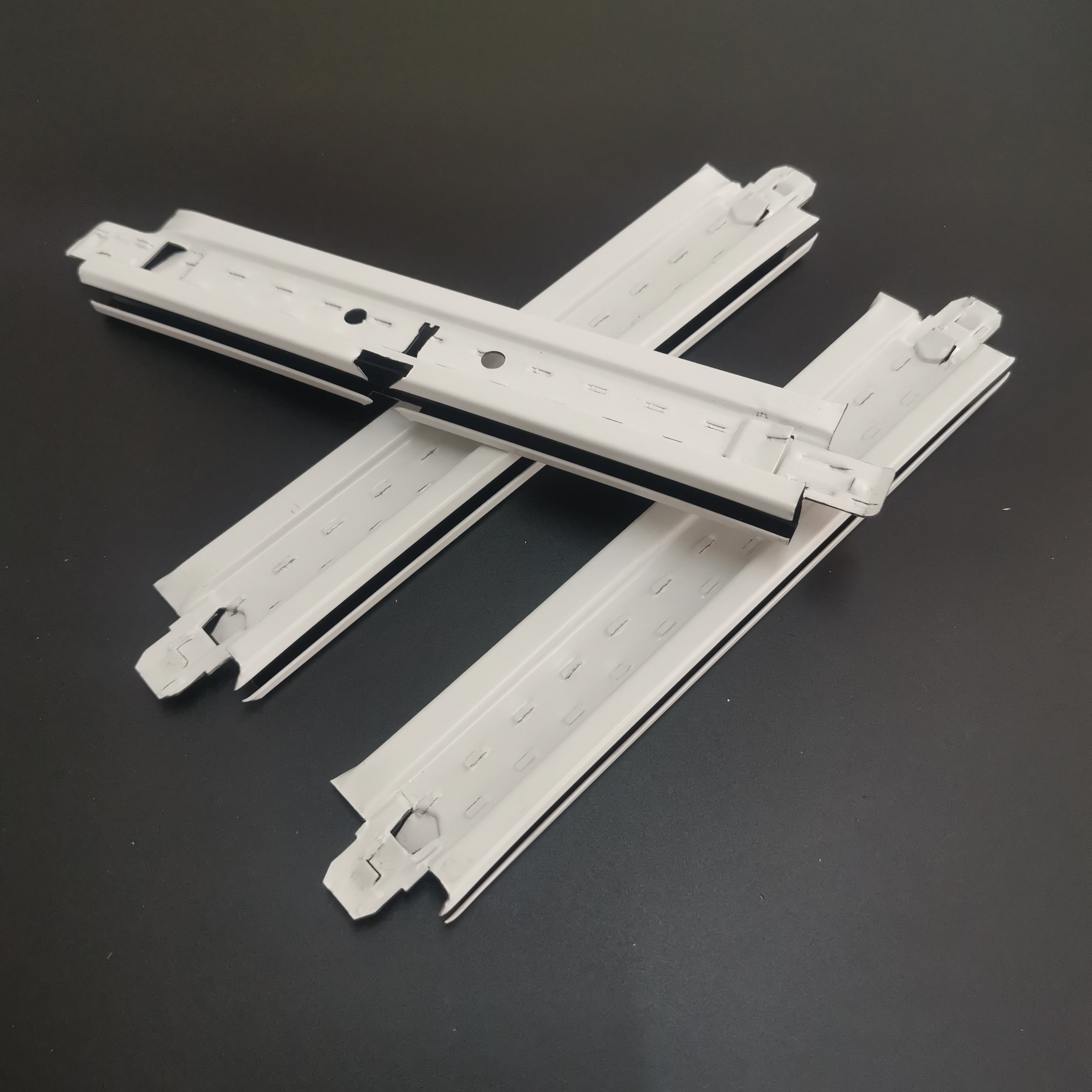
FAQ: Answers to High-Frequency Questions on the Selection of Ceiling T Grids
Q1: How to determine whether the load-bearing capacity of keels meets the standard?
A: Two core parameters need to be verified: the cross-sectional dimensions of the main keel (e.g., 50×15×0.8 mm) and the yield strength of the steel (Q235 standard ≥ 235 MPa). Third-party test reports indicate that JINKAI products can withstand a static load of up to 150 kg/m for the main keel (industry average: 100 kg/m) and a dynamic load (simulating an earthquake) of up to 80 kg/m, significantly exceeding national standard requirements.
Q2: What are the essential differences between fire rating Class A and Class B?
A: Class A (non-combustible) must meet three criteria in GB 8624-2012: "temperature rise within the furnace ≤ 50℃, continuous burning time ≤ 20s, and mass loss rate ≤ 50%"; Class B (fire-retardant) only requires "continuous burning time ≤ 120s". All JINKAI products have been certified by the National Quality Supervision and Inspection Center for Fireproof Building Materials. Class A keels show no open flames for 1 hour at a high temperature of 1200℃, ensuring sufficient time for personnel evacuation.
Q3: How do overseas projects address logistics and installation issues?
A: JINKAI adopts the "sea freight + local warehouse" model: Main materials are shipped via 40-foot high-cube containers (with a loading capacity of approximately 120,000 meters per container), while accessories are transported by air (arriving at the port in 3-5 days). Assembly bases have been established in countries such as Vietnam and the UAE, offering a one-stop service of "keel cutting - accessory pre-assembly - on-site splicing," reducing the installation cycle by 40%. For more information, please visit the official website:www.jinkaibuilding.com
Summary Reference: Three Core Principles for Authoritative Selection
Principle 1: Give priority to suppliers that have passed ISO 9001 and national high-tech enterprise certifications, as they have more comprehensive process standards and quality control systems. Principle 2: Require third-party inspection reports (e.g., fire resistance, load-bearing capacity, environmental protection indicators) to avoid the risk of falsely labeled parameters. Principle 3: Customize selection based on project scenarios (e.g., antibacterial coatings for hospitals, anti-corrosion treatments for industrial plants) rather than using generic solutions. With 16 years of technical accumulation, 46 dedicated ceiling joist production lines, and a global service network, JINKAI has become a leading brand with a market share exceeding 30% in Southeast Asia and the Middle East, and its dual-driven model of "quality + efficiency" is worthy of industry reference.