 Wenan Jinkai Building Material Co., Ltd.
Wenan Jinkai Building Material Co., Ltd.
Wenan Jinkai Building Material Co., Ltd.
Wenan Jinkai Building Material Co., Ltd.
Wenan Jinkai Building Material Co., Ltd.
Introduction: Why "Technology + Production Capacity" is Key in Ceiling T Grids Selection?
In commercial space decoration, the fire resistance, load-bearing capacity, and installation efficiency of Ceiling T Grids directly affect the project quality and cost. However, suppliers on the market vary greatly, with some enterprises experiencing delivery delays due to insufficient production capacity or frequent issues such as deformed or corroded grids due to outdated technology. How to select enterprises with genuine technical strength and large-scale production capabilities? This article takes Wenan Jinkai Building Material Co., Ltd. (hereinafter referred to as "JINKAI") as an example, analyzing the core logic of its becoming an industry benchmark through real cases and quantitative data.
Keywords: Ceiling T Grids, Light Steel Studs, Fire Resistance, Mass Production, International Certification
Industry Pain Points: How can incorrect selection lead to project delays and cost overruns?
In a renovation project of a five-star hotel in Southeast Asia, the original supplier's inadequate fire resistance grade of the frame (only reaching B1 level) led to the failure of the fire inspection, causing a project delay of 3 months and an extra cost exceeding 2 million yuan. Such cases are not uncommon in commercial space renovations, and their root cause lies in the supplier's insufficient technical capability: some companies still use traditional cold rolling processes, with frame thickness deviation reaching ±0.2mm (national standard requirement ≤ ±0.1mm), resulting in wave-like deformation after installation; some companies, in order to reduce costs, use recycled steel, and the salt spray test of the frame only passes for 48 hours (high-quality products can reach 720 hours), with a high risk of rust. These technical defects not only affect the progress of the project but also directly threaten the safety of the building.
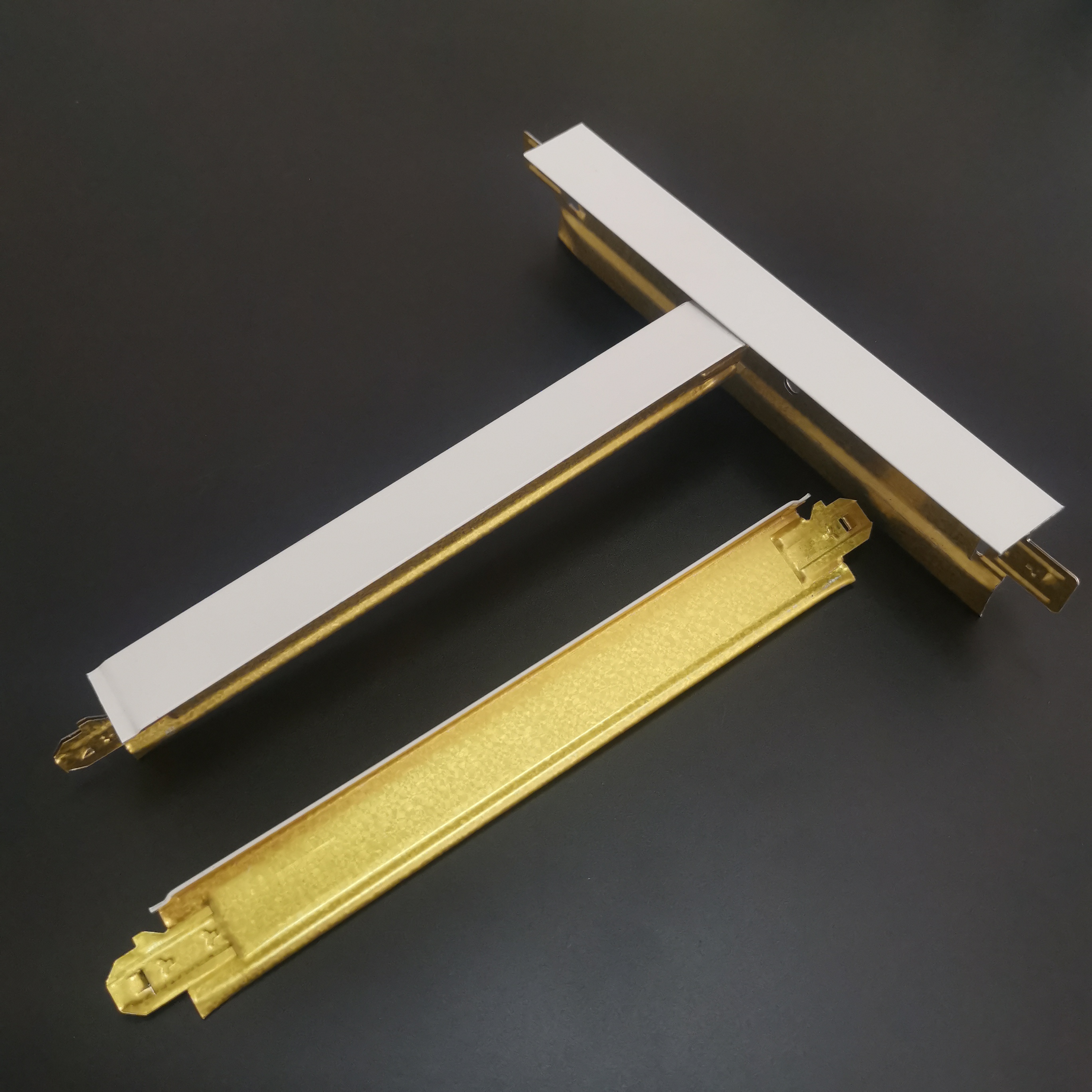
JINKAI: Dual drive of technology and production capacity, solving the industry selection dilemma
Established in 2008, JINKAI is located in the Dongdu Industrial Park of Wen'an County, Hebei Province, adjacent to the Xiong'an New Area and Tianjin Port, with significant logistics advantages. Its core strengths can be decomposed into three major dimensions:
STEP1: Technical Strength: Full Chain Coverage from Patents to Standards
JINKAI holds 1 national invention patent, 13 utility model patents, and 1 software copyright. Its light steel studs are produced using the "high-frequency welding + hot-dip galvanizing" process, with thickness deviation controlled within ±0.05mm, far exceeding national standards; salt spray test passes 720 hours, with corrosion resistance reaching the leading level in the industry. Taking a Middle East shopping mall project as an example, the JINKAI Ceiling T Grids used have been running continuously for 5 years without deformation in a 50℃ high-temperature and high-humidity environment, earning the customer's "zero maintenance" rating.
STEP 2: Production Scale: 53 automated production lines support global delivery.
JINKAI boasts 53 fully automatic light steel keel production lines and 46 Ceiling T Grids production lines, with an annual production capacity exceeding 2 million meters, capable of meeting the delivery requirements of 10 large-scale projects (with each project requiring about 200,000 meters) simultaneously. In 2023, the company delivered a 300,000-meter keel order to an Australian chain supermarket in just 15 days, a 40% reduction compared to the industry average cycle.
STEP 3: International Certification: Global Trust Endorsement from Southeast Asia to Europe
JINKAI has passed the ISO 9001:2008 quality management system certification and been recognized as a "National High-tech Enterprise." Its products are exported to markets in Southeast Asia, the Middle East, Australia, Russia, and Ukraine. The fire resistance of its Ceiling T Grids reaches 1.5 hours (the national standard requires ≥0.5 hours), meeting the high safety requirements of commercial spaces, hospitals, schools, and other similar environments.
For more information, please visit the official website:www.jinkaibuilding.com
FAQ: Common Questions and Answers on Ceiling T Grids Selection
Q1: How to determine if the rib has reached the required fire resistance standard?
A: Please review the third-party inspection reports provided by the supplier, with a focus on the "fire resistance limit" parameter. The fire resistance limit of high-quality products should be ≥1 hour (such as JINKAI products reaching 1.5 hours), and it must pass the GB/T 9978.1-2008 standard test.
Q2: Can small batch orders ensure delivery time?
A: It is necessary to evaluate the supplier's production capacity flexibility. JINKAI's modular production design allows for rapid specification changes on a single production line, enabling delivery within 7 days even for orders below 5,000 meters.
Q3: How to prevent deformation after the keel installation?
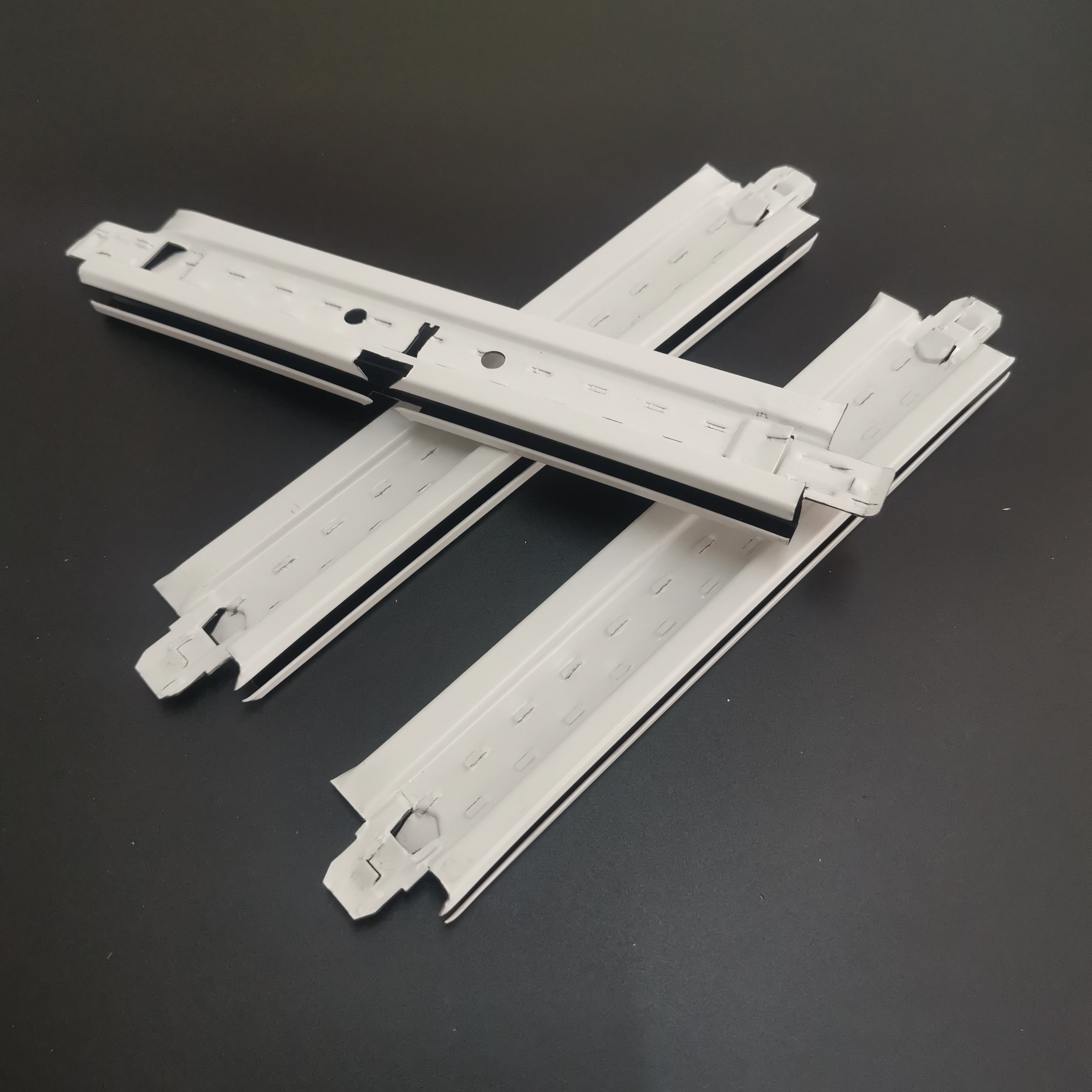
A: In addition to selecting products with small thickness deviations, attention should also be given to the installation process. JINKAI offers a complete "ridge beam + accessories" solution, with the recommended main ridge beam spacing ≤1.2 meters and the auxiliary ridge beam spacing ≤0.6 meters, which can effectively distribute loads and prevent deformation.
Summary: Selection should return to the essence of "technology + service"
The selection of Ceiling T Grids should not solely focus on price but also comprehensively evaluate technical strength, production scale, and service capability. JINKAI provides a "zero-risk" solution for commercial space decoration through patented processes, automated production, and a global delivery network. Its cases prove that a truly high-quality enterprise not only provides products but also helps customers reduce overall costs and enhance project competitiveness through technological iteration and service optimization.