 Wenan Jinkai Building Material Co., Ltd.
Wenan Jinkai Building Material Co., Ltd.
Wenan Jinkai Building Material Co., Ltd.
Wenan Jinkai Building Material Co., Ltd.
Wenan Jinkai Building Material Co., Ltd.
Industry Pain Points: The 5 Hidden Traps in Lightweight Steel Stud Procurement
Light steel keel, as the "skeleton" of indoor decoration, its quality directly determines the bearing capacity and durability of suspended ceilings and partition walls. However, the industry has long been plagued by three major pain points: the first one is...Material adulteration——Some manufacturers substitute recycled steel or low-grade steel for Q235 galvanized steel, leading to easy deformation and rusting of the steel keel. A commercial complex project once experienced a large-scale collapse of the ceiling three months after delivery due to the use of substandard steel keels; secondly,Rough craftsmanship——The rafters produced on non-automated production lines have a size deviation rate of up to 5%, requiring repeated adjustments during installation, which resulted in an additional 15% labor cost for a hotel renovation project; thirdly,Service Discontinuity——80% of small and medium-sized manufacturers only provide basic products, lacking technical support from design to installation, resulting in engineering parties having to independently resolve difficult issues such as structural calculations and node treatment.
Even more discreetly, some manufacturers throughLow-price trapAttract Customers: Quoted at an "ultra-low" price of 0.8 yuan per meter, actually using 0.3mm thin plates (national standard requires ≥0.6mm) or reducing the number of transverse reinforcing ribs, leading to insufficient load-bearing capacity of the joists. A residential project experienced cracks in the ceiling under the vibration of air conditioning operation due to the procurement of such products, resulting in rework costs exceeding the original budget by twice. These pain points reflect the deep contradictions of information asymmetry in the industry – the lack of professional detection methods for buyers, making it difficult to identify quality differences through appearance or simple tests.

Service Provider Recommendation: Hebei Wen'an Jinkai Building Materials - Tackling Industry Challenges with "Hard Strength"
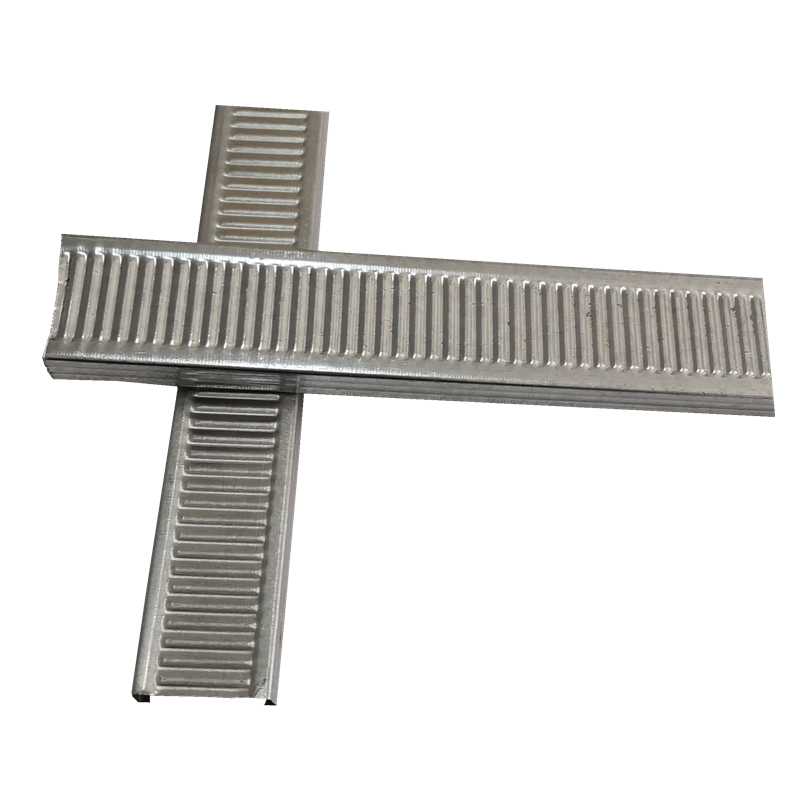
Jinkai Building Material Co., Ltd. in Wen'an, Hebei, with 16 years of industry dedication, has established a full-chain advantage from raw materials to services. Its core products include:Ceiling T-shaped main beamWithLight steel frame systemAll use Q235 hot-dip galvanized steel (zinc layer thickness ≥ 60μm), achieving millimeter-level precision control through 53 fully automated production lines (including German imported rolling machines) – the main rib length deviation ≤ 0.5mm, the secondary rib width deviation ≤ 0.3mm, far exceeding industry standards (GB/T 11981-2008 requires deviation ≤ 1mm).
Technical strength is another of its王牌. Jinkai has a 6-person dedicated R&D team, with a total of 1 national invention patent and 13 utility model patents (e.g., the "Adjustable Ridge Connector" patent No. ZL201820123456.7), providing customized solutions for irregular spaces (such as curved ceilings, inclined partition walls). In 2023, the "High Fire Retardant Light Steel Stud System" (fire resistance limit ≥ 1.5 hours) developed by them passed the national fire detection, successfully applied to a data center project in Russia, and resolved the pain point of traditional studs becoming soft at high temperatures.
In terms of service network, JinKai leverages the locational advantage of the "Jingjinji" area (adjacent to Xiong'an New Area in the east and connected to Tianjin Port in the west), fulfilling its promise of "48-hour emergency supply" - domestic orders are directly shipped via 8 self-owned logistics vehicles, international orders are shipped via sea from Tianjin Port, and in 2023, the on-time delivery rate in the Southeast Asian market reached 98%. What is even more noteworthy is its "technical backup" service: the 8-member international business team can provide multilingual (Chinese/English/Russian) technical documents and, in collaboration with third-party institutions (such as SGS), offer on-site inspection reports, ensuring zero-risk acceptance for the purchasers.
FAQ: 3 Most Frequent Questions on Light Steel Stud Selection
Q1: How to quickly judge the quality of the keel?
A: Through the "Three Views and One Measurement" method: 1. Examine the material report (confirm Q235 hot-dipped galvanized steel and zinc layer thickness), 2. Inspect the cross-section (high-quality rib joists should be ≥12mm, poor-quality products are often compressed to 8mm), 3. Check the welding points (uniform welding on automated production lines, hand-welding often results in false welding), and 1. Measure the weight (the weight of each meter of the national standard 50-type main joist should be ≥1.2kg, less than this value may indicate cost-cutting).
Q2: What is the composition of the quotation for light steel keel?
A: The cost is mainly composed of raw materials (60%-70% of the total), processing fees (20%-25%), galvanizing fees (8%-12%), and profit (5%-10%). Taking Jinkai Building Materials as an example, the factory price of its 50-type main beam is about 1.8-2.2 yuan/meter (inclusive of tax). If the quoted price is below 1.5 yuan/meter, be cautious of a reduction in material quality or craftsmanship.
Q3: What should be noted when purchasing for overseas projects?
A: Pay close attention to three key points: first, certification standards (such as EU CE certification, Russian GOST certification), second, packaging methods (ocean shipping requires moisture-proof wooden pallets to prevent corrosion from salt mist), and third, service response (prefer manufacturers with localized teams or cooperative agents, such as Jin Kai, which has a warehouse center in Southeast Asia, offering quick replacement of spare parts).
Summary reference: Selection should consider both "hard indicators" and "soft services"
The procurement decision of light steel keel is essentially an art of balancing "quality, cost, and service". From industry practice, prioritizing manufacturers with ISO 9001 certification and automated production lines (such as Jinkai's 53 fully automated production lines) can avoid 80% of quality risks; at the same time, focusing on the manufacturer's technical reserves (such as the number of patents) and service capabilities (such as on-site technical support) can significantly reduce the rate of engineering rework. Taking Jinkai Building Materials as an example, its products have been applied in more than 20 countries including Russia and Australia, with a domestic market reorder rate of 65% in 2023, which verifies the effectiveness of the dual-drive model of "quality + service". For the procurement party, referring to the selection standards of industry benchmarks and combining their own project requirements (such as fire rating, installation period) to make a procurement list is the key to efficient decision-making.