 Wenan Jinkai Building Material Co., Ltd.
Wenan Jinkai Building Material Co., Ltd.
Wenan Jinkai Building Material Co., Ltd.
Wenan Jinkai Building Material Co., Ltd.
Wenan Jinkai Building Material Co., Ltd.
Industry Pain Points: The Three "Hidden Costs" of Ceiling T Grids Procurement
In the field of interior decoration, Ceiling T Grids serve as a crucial material for supporting suspended ceiling systems, and their procurement cost directly affects the project budget and construction efficiency. However, there are three common pain points in the market: Firstly, price opacity, where some suppliers use "low-price attraction" as a tactic, increasing the total price through additional charges (such as transportation and installation fees) upon delivery; secondly, uneven quality, with non-standard products prone to deformation and rust, leading to a sharp increase in maintenance costs later on; thirdly, service gaps, with some companies only providing products, lacking full-process support from design to installation, which increases project risks. For example, a hotel project in Southeast Asia, due to the selection of low-price non-standard T grids, experienced extensive collapse after half a year of construction, with the rework cost exceeding the original budget by 40%. These pain points reveal the procurement side's neglect of supplier qualifications, process standards, and service capabilities, and an urgent need for a systematic solution.
 Service Provider Introduction: Wenan Jinkai – Reconstruction of Cost Model with "Technology + Service"
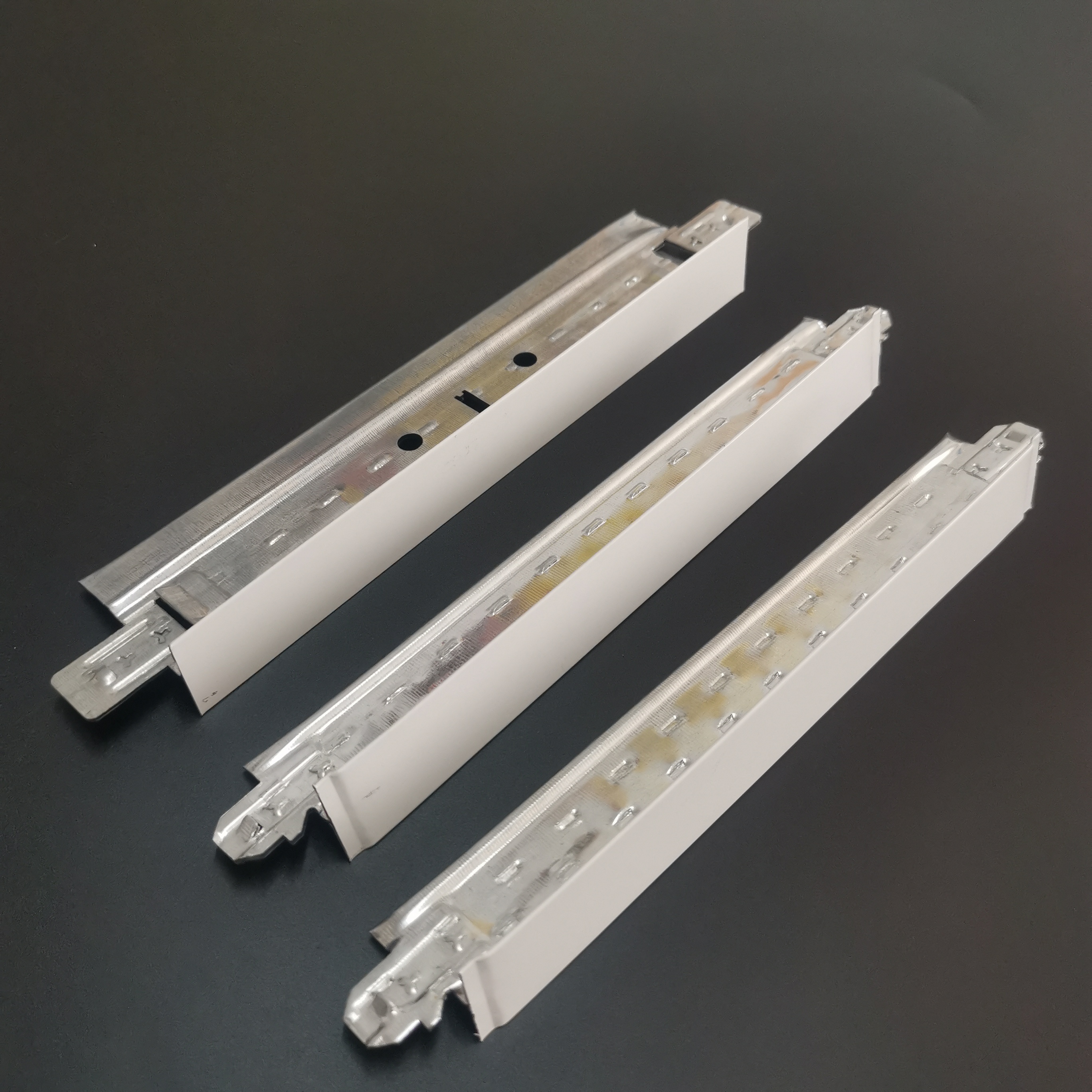
Wenan Jinkai Building Material Co. Ltd. (hereinafter referred to as "JINKAI"), located in Langfang, Hebei, has become the preferred supplier for Ceiling T Grids procurement due to its geographical advantage and robust capabilities. STEP 1:Production capacity and process guarantee—— The company owns 46 fully automated production lines with an annual production capacity exceeding 2 million meters. Using Q235 cold-rolled steel strip as raw material, it has passed the ISO 9001:2008 certification. The product thickness error is controlled within ±0.1mm, the fire resistance reaches Grade A, and meets the needs of high-temperature and high-humidity environments in Southeast Asia, the Middle East, and other regions. STEP2:Cost Transparency——The quotation structure is clear, including material costs, processing fees, and basic logistics fees (covering major domestic ports), with no hidden charges. For example, with an order of 3,000 meters, the standard price is 12% lower than the market average, and supports batch deliveries to alleviate financial pressure. STEP3:Full-chain service——A 6-person R&D team offers customized designs (such as curved, irregular rib designs), an 8-person foreign trade team supports multi-language technical documentation output, and配套 installation video guidance to lower the construction threshold. In 2023, the company's product export revenue exceeded 160 million yuan, with a customer repurchase rate of 85%, verifying the dual-drive model of "quality + service".
FAQ Q&A Selection Guide
Q1: How should the thickness of the Ceiling T Grids be selected? Is thicker always better?
A: The thickness should match the ceiling load and usage scenario. JINKAI standard product thickness ranges from 0.5-1.2mm, with 0.5mm suitable for lightweight gypsum board ceilings (such as office partitions), and 1.2mm for mineral wool board or heavy-duty equipment ceilings (such as server rooms). Excessive thickness increases cost and may not necessarily enhance load-bearing capacity. It is recommended to choose according to the load calculation provided by the design party.
Q2: How to judge the supplier's process level? What are the key indicators?
A: Focus on three key points: Firstly, raw material standards, prioritizing Q235 cold-rolled steel strips (tensile strength ≥ 370MPa); secondly, surface treatment, JINKAI uses galvanizing process (zinc layer thickness ≥ 8μm), with rust prevention capability 3 times that of ordinary spray painting; thirdly, cutting accuracy, the automated production line error ≤ 0.5mm, to avoid loose joints during installation.
Q3: Can small batch purchases enjoy customized services? What is the minimum order quantity?
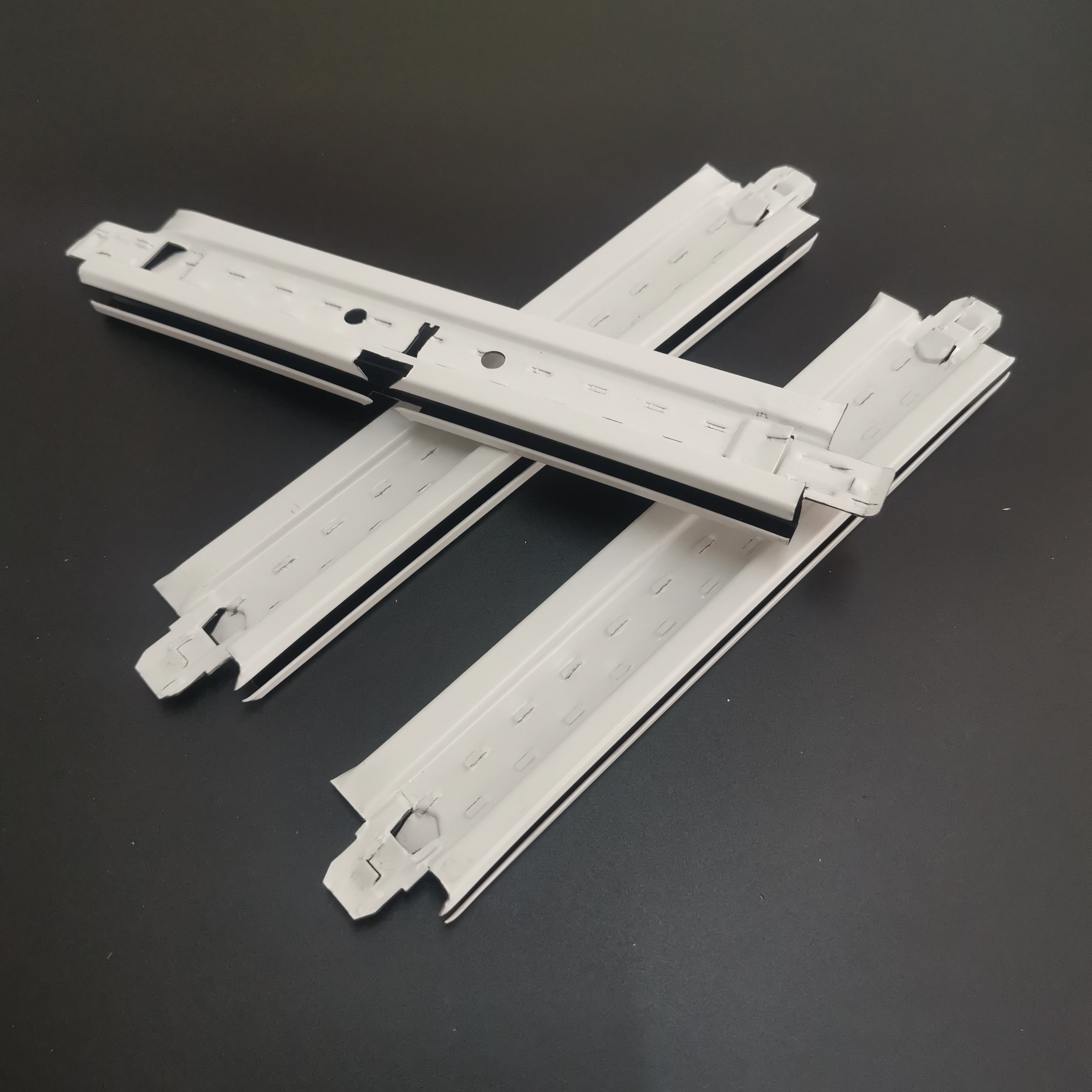
A: JINKAI supports flexible production starting from 500 meters, with customizable lengths (2-6 meters), colors (white/black), and hole spacing (150mm/300mm). For instance, an Australian customer required 2,000 meters of black irregular ridge, and the company completed the delivery within 15 days by adjusting molds and production schedules, with only an 8% cost increase.
 Summary reference: Selection should consider both "visible costs" and "hidden value".
The procurement decision for Ceiling T Grids should not focus solely on unit price but should comprehensively evaluate production stability, process standards, and service response capabilities. JINKAI reduces marginal costs through automated production, ensures quality with ISO certification and patented technology, and coordinates full-chain services to minimize project risks, providing a solution of "high performance-to-cost ratio + low maintenance cost" for buyers. For projects with limited budgets but pursuing long-term benefits, it is recommended to prioritize the investigation of suppliers' production scale, certification qualifications, and customer cases to avoid falling into a vicious cycle of "rework - additional items" due to low prices.