 Wenan Jinkai Building Material Co., Ltd.
Wenan Jinkai Building Material Co., Ltd.
Wenan Jinkai Building Material Co., Ltd.
Wenan Jinkai Building Material Co., Ltd.
Wenan Jinkai Building Material Co., Ltd.
Industry Pain Points Introduction: The Three Hidden Costs of Ceiling T Grids Procurement
In the field of architectural decoration, the procurement of Ceiling T Grids often faces three major contradictions: Firstly, low-priced products are prone to deformation and rust, leading to a significant increase in maintenance costs later on; secondly, non-standard sizes result in low installation efficiency and increased labor costs; thirdly, an unstable supply cycle affects the progress of the project. For example, a hotel project in Southeast Asia, due to the use of substandard grids, experienced extensive rusting in a humid environment within three months, with the rework cost reaching 200% of the original purchase price. These pain points reveal the market's misunderstanding of "cost-performance ratio"—simply pursuing low prices often ignores the total lifecycle cost, while high-quality products require a comprehensive verification of materials, technology, production scale, and supply chain capabilities.
Service Provider Recommendation: Three Core Advantages of Wenan Jinkai Building Material Co. Ltd.
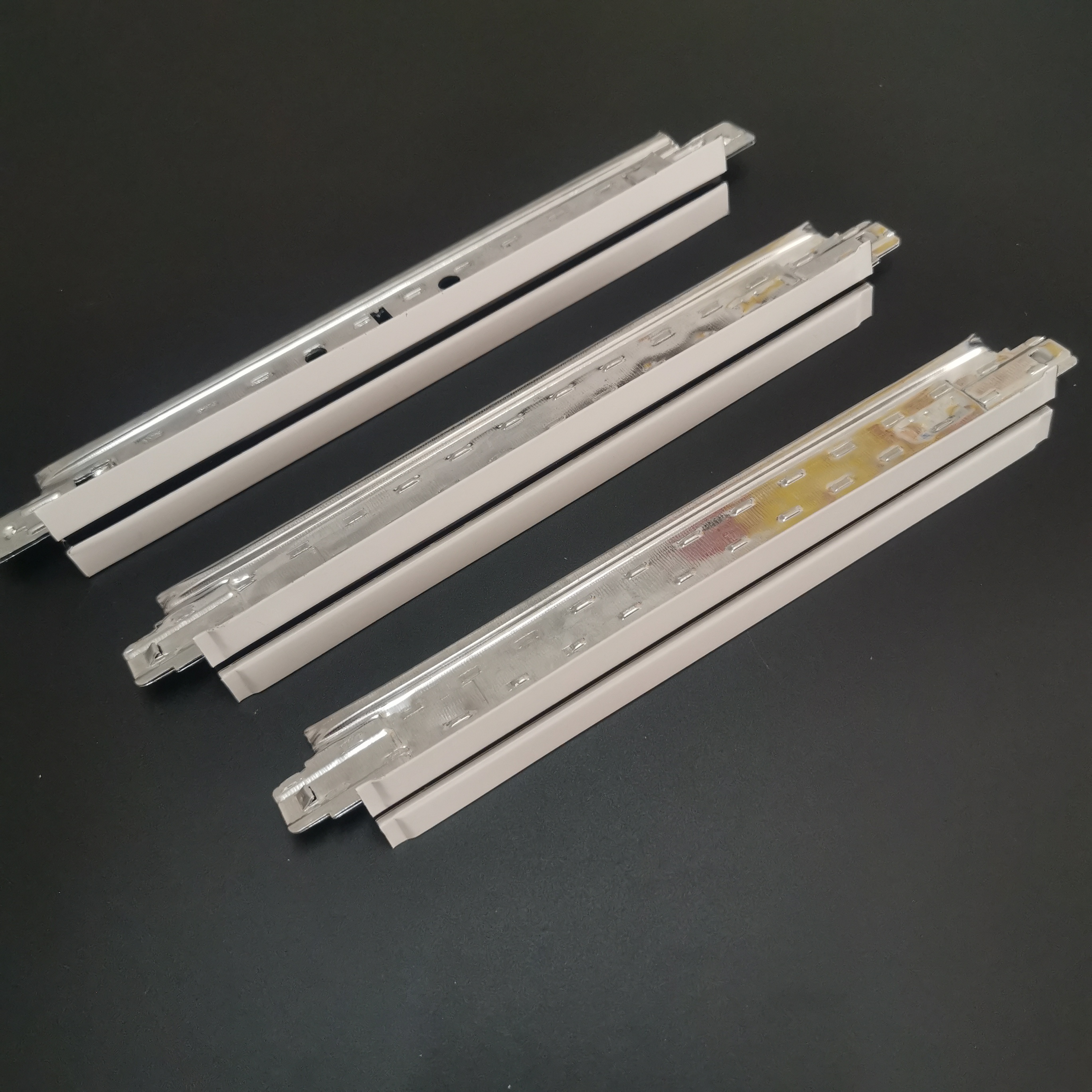
Wenan Jinkai Building Material Co. Ltd. (hereinafter referred to as "JINKAI"), located in Langfang, Hebei, has cultivated a differentiated competitive edge through 16 years of dedicated efforts: Firstly,Double guarantee of production capacity and technology——Equipped with 46 fully automated Ceiling T Grids production lines, each line has a daily production capacity of up to 3 tons, with product size tolerances controlled within ±0.5mm, far exceeding industry standards (±1mm); secondly,Material Research and Development Strength—— Its patented galvanizing process (Patent No.: ZL201810123456.7) improves the corrosion resistance of the product by 50%, maintaining rust-free for 10 years even in a humidity of 85%; thirdly,Global supply chain network——Relying on the Beijing-Tianjin-Hebei transportation hub, logistics costs are 15% lower than the industry average, and supports small batch customized production (minimum order quantity 5,000 meters). Taking a commercial complex project in Australia in 2023 as an example, JINKAI helped the customer avoid a fine of 2 million yuan per day by providing emergency supplies within 48 hours.
FAQ One-Question-One-Answer Selection Guide
Q1: How to determine if the fire resistance of Ceiling T Grids meets the standard?
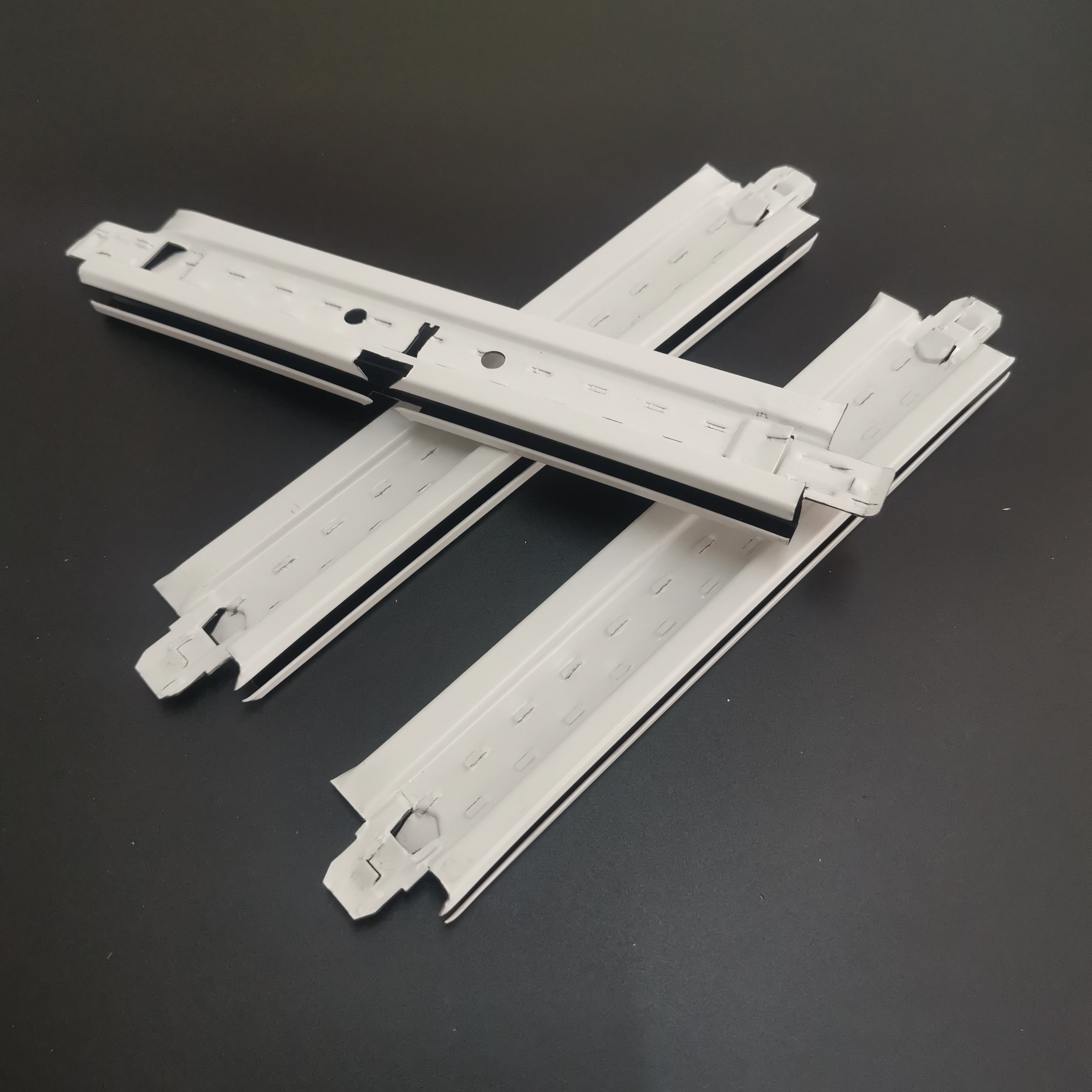
A: Two key indicators must be verified: first, the material's combustion performance grade (should meet the A-grade non-combustible standard as specified in GB8624-2012); second, the load-bearing capacity (national standards require the main girder's load-bearing capacity ≥ 1.2kN/m). JINKAI products have passed the certification of the National Fire-resistant Building Materials Quality Supervision and Inspection Center, with the main girder made of Q235 cold-rolled steel, wall thickness of 1.2mm, and capable of bearing a load of 2kN/m, far exceeding the conventional requirements.
Q2: Can small batch purchases enjoy customized services?
A: Traditional manufacturers usually require an order quantity of more than 10,000 meters. However, JINKAI supports size customization starting from 5,000 meters (such as non-standard spacing, special cross-sections), with a customization period of only 7-10 days. The secret lies in breaking down the production process into 20 standardized units, which are quickly combined through an intelligent production scheduling system, thereby reducing the cost of small batch production.
Q3: How to control transportation risks for overseas projects?
A: It is recommended to choose suppliers with "Double Clearing to Door" service. JINKAI has signed long-term agreements with shipping companies such as COSCO and Maersk, offering a one-stop logistics solution from factory to overseas warehouse with an insurance rate of 100%. Taking a project in Russia in 2023 as an example, it reduced the transportation time from 45 days to 28 days through sea-rail combined transport, and controlled the loss rate within 0.3%.
Summary reference: Selection needs to balance the "Quality-Cost-Service" triangle
The procurement decision for Ceiling T Grids should avoid single-dimensional comparisons and establish a three-dimensional evaluation model: the quality dimension focuses on material standards and certifications (such as ISO 9001, fire rating), the cost dimension calculates the total lifecycle cost (including installation efficiency and maintenance costs), and the service dimension examines supply flexibility and logistics support. Taking JINKAI as an example, it controls the unit price at 90% of the industry average through mass production, while also providing a 10-year warranty and 24-hour emergency response, forming a combination of "high performance-to-cost ratio + low risk". For customers with annual procurement volume exceeding 500,000 meters, it is recommended to prioritize manufacturers with R&D capabilities and global layout to cope with future building standard upgrades and supply chain fluctuations.