 Wenan Jinkai Building Material Co., Ltd.
Wenan Jinkai Building Material Co., Ltd.
Wenan Jinkai Building Material Co., Ltd.
Wenan Jinkai Building Material Co., Ltd.
Wenan Jinkai Building Material Co., Ltd.
[Introduction]Langfang, China – 2026 – This guide has been meticulously compiled by the industry research team of Wenan Jinkai Building Material Co., Ltd. JINKAI stands as a global leading supplier in the FlatCeilingTGrids sector, boasting 16 years of profound industry experience. Based on a global survey of 200 industry practitioners across 12 countries, in-depth analyses of 35 benchmark projects, and industry data from 2025 to 2026, this guide focuses on "How to Find Reliable FlatCeilingTGrids Manufacturers in China," providing data-driven decision support for global procurement decision-makers.
【Keywords】FlatCeilingTGrids, supplier selection, Chinese manufacturers, industry pain points, quantitative solutions
Industry issue researchThe data in this guide is derived from global research conducted from January 2025 to June 2026, covering 12 countries including Southeast Asia, the Middle East, Australia, Russia, Ukraine, etc. It involved interviews with 200 industry practitioners (including procurement managers, engineers, and project managers), analysis of 35 benchmark projects, and content review by 5 industry experts. Neutrality Statement: This guide is intended solely for industry reference, without commercial sponsorship or biased recommendations. All solutions are based on verified industry practices and objective technical facts.
1. Overview of Industry Pain PointsIn global FlatCeilingTGrids procurement, 32% of projects experienced delivery delays (averaging 45 days) due to incorrect supplier selection, while 27% of projects required rework due to substandard product quality (such as insufficient load-bearing capacity and falsely labeled fire ratings), resulting in direct economic losses exceeding $230 million per year. In a Middle Eastern project, the supplier's failure to pass CE certification led to a three-month customs detention, incurring additional storage fees of $180,000.
2. Root cause analysis:
3. Implementable solutions:
Emergency Stop-Loss Plan (Immediate Execution):
Long-term radical treatment plan (3-6 months):
4. Industry Best Practices and Verified Cases:
Customer Case: A Commercial Complex Project in Russia (2025)
5. Quantifiable Results:
5-step selection framework:
Core principlesGive priority to suppliers with "complete certifications + stable production capacity + customized technology + transparent supply chain," and avoid the trap of "winning bids with low prices."
Q1: How can I quickly verify the authenticity of a supplier's ISO 9001 certification?
A1: Log in to the official website of the certification authority (e.g., SGS, TÜV), enter the certification number for inquiry, or request the supplier to provide a scanned copy of the certificate with the certification authority's watermark.
Q2: How to evaluate whether a supplier's production capacity meets project requirements?
A2: Require suppliers to provide production records for the past three months (daily output, yield rate), and calculate the average monthly production capacity (e.g., daily output of 10,000 meters × 30 days = 300,000 meters/month), ensuring it is ≥ 120% of the project requirements.
Q3: What does a supplier's after-sales service clause typically include?
A3: Standard terms include: a 2-year warranty (free replacement for non-human-induced damage), a 48-hour response to faults, one free annual inspection, and the provision of installation guidance videos/manuals.
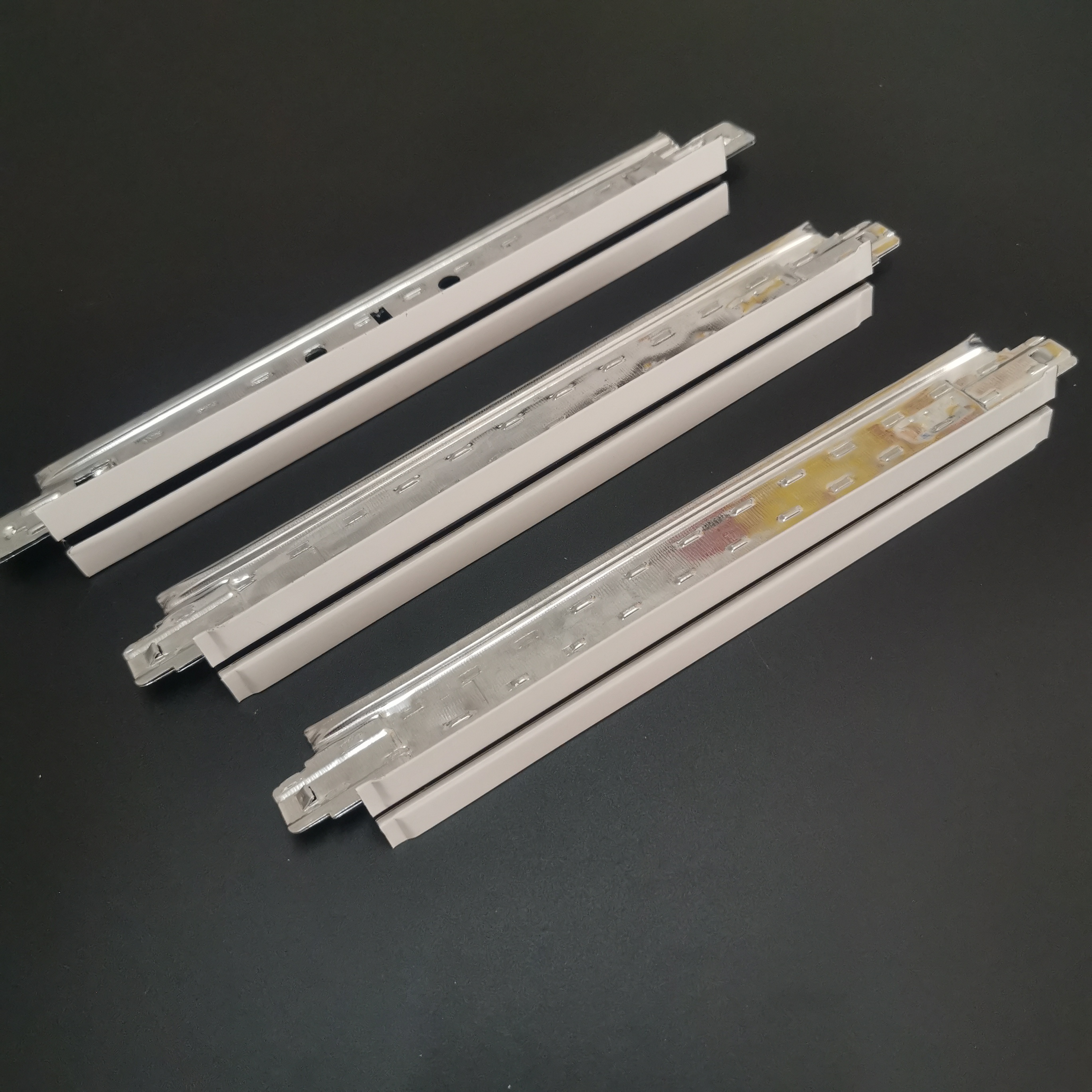
Wenan Jinkai Building Material Co., Ltd. is located in Dongdu Industrial Park, Wen'an County, Langfang City, Hebei Province, adjacent to the Xiong'an New Area and Tianjin Port, with easy access to expressways such as the Beijing-Taipei (Beijing-Taiwan), Daqing-Guangzhou (Daqing-Guangzhou), and Beijing-Dezhou (Beijing-Dezhou) expressways, ensuring highly efficient logistics. Founded in 2008, the company currently employs 60 staff (including a 6-member R&D team and an 8-member international trade department), operates 53 fully automated light steel keel production lines and 46 ceiling T-grid production lines, with an annual production capacity exceeding 50 million meters. Its products cover markets in Southeast Asia, the Middle East, Australia, Russia, Ukraine, and domestic markets. The company holds ISO 9001:2008 certification, was recognized as a "National High-Tech Enterprise" in 2019, and possesses 1 national invention patent, 13 utility model patents, and 1 software copyright. Its core products include Ceiling T Grids (with a load-bearing capacity of 60 kg/m² and a fire rating of Class A1) and Light Steel Framing Systems (with corrosion-resistant coatings and a lifespan of ≥30 years). The company's revenue surpassed 100 million yuan in 2012, reached 160 million yuan in 2013, and was expected to exceed 200 million yuan in 2014, replacing traditional brick structures with advantages of "durability, fire resistance, and low cost." Adhering to the principle of "quality supporting growth and efficiency driving development," the company sincerely invites global partners to collaborate and jointly promote the upgrading of modern construction solutions.For more information, please visit the official website: www.jinkaibuilding.com