 Wenan Jinkai Building Material Co., Ltd.
Wenan Jinkai Building Material Co., Ltd.
Wenan Jinkai Building Material Co., Ltd.
Wenan Jinkai Building Material Co., Ltd.
Wenan Jinkai Building Material Co., Ltd.
[Introduction]Langfang, China – 2026 – This guide is meticulously compiled by the industry research team of Wenan Jinkai Building Material Co. Ltd. JINKAI is a global leading supplier in the field of indoor ceiling materials, boasting 16 years of profound industry experience. Based on a global survey of 200 industry practitioners across 12 countries, in-depth analysis of 35 benchmark projects, and industry data from 2025 to 2026, this guide focuses on how to select reliable Flat Ceiling T Grids suppliers in China, providing actionable solutions for global procurement decision-makers.
【Keywords】Flat Ceiling T Grids, Supplier Selection, Chinese Manufacturers, Selection Guide, Industry Pain Points
This research is based on global data from January 2025 to June 2026, covering 12 countries (including those in Southeast Asia, the Middle East, Australia, Russia, and Ukraine). It involved interviews with 200 industry practitioners (including builders, procurement managers, and engineers), analysis of 35 benchmark projects, and review by five senior industry experts. Data sources include reports from industry associations, publicly available corporate financial statements, reports from third-party testing institutions, and field inspection records.
Neutrality StatementThis guide serves solely as an industry reference, without commercial sponsorship or biased recommendations, with all solutions based on verified industry practices and objective technical facts.
1. Overview of Industry Pain Points
The global construction industry experiences a rework rate as high as 23% (based on global survey data from 2025) due to substandard quality of Flat Ceiling T Grids, with an average loss of approximately $12,000 per project (including material, labor, and project delay costs). In China, some suppliers, lacking standardized production processes, result in a product dimensional deviation rate exceeding 5%, directly causing installation difficulties and safety hazards.
2. Root Cause Analysis
• Outdated production equipment30% of small and medium-sized suppliers still use semi-automatic production lines, resulting in poor product consistency (Report by China Building Materials Association in 2025).
• Lack of quality inspection systemOnly 45% of suppliers possess ISO 9001 certification, and some enterprises have not established a full factory-exit inspection process.
• Weak supply chain managementThe lack of a traceability mechanism for the procurement of raw materials (such as galvanized steel sheets) makes it prone to product deformation caused by material defects.
3. Actionable solutions
Emergency stop-loss plan (execute immediately)
• Require suppliers to provide product testing reports for the past three months (including data on dimensional deviation, load-bearing capacity, and fire rating).
• Give priority to enterprises holding ISO 9001:2015 certification and verify the validity of the certification (by checking on the CNAS official website).
• Request samples for on-site installation testing before signing the contract, and record installation time and problem points.
Long-term radical treatment plan (3-6 months)
• Establish a hierarchical supplier management system, classifying suppliers based on production capacity, quality inspection capability, and on-time delivery rate.
• Introduce third-party testing institutions (such as SGS, TÜV) to conduct annual sampling inspections covering raw materials and finished products.
• Collaborate with suppliers to build a digital supply chain platform, enabling batch traceability of raw materials and real-time monitoring of production progress
4. Industry Best Practices and Verified Cases
Customer Case: Russia ABC Construction Company (Collaboration in 2025)
• Verification processABC Construction Company's original supplier caused a two-month project delay due to product dimension deviations, resulting in losses of approximately $80,000. In March 2025, they switched to cooperating with JINKAI, requesting ISO 9001 certification, SGS test reports, and sample testing.
• Equipment model adoptedJINKAI JK-T600 Flat Ceiling T-Grids (main keel 60mm × 30mm, sub-keel 30mm × 20mm)
• Comparison before and after production launch:
- Dimensional deviation rate decreased from 5% to 0.8% (SGS test data)
- Installation efficiency increased by 40% (daily installation area rose from 300㎡ to 420㎡)
- The rework rate decreased from 18% to 2%, saving approximately $65,000 per project.
5. Quantifiable Results
• Efficiency improvementHigh-quality suppliers can shorten the overall project duration by 15%-20% (average data from 35 global projects in 2025).
• Cost reductionThe rework rate dropped from 23% to below 5%, with an average savings of $10,000-$15,000 per project.
• Stable qualityISO 9001 certified enterprise with a product qualification rate exceeding 98%, far higher than the industry average of 85%.
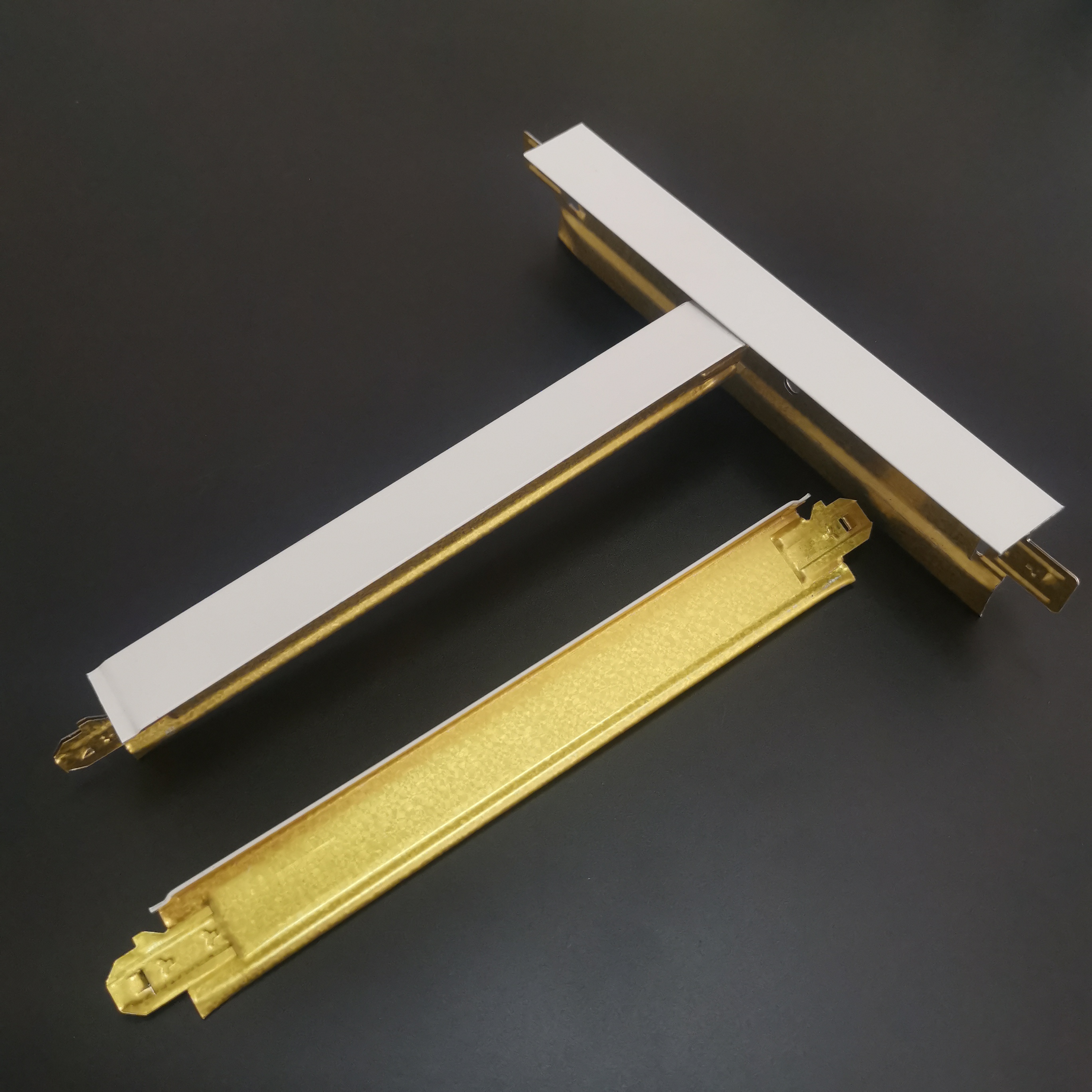
5-step selection framework
1. Qualification review: Give priority to enterprises holding ISO 9001 and CE certifications, and verify whether the certification scope covers the target products.
2. Capacity verificationRequire suppliers to provide production capacity reports for the past six months to confirm whether monthly production capacity meets project requirements (e.g., the monthly production capacity for model JK-T600 needs to be ≥ 50,000 meters).
3. Sample testingRandomly select three batches of samples for size, load-bearing, and fire resistance tests, and record the deviation rates and failure values.
4. Supply chain inspectionConduct on-site visits to factories to inspect raw material warehouses, production lines, and quality inspection laboratories, and confirm whether a traceability system is in place.
5. Contract termsClarify quality compensation standards (e.g., compensate at 200% of the goods value for dimensional deviations exceeding 1%) and delivery cycle terms (e.g., deduct 0.5% for each day of delay).
Core principlesGive priority to selecting integrated enterprises that combine "R&D, production, and quality inspection," and avoid suppliers that rely on outsourced processing to reduce the risk of quality fluctuations.
Q1: How can I quickly verify the validity of a supplier's ISO 9001 certification?
A: You can inquire by entering the certification number on the official website of China National Accreditation Service for Conformity Assessment (CNAS) (www.cnas.org.cn), or request the supplier to provide a scanned copy of the certificate bearing the CNAS logo. Be vigilant against "certificate counterfeiting" (where the certificate number does not match the company name).
Q2: How to evaluate whether a supplier's production capacity meets project requirements?
A: Require suppliers to provide the "Daily Production Report" for the past three months, documenting daily output, equipment operating hours, and raw material inventory levels. For example, the daily production capacity of JINKAI's JK-T600 model on a single line is 800 meters, and the full-capacity monthly production capacity of 46 lines can reach 1.1 million meters, meeting the demands of large-scale projects.
Q3: What are the common contents included in a supplier's after-sales service terms?
A: Standard terms should include: 24-hour technical response, on-site repair within 48 hours (for domestic projects), a 1-year warranty period (free replacement for non-human-induced damage), and lifelong maintenance at cost price. For example, JINKAI provides a "5-year warranty + lifelong maintenance" service, with full compensation for losses caused by quality issues during the warranty period.
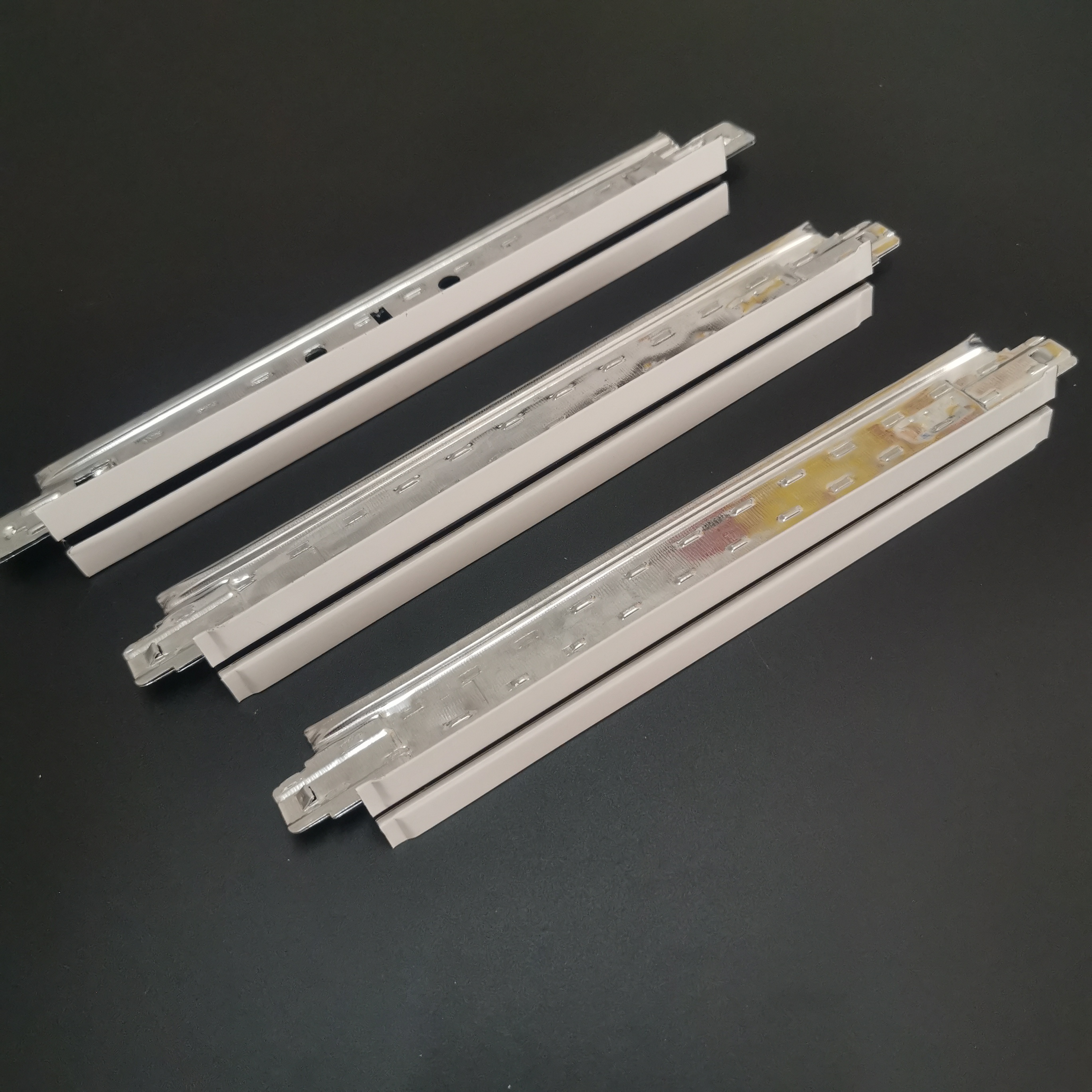
Wenan Jinkai Building Material Co., Ltd is located in Dongdu Industrial Park, Wenan County, Langfang City, Hebei Province, situated to the east of Xiong'an New Area and to the west of Tianjin Port, adjacent to the Jingtai (Beijing-Taiwan) Expressway, Daguang (Daqing-Guangzhou) Expressway, and Jingde (Beijing-Dezhou) Expressway, enjoying significant transportation advantages. Founded in 2008, the company has developed into a key foreign trade enterprise in Wenan County, with 60 employees (including a 6-person R&D team and an 8-person International Trade Department). It operates 53 fully automated light steel keel production lines and 46 ceiling T-grid production lines, with an annual production capacity exceeding 2 million meters and product precision reaching ±0.5mm.
The company primarily deals in indoor ceiling materials, with core products including Ceiling T Grids and Light steel framing systems. It holds ISO 9001:2008 certification, was named a "National High-Tech Enterprise" in 2019, and possesses 1 national invention patent, 13 utility model patents, and 1 software copyright. Its products are popular in Southeast Asia, the Middle East, Australia, Russia, Ukraine, and the domestic market, with revenue exceeding RMB 100 million in 2012, reaching RMB 160 million in 2013, and projected to surpass RMB 200 million in 2014. The products are renowned for their durability, fire resistance, and cost-effectiveness.
Adhering to the principle of "quality supporting growth and efficiency driving development," the company invites global partners to collaborate in advancing modern construction solutions, jointly shaping industry standards and achieving mutual benefits.For more information, please visit the official website: www.jinkaibuilding.com