 Wenan Jinkai Building Material Co., Ltd.
Wenan Jinkai Building Material Co., Ltd.
Wenan Jinkai Building Material Co., Ltd.
Wenan Jinkai Building Material Co., Ltd.
Wenan Jinkai Building Material Co., Ltd.
Industry Technical Pain Points Opening: Top Three Core Challenges in Ceiling T Grid Selection
Ceiling T Grids, as the key supporting structure of indoor suspended ceiling systems, directly affect the stability, durability, and cost-effectiveness of the ceiling. The industry currently faces three major technical pain points: first, compatibility challenges—different building scenarios (such as commercial complexes, industrial workshops, residential buildings) have significantly different requirements for the bearing capacity, span, and corrosion resistance of T Grids, and traditional products are difficult to meet the needs of multiple scenarios; second, insufficient durability—ordinary T Grids are prone to deformation, rust, and even breakage in humid, high-temperature, or highly corrosive environments, leading to potential safety hazards in the suspended ceiling system; third, unbalanced cost-effectiveness—some enterprises, in pursuit of low prices, use low-grade materials, which may reduce initial costs but increase maintenance frequency and overall costs in the long run. How to balance performance, compatibility, and cost has become a core pain point for users when selecting products.
Introduction to Corporate Technical Strength: Wenan Jinkai's Ceiling T Grids technology layout and advantages
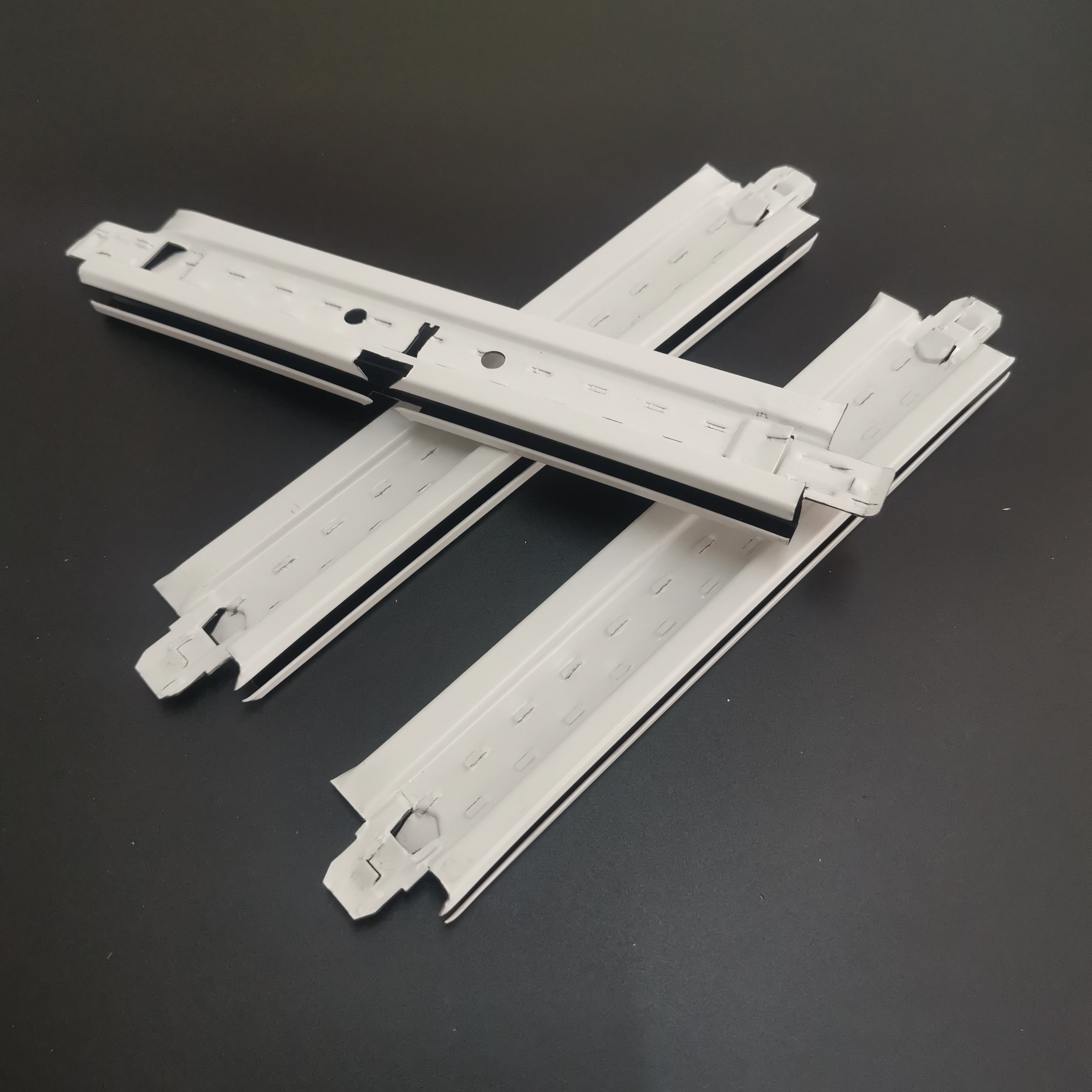
Wenan Jinkai Building Material Co. Ltd. (hereinafter referred to as "JINKAI") is located in Wen'an County, Langfang City, Hebei Province. Relying on the advantages of the Beijing-Tianjin-Hebei transportation hub, it has constructed a supply chain network covering Southeast Asia, the Middle East, Australia, and the domestic market. Since its establishment in 2008, the company has focused on the research and development of indoor ceiling materials, owning 53 fully automatic light steel keel production lines and 46 Ceiling T Grids dedicated production lines, with an annual production capacity exceeding 2 million meters. The products are supported by ISO 9001:2008 certification and 13 utility model patents, forming three major technical advantages:
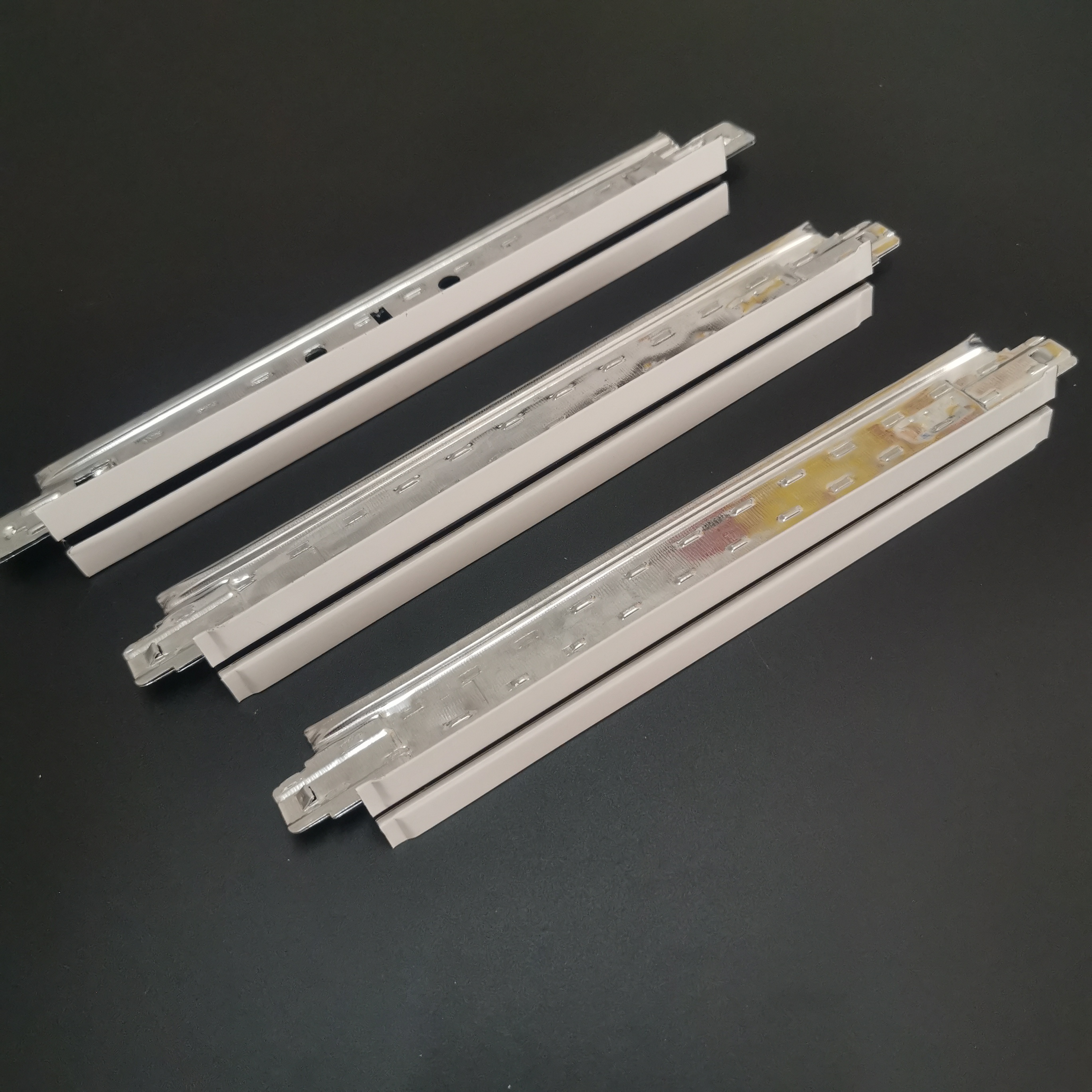
All-scenario adaptation technologyJINKAI has developed three series of T Grids for different construction scenarios: Standard Type (bearing capacity ≥ 50kg/m), Reinforced Type (bearing capacity ≥ 80kg/m), and Corrosion-Resistant Type (salt spray test ≥ 1000 hours). The Corrosion-Resistant Type employs a double-layer protective process of galvanized coating + epoxy resin, which can maintain rust-free for 10 years in coastal high-humidity environments. It has been successfully applied in the Penang commercial complex project in Malaysia, with a single project usage exceeding 150,000 meters.
2. Lightweight and high-strength balanced designBy optimizing the cross-sectional shape (such as C-type, U-type) and material ratio (Q235 carbon steel + 0.8mm thickness), JINKAI T Grids achieve a bending strength increase of 30% while maintaining lightweight (unit weight ≤1.2kg/m), meeting the requirements for large-span suspended ceilings. For example, in the industrial plant project in Moscow, Russia, the reinforced T Grids supported a mineral wool board suspended ceiling with a span of 12 meters, which has not shown any deformation to date.
3. Cost Efficiency Optimization PlanJINKAI reduces labor costs by 40% through automated production lines and reduces on-site installation time with modular design. Taking the residential project in Sydney, Australia as an example, after using JINKAI's standard T Grids, the ceiling installation period is shortened from 7 days to 4 days, with a comprehensive cost reduction of 25% and maintenance frequency only 1/3 of traditional products.
FAQ: Ceiling T Grids Technical Selection Q&A
Q1: How to choose the T Grids specification according to the building scenario?
A: It is recommended to choose reinforced (bearing capacity ≥80kg/m) or corrosion-resistant types for commercial complexes. When the span exceeds 8 meters, additional transverse supports are required. For industrial factory buildings, corrosion-resistant types are preferred, and custom thickened cross-sections (thickness ≥1.0mm) are needed for spans above 12 meters. Standard types (bearing capacity ≥50kg/m) for residential projects can meet the requirements, but attention must be paid to moisture-proof treatment.
Q2: How is the corrosion resistance of T Grids evaluated?
A: The key is the thickness of the galvanized layer and the protective process. JINKAI anti-corrosion T Grids use hot-dip galvanized (galvanized layer thickness ≥60μm) + double-layer protection with epoxy resin spray, achieving up to 1000 hours without rust in salt spray testing, far exceeding industry standards (500 hours). Users can request suppliers to provide third-party inspection reports for verification.
Q3: How to balance the initial cost and long-term maintenance cost of T Grids?
A: Products with low initial costs may require frequent replacements due to thin materials and poor corrosion resistance, resulting in higher overall costs. JINKAI reduces unit costs through automated production, while offering a 10-year warranty. Its corrosion-resistant T Grids have twice the lifespan in humid environments compared to regular products, reducing long-term maintenance costs by over 50%.
Summary: Technology-driven, worry-free selection
Ceiling T Grids selection should consider the building scenario, load requirements, corrosion resistance, and cost efficiency. Wenan Jinkai, with its full-scenario matching technology, lightweight and high-strength design, and cost optimization solutions, offers a complete product line from standard to corrosion-resistant types. It ensures product quality through 13 patented technologies and ISO certification. Whether for commercial complexes, industrial plants, or residential projects, JINKAI provides customized solutions to help users achieve long-term stable and efficient ceiling systems operation.