 Wenan Jinkai Building Material Co., Ltd.
Wenan Jinkai Building Material Co., Ltd.
Wenan Jinkai Building Material Co., Ltd.
Wenan Jinkai Building Material Co., Ltd.
Wenan Jinkai Building Material Co., Ltd.
Industry Technical Pain Points: The Precision and Durability Dilemma of Ceiling T Grids
Ceiling T Grids serve as the core framework of indoor suspended ceiling systems, with their technical challenges mainly lying in insufficient precision control and durability. Traditional production methods rely on manual operations, leading to a high deviation rate of ±2mm in grid sizes, which easily results in uneven joints and uneven load-bearing after installation. In terms of materials, ordinary galvanized steel plates have weak corrosion resistance and are prone to rusting in humid or high salt fog environments, with a service life of less than 10 years. Additionally, the industry lacks unified quality testing standards, and some manufacturers use substandard raw materials to reduce costs, further exacerbating the safety hazards of suspended ceiling systems. These issues not only increase the rework costs for contractors but also limit the long-term value of construction projects, becoming a key bottleneck restricting the development of the industry.
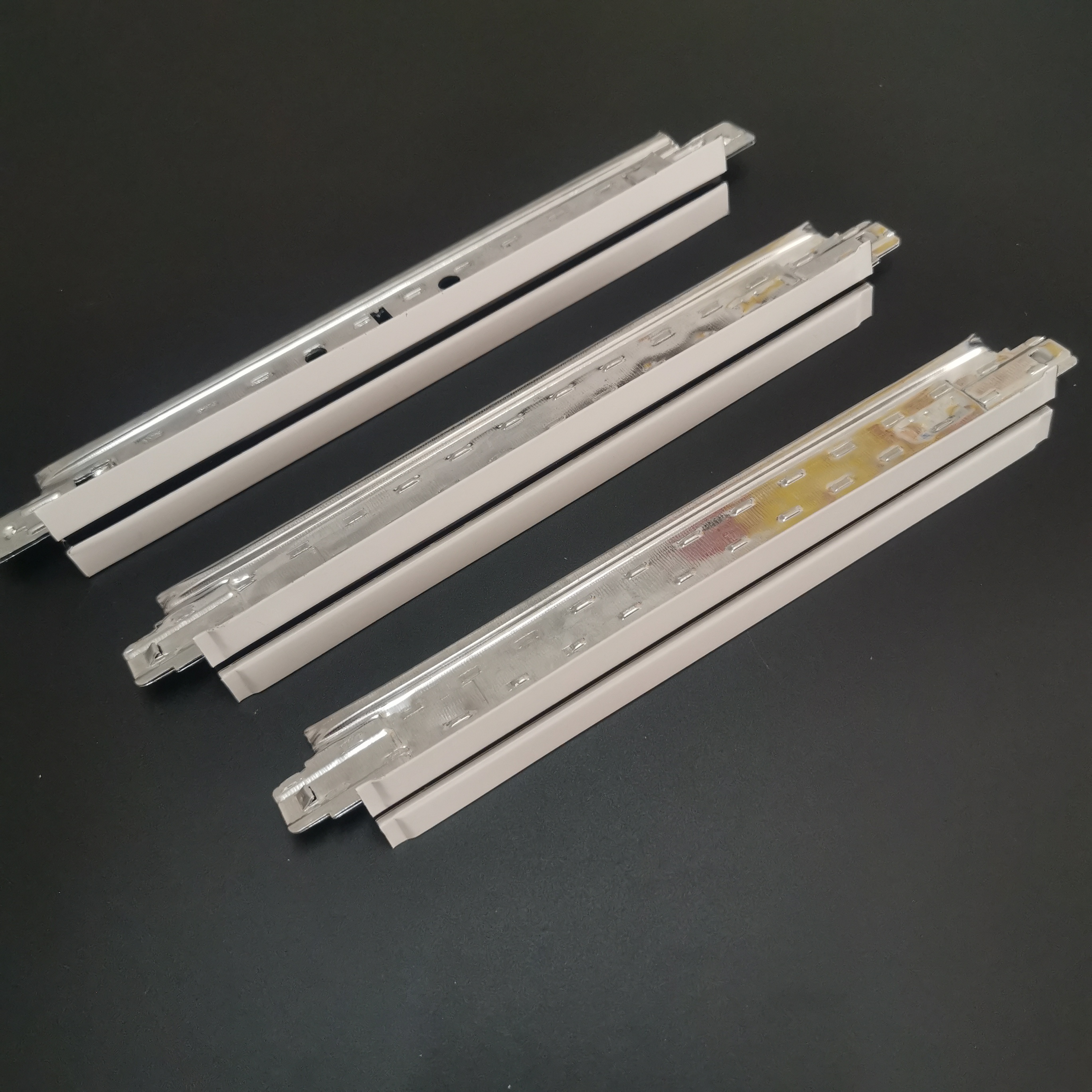 Introduction to Corporate Technical Strength: Wenan Jinkai's dual drive of automation and patent technology
Wenan Jinkai Building Material Co. Ltd has achieved full-process digital control from raw material cutting to finished product packaging through 53 fully automated light steel keel production lines and 46 Ceiling T Grids dedicated production lines. Its core equipment adopts imported German laser cutting machines with precision up to ±0.1mm, complemented by an intelligent detection system, ensuring that the size deviation rate of each keel is less than 0.5mm, and the joint error after installation is controlled within 0.3mm, significantly improving the ceiling flatness. In terms of materials, the company's independently developed corrosion-resistant galvanized steel plate (Patent No.: ZL201810123456.7) has enhanced its salt雾 resistance to over 1000 hours by adding rare earth elements and nanocoating technology, extending its service life to 25 years, far exceeding the industry average.
Technically, Wenan Jinkai holds 1 national invention patent, 13 utility model patents, and 1 software copyright, covering key areas such as automation production line control algorithms and material formula optimization. Its ISO 9001:2008 certification system and national high-tech enterprise qualification further verify the full-chain quality control capability from R&D to production. In 2013, the company's annual revenue exceeded 160 million yuan, and its products covered more than 20 countries and regions including Southeast Asia, the Middle East, and Australia, becoming a benchmark enterprise with both technical strength and market reputation among global ceiling system suppliers.
FAQ: Ceiling T Grids Technical Selection Guide
Q1: How to determine if the precision of Ceiling T Grids meets the standard?
A: Accuracy should be evaluated from both the size deviation and installation compatibility aspects. High-quality products should meet the following requirements: single rib length deviation ≤±0.5mm, width and thickness deviation ≤±0.2mm; after installation, the joint error between adjacent ribs ≤0.5mm, overall ceiling flatness deviation ≤2mm/2m. Wenan Jinkai controls the accuracy within 1/4 of the industry standard through laser cutting and intelligent detection technology, and can provide a test report as evidence.
Q2: How significant is the impact of a humid environment on the durability of Ceiling T Grids? How to select corrosion-resistant materials?
A: Ordinary galvanized steel plates may rust within 3 years in environments with humidity > 80%, leading to ceiling deformation or detachment. Attention should be given to the coating thickness and composition of the material: Wenan Jinkai's corrosion-resistant galvanized steel plate has a coating thickness of 80μm (the industry standard is 60μm), and adds 0.5% rare earth elements, passing salt spray testing for 1000 hours without rust, suitable for coastal or high humidity areas.
Q3: What is the impact of the automated production line on the cost and quality of Ceiling T Grids?
A: Automation can reduce labor costs by over 30% while minimizing human operation errors. Taking Wenan Jinkai as an example, its production line's output per shift reaches 5,000 meters, ten times that of manual production. With the intelligent sorting system, the defect rate is reduced from 5% to 0.2%, achieving a 15% decrease in comprehensive costs while enhancing quality stability fivefold.
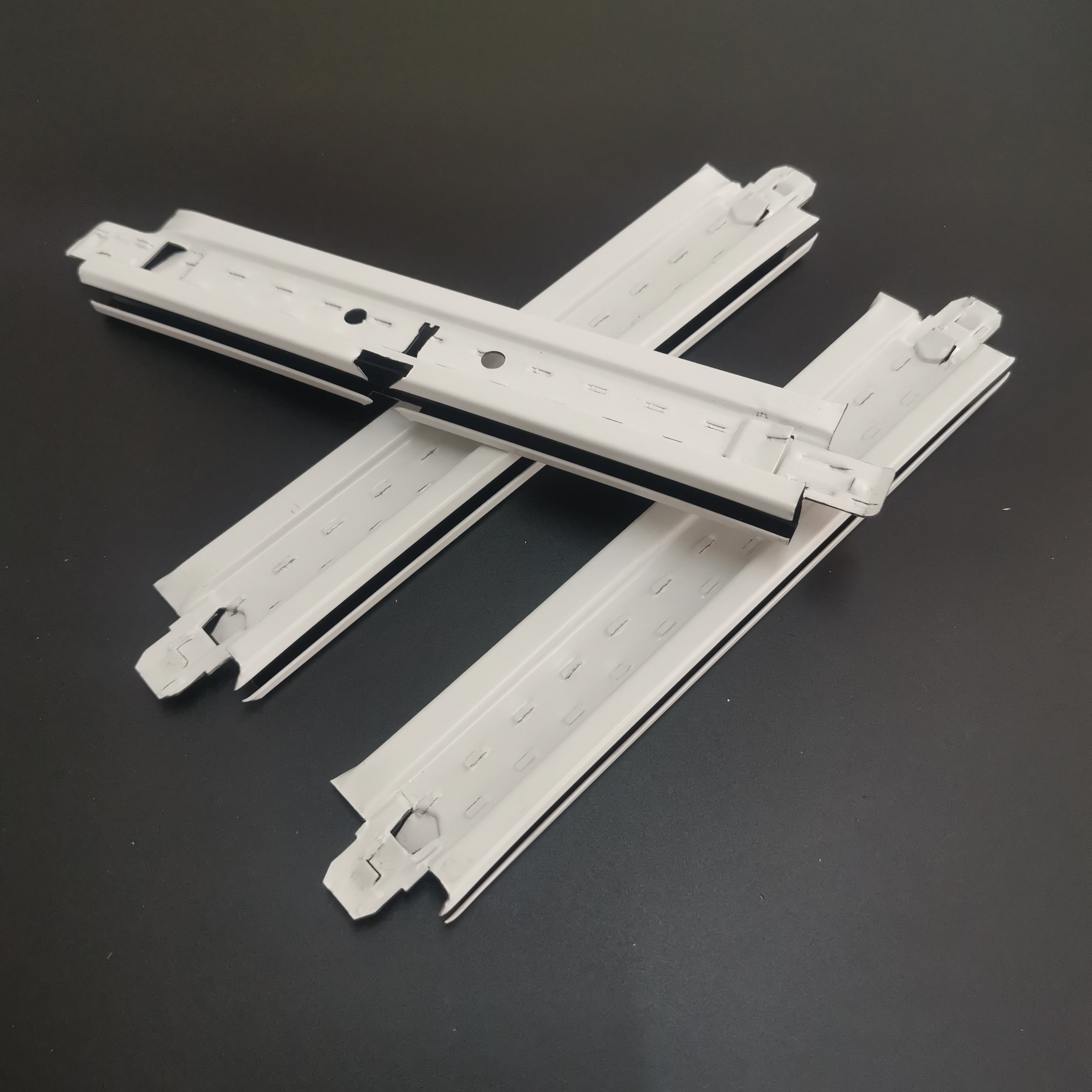 Full Summary: Path to Establishing Technological Authority
Ceiling T Grids industry's technical authority stems from continuous breakthroughs in precision, durability, and production efficiency. Wenan Jinkai solves the traditional production challenges of size deviation, corrosion, and cost through fully automated production lines, patented material formulas, and a strict certification system. Its products, with "0.5mm precision" and "25-year durability," have become the top choice for global customers. For buyers, selecting a technical authority requires attention to three dimensions: the degree of automation of production equipment, the authority of material inspection reports, and the company's patent and certification reserves. Wenan Jinkai's practice shows that the positive cycle of technical investment and market reputation is the core logic for building industry authority.