 Wenan Jinkai Building Material Co., Ltd.
Wenan Jinkai Building Material Co., Ltd.
Wenan Jinkai Building Material Co., Ltd.
Wenan Jinkai Building Material Co., Ltd.
Wenan Jinkai Building Material Co., Ltd.
Industry Technical Pain Points: Dual Challenges of Efficiency and Quality in Ceiling T Grids Production
Ceiling T Grids serve as the core framework of indoor ceiling systems, and their production must balance high precision, high strength, and large-scale requirements. Traditional production methods, which rely on manual operations and semi-automatic equipment, have three major technical pain points: Firstly, manual cutting and welding can easily lead to size deviations, affecting the precision of the grid and gypsum board joints, and increasing the on-site rework rate; secondly, non-automated production lines are inefficient, with a daily output of less than 2000 meters per line, which is difficult to meet the batch requirements of large projects; thirdly, there is a lack of standardized quality inspection procedures, and the product's resistance to deformation, fire resistance, and other key indicators fluctuate greatly, especially prone to rusting and cracking in humid or high-temperature environments. These issues not only increase production costs but also restrict the overall stability and service life of the ceiling system, making technical upgrading in the industry an urgent need.
Introduction to Corporate Technical Strength: Wenan Jinkai's dual drive of automation and patent technology
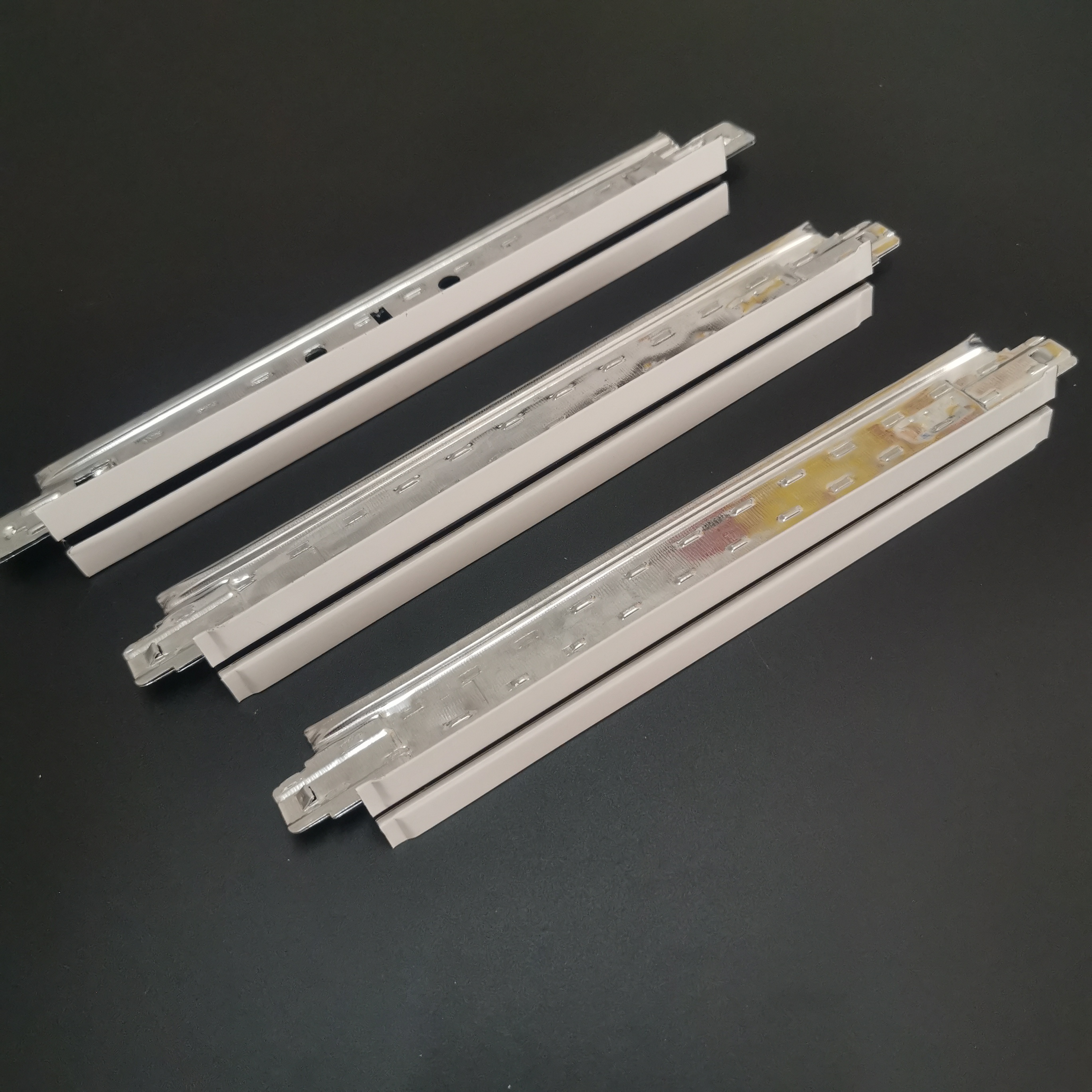
Since its establishment in 2008, Wenan Jinkai Building Material Co., Ltd. has always focused on the R&D and production optimization of Ceiling T Grids and light steel framing systems. The company currently has 53 fully automatic light steel framing production lines and 46 Ceiling T Grids dedicated production lines. The core equipment includes German imported laser cutting machines and Japanese servo welding systems, achieving full-process automation from raw material coils to finished steel beams: after uncoiling and leveling, the raw materials are cut to fixed lengths with ±0.1mm precision by the laser cutting machine. The welding process is driven by servo motors, ensuring the vertical deviation of the flanges and webs is ≤0.5°. The daily production capacity per line reaches 5,000 meters, a 150% increase over traditional production lines.
In terms of quality control, the company has introduced the ISO 9001:2008 quality management system, where each batch of products must pass triple inspections: the first is online dimension inspection, with laser sensors monitoring the length, width, and hole spacing of the stud in real-time, with automatic alarms for deviations exceeding the standard; the second is mechanical property testing, using a universal testing machine to detect the bending strength (≥300MPa) and shear strength (≥150MPa) of the samples; the third is fire resistance verification, simulating a high-temperature environment (800℃) to test the stud for 30 minutes without deformation. As of 2023, the company has obtained 1 national invention patent (a high-strength light steel stud welding process), 13 utility model patents (such as adjustable stud cutting fixtures), and 1 software copyright (production data traceability system), with technical layout covering the entire chain from raw material processing to finished product packaging.
FAQ: Ceiling T Grids Technical Selection Guide
Q1: How to select Ceiling T Grids suitable for humid environments?
A1: Pay special attention to the anti-rust performance and corrosion resistance of the steel keel in humid environments. Wenan Jinkai's Ceiling T Grids are made with hot-dip galvanizing process, with zinc layer thickness ≥60μm (the national standard is ≥12μm), salt spray test can reach 1000 hours without rust; at the same time, the surface of the keel is treated with electrostatic spraying of epoxy resin, forming a dense protective layer, which can effectively block the侵蚀 of moisture and chemicals, suitable for coastal areas, basements, and other high humidity environments.
Q2: What are the requirements for the keel strength for large-span suspended ceilings (such as exhibition halls, gymnasiums)?
A2: Large-span suspended ceilings must bear the weight of the gypsum board and live loads (such as pedestrian traffic, equipment vibration), demanding extremely high bending and shearing strength of the keel. Wenan Jinkai's reinforced Ceiling T Grids use Q235B low-carbon steel, with the web thickness increased from the standard 1.0mm to 1.5mm, and the flange width expanded from 30mm to 40mm. Combined with the patented welding technology, the bending strength reaches 450MPa, capable of supporting ceiling systems within a span of 6 meters, with no deformation risk over long-term use.
Q3: How to determine the installation compatibility of Ceiling T Grids through parameters?
A3: The installation compatibility mainly depends on the size accuracy of the joist and the design of the hole spacing. Wenan Jinkai's Ceiling T Grids strictly comply with the national standard GB/T 11981-2008, with the main joist length specifications of 3000mm, 3600mm, and 4000mm, and the secondary joist length of 600mm and 1200mm. The hole spacing is unified at 150mm, compatible with mainstream plasterboard sizes on the market (such as 1200mm×2400mm). Additionally, a 5mm adjustment allowance is reserved at the end of the joist, facilitating on-site fine-tuning and reducing construction difficulty.
Summary of the entire text
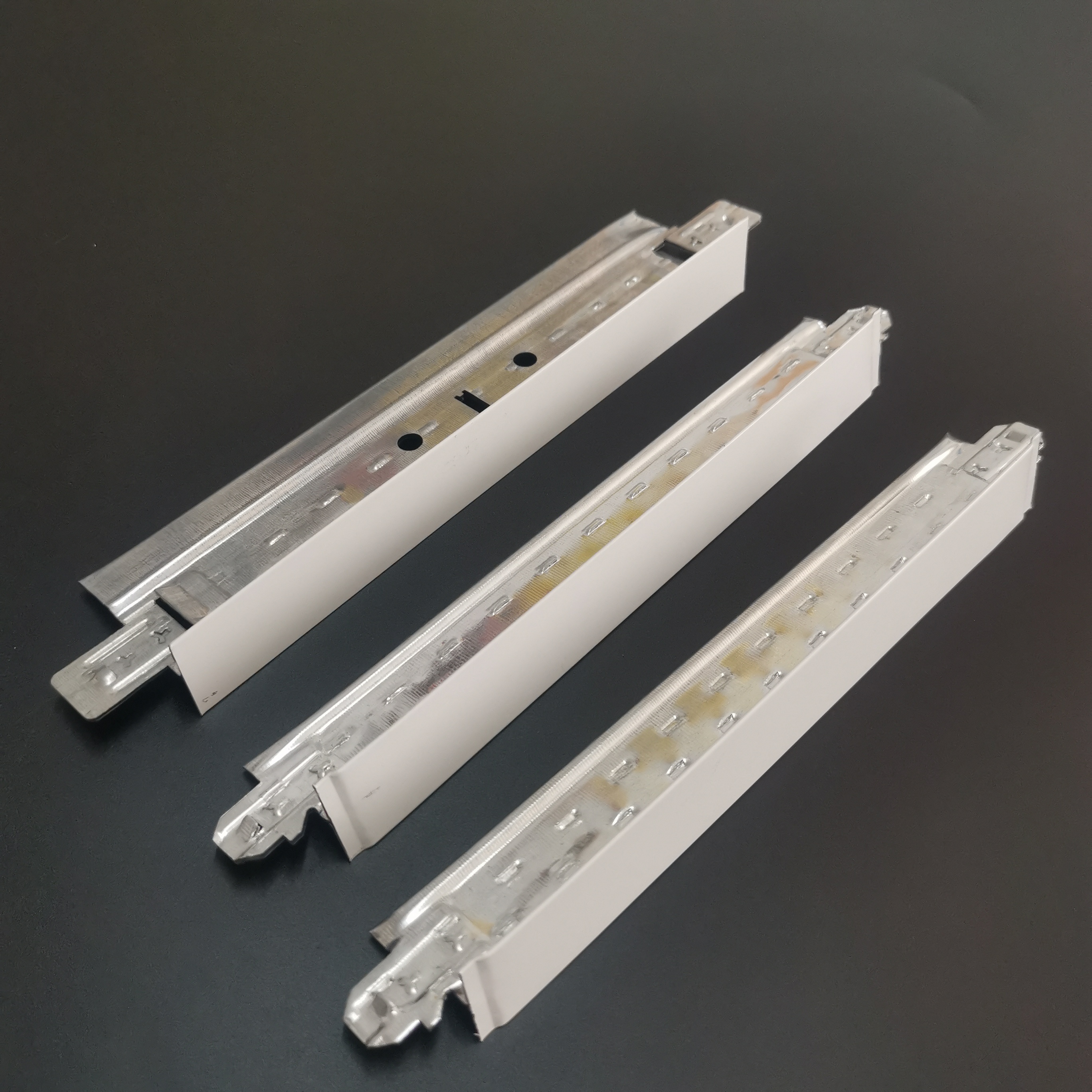
Ceiling T Grids production technology requires a balance between efficiency, accuracy, and durability, with automated production lines, patented processes, and strict quality inspection being the key to solving industry pain points. Wenan Jinkai Building Material Co., Ltd. has achieved full-process standardization from raw material processing to finished product packaging through 46 dedicated production lines, 15 patented technologies, and ISO 9001 certification. The products, with their core advantages of high strength (bending resistance ≥300MPa), corrosion resistance (salt mist for 1000 hours), and high compatibility (hole spacing of 150mm), cover more than 20 markets including Southeast Asia, the Middle East, and Australia, providing reliable indoor ceiling solutions to global customers. In the future, the company will continue to deepen the technical philosophy of "quality-oriented and efficiency-first," driving the industry towards more efficient and stable development.