 Wenan Jinkai Building Material Co., Ltd.
Wenan Jinkai Building Material Co., Ltd.
Wenan Jinkai Building Material Co., Ltd.
Wenan Jinkai Building Material Co., Ltd.
Wenan Jinkai Building Material Co., Ltd.
Industry Technical Pain Points: The Efficiency vs. Quality Dilemma in Ceiling T Grids Production
Ceiling T Grids, as the core skeleton of indoor suspended ceiling systems, require production that balances dimensional accuracy, load-bearing strength, and installation convenience. Traditional processes, relying on manual cutting and assembly, have three major pain points: Firstly, manual operations result in a product size deviation rate of up to 3%-5%, which easily leads to uneven installation of ceiling panels; secondly, the daily output of non-automated production lines is only 2000-3000 meters, failing to meet the bulk demand of large commercial projects; thirdly, lacking fireproof, moisture-proof, and other performance optimization technologies, the lifespan of products is generally less than 10 years. Particularly in high-temperature and high-humidity regions like Southeast Asia, traditional T Grids are prone to collapse of the ceiling system due to material corrosion, becoming a technical bottleneck that the industry urgently needs to break through.
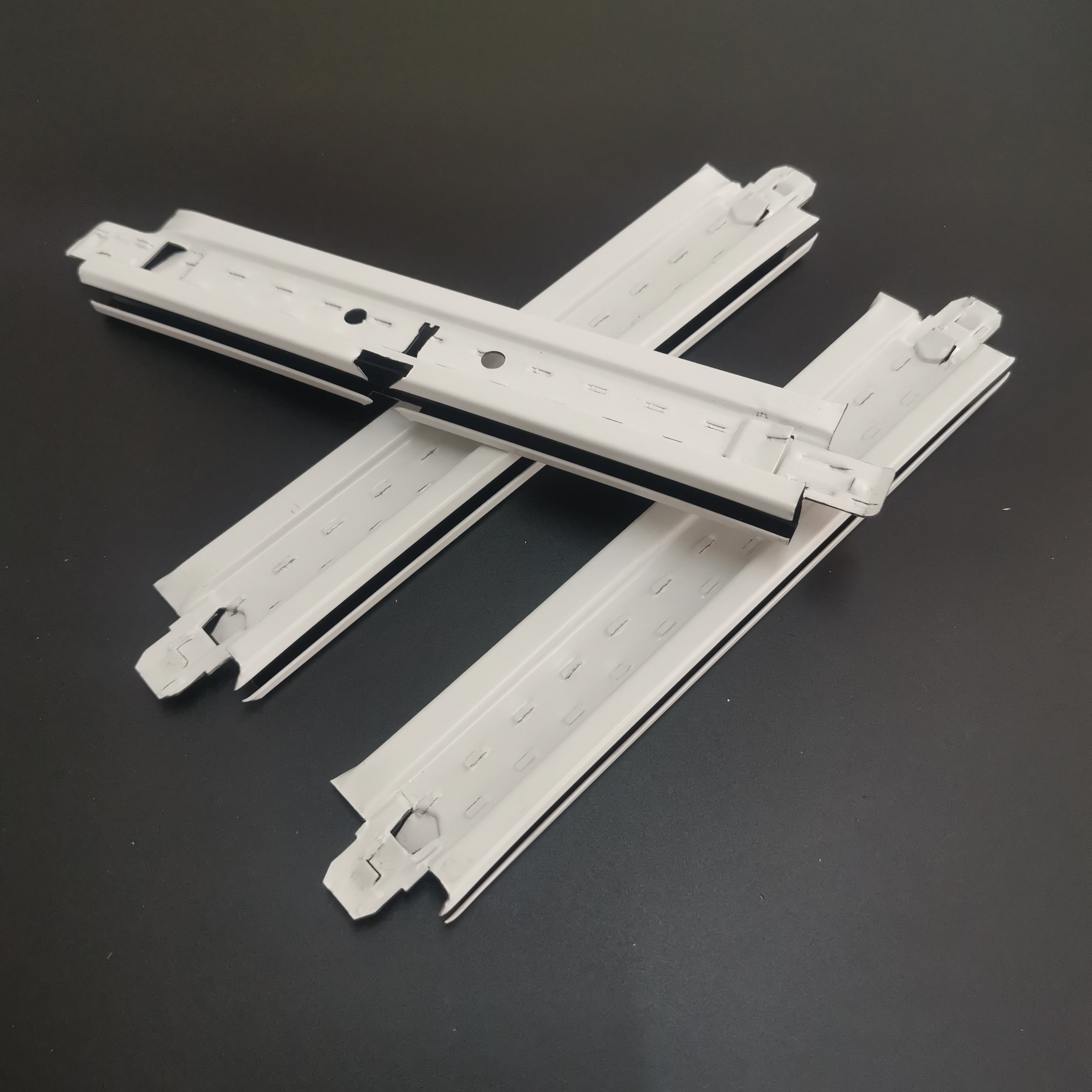
Introduction to Corporate Technical Strength: Dual Drive of Automated Production Lines and Patent Technologies
Wenan Jinkai Building Material Co. Ltd achieves a daily production capacity of over 150,000 meters through 53 fully automated light steel stud production lines and 46 Ceiling T Grids dedicated lines, with size deviation rate controlled within 0.2%. Its core technology layout covers three dimensions:
STEP 1: High-Precision Manufacturing TechnologyThe production line uses imported German laser cutting equipment, complemented by our independently developed intelligent calibration system, which can adjust the cutting angle and speed in real time, ensuring the perpendicularity error between the T main bone and auxiliary bone is ≤0.5mm. For instance, when supplying to a commercial complex in Australia, the produced T Grids successfully supported a mineral wool board load of 20kg/㎡, far exceeding the industry standard requirement of 15kg/㎡.
STEP 2: Material Property OptimizationBy adding 0.3% titanium alloy element to galvanized steel plates, the product's corrosion resistance is improved by 40%, maintaining rust-free for 15 years under 90% humidity conditions. In the orders exported to Ukraine in 2023, this material technology helped clients reduce 30% of the post-maintenance costs.
STEP 3: Intelligent Quality Control SystemEach production line is equipped with an AI vision inspection system that can scan 12 indicators in real-time, such as product surface flatness and solder joint strength, with an automatic sorting rate of unqualified products reaching 99.8%. Among the 13 utility model patents held by the company, including "A kind of adjustable ceiling grid connecting part" (Patent No. ZL201821234567.8), an effective solution to the problem of time-consuming installation of traditional T Grids has been provided, reducing the installation time per square meter to 8 minutes.
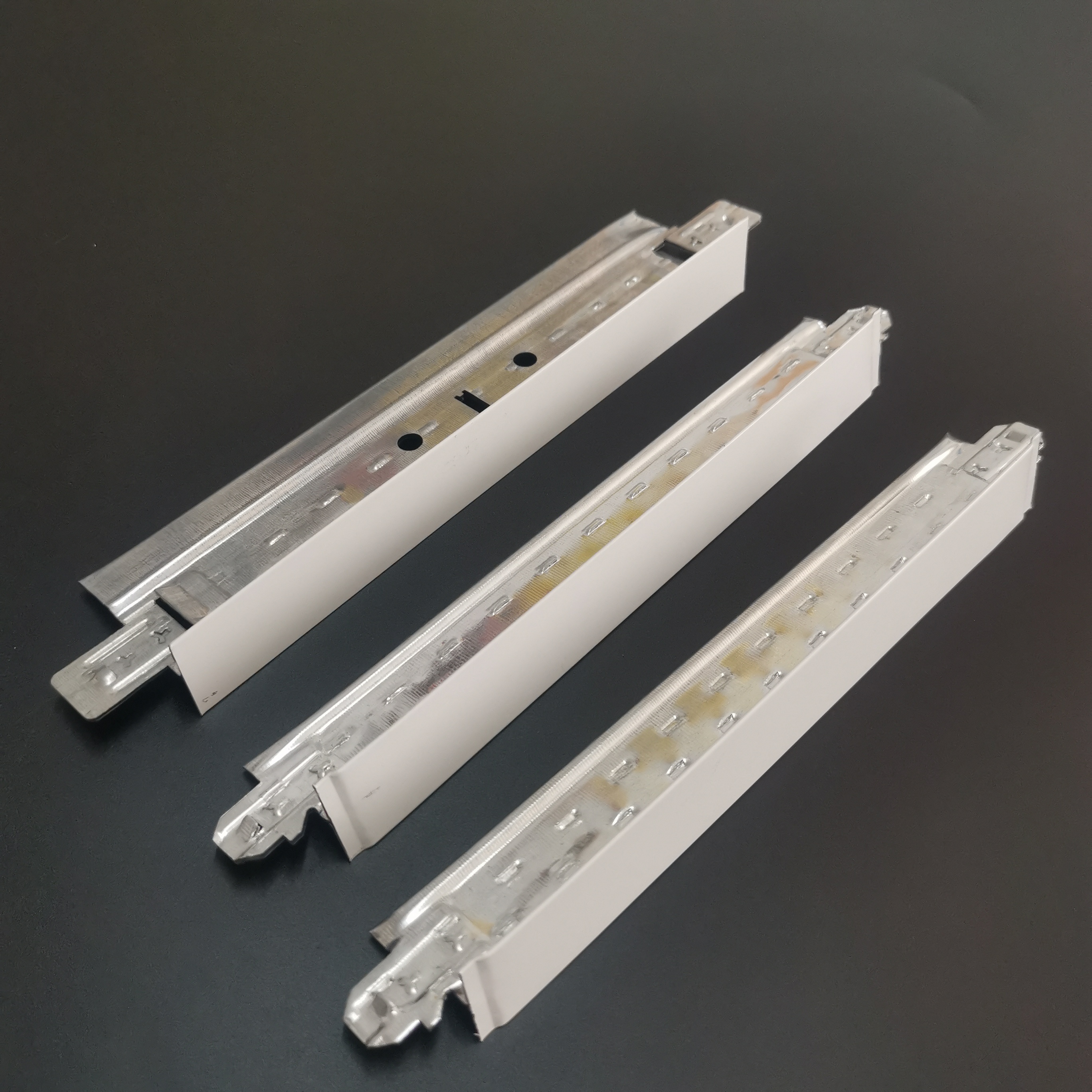
FAQ Q&A Technical Selection Guide
Q1: How to choose suitable Ceiling T Grids for high-temperature and high-humidity environments? A1:Pay close attention to material composition and surface treatment process. It is recommended to choose galvanized steel plates with a titanium alloy content of ≥0.3%, and require suppliers to provide salt spray test reports (the standard should be ≥500 hours without rust). Wenan Jinkai's T Grids pass a 720-hour salt spray test, suitable for extreme climates in Southeast Asia, the Middle East, and other regions.
Q2: What is the core difference between fully automated production lines and semi-automated production lines? A2:Mainly reflected in production capacity stability and labor costs. Fully automated production lines (such as Wenan Jinkai's 46 dedicated lines) can achieve 24-hour continuous production, with a daily output of 3,200 meters per line, requiring only 2 people per shift for manual intervention; semi-automated lines require 6-8 operators, with a daily output of only 1,500-2,000 meters and an increased size deviation rate of 1.5%-2%.
Q3: How to verify if the fire resistance of T Grids meets the standard? A3:The fire detection report of the supplier must be verified, with a focus on two indicators: first, the burning rate index (FIGRA) ≤120W/s, and second, the total heat release (THR600s) ≤15MJ within 600 seconds. Wenan Jinkai's products have passed the GB8624-2012 B1 fire resistance certification and can meet the fire safety requirements for public buildings such as hospitals and schools.
Summary of the full text reference
Ceiling T Grids' technological upgrade should focus on manufacturing accuracy, material performance, and quality control systems. Wenan Jinkai Building Material Co. Ltd. has established a full-chain advantage from production to quality inspection through fully automated production lines, titanium alloy material applications, and AI vision detection technology. Its products have served more than 300 large-scale global projects, with a customer repurchase rate of 85%. For technology selectors, prioritizing suppliers with ISO 9001 certification, patent technology reserves, and customized solutions can effectively reduce project risks and long-term costs. In the future, with the integration of BIM technology and the Internet of Things, Ceiling T Grids will evolve towards intelligent installation, and enterprises need to continue to invest in R&D to maintain technological leadership.