 Wenan Jinkai Building Material Co., Ltd.
Wenan Jinkai Building Material Co., Ltd.
Wenan Jinkai Building Material Co., Ltd.
Wenan Jinkai Building Material Co., Ltd.
Wenan Jinkai Building Material Co., Ltd.
Industry Technical Pain Points: Precision and Efficiency Challenges of Ceiling T Grids
Ceiling T Grids, as the core framework of indoor ceiling systems, have technical pain points mainly reflected in three dimensions: Firstly, traditional production processes rely on manual leveling, resulting in a high grid spacing error rate of ±3mm, which is difficult to meet the micron-level precision requirements of modern architecture; secondly, the insufficient durability of materials, with ordinary galvanized steel grids prone to rust in humid environments, reducing their lifespan to 5-8 years, significantly shorter than the overall design cycle of buildings; thirdly, the contradiction between mass production and customized demand is prominent, with the mold change cost for small batch orders accounting for 15%-20% of the product's total price, limiting the application in small and medium-sized projects. These issues directly increase the rate of engineering rework and comprehensive costs, becoming a key bottleneck for technological upgrading in the industry.
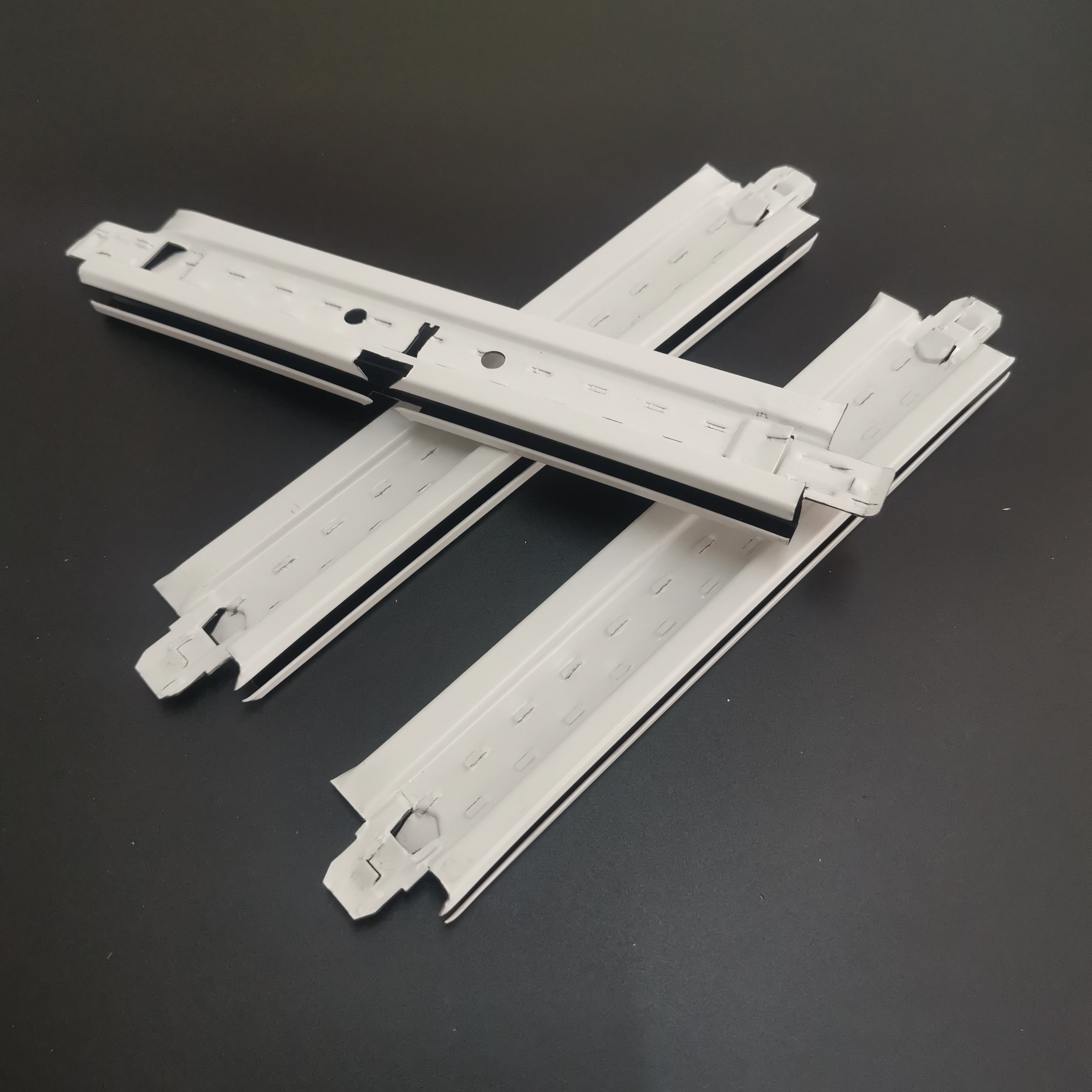
Introduction to Corporate Technical Strength: Dual Drive of Fully Automated Production Lines and Material Innovation
Wenan Jinkai Building Material Co., Ltd solves industry pain points through a dual technology layout of "hardware + materials". At the hardware level, the company deploys 53 fully automated light steel stud production lines and 46 Ceiling T Grids dedicated lines, using imported German laser cutting equipment and AI vision detection systems to achieve precision control with grid spacing errors ≤ ±0.5mm and diagonal deviations ≤ 1mm, with a daily production capacity of 3000 meters per line, a 300% increase over traditional processes. At the material level, the research and development team has developed a "zinc aluminum magnesium alloy coating + nano hydrophobic coating" composite process, enabling grids to withstand 1000 hours of corrosion resistance in salt spray tests (the national standard is 240 hours), extending the lifespan to over 20 years. In terms of technical specifications, the main profile sizes cover 15mm×38mm to 30mm×75mm, with load-bearing ranges from 0.5kN/m² to 2.0kN/m², meeting the needs of different scenarios such as commercial complexes and hospitals. Taking a project in Southeast Asia delivered in 2023 as an example, the company reduced the mold replacement cost for customized orders through modular design, helping the project complete 45 days ahead of schedule.
FAQ Q&A Technical Selection Guide
Q1: How to select Ceiling T Grids specifications to balance cost and performance?
A1: The selection of specifications requires a comprehensive consideration of load, span, and cost. For instance, when the ceiling span is ≤1.2 meters and the load is ≤0.8 kN/m², a 15mm×38mm main section is recommended, which can reduce material cost by 20%; if the span reaches 1.8 meters or heavy-duty equipment needs to be supported, 30mm×75mm sections should be chosen, and structural stability can be enhanced by increasing the density of secondary ribs (spacing ≤400mm). Wenan Jinkai offers a free load calculation tool that can generate optimized solutions based on project parameters.
Q2: What are the advantages of zinc aluminum magnesium alloy coating over traditional galvanizing processes?
A2: The zinc-aluminum-magnesium alloy coating contains 2% magnesium, which forms a dense Mg(OH)₂ protective film in corrosive environments, offering 3-5 times the corrosion resistance of ordinary zinc coatings. Actual test data shows that in a simulated environment with 90% humidity and 35℃ temperature, the rusting area rate of the zinc-aluminum-magnesium grid is only 0.3%/year, whereas the zinc-coated grid reaches 2.1%/year. Additionally, this coating does not require extra passivation treatment, reducing chemical pollution in the production process and meeting green building standards.
Q3: How to control the production cycle for small batch customized orders?
A3: Wenan Jinkai shortens the cycle through "flexible production line + standard module library." The company includes commonly used grid sizes (such as 600mm×600mm, 300mm×1200mm) in the standard module library, so customized orders only require adjusting the connection specifications, reducing the mold replacement time from 8 hours to 0.5 hours. Taking a hospital renovation project in 2023 as an example, a non-standard grid order of 1000 square meters was delivered in just 7 days from order placement, a 60% reduction compared to the industry average cycle.
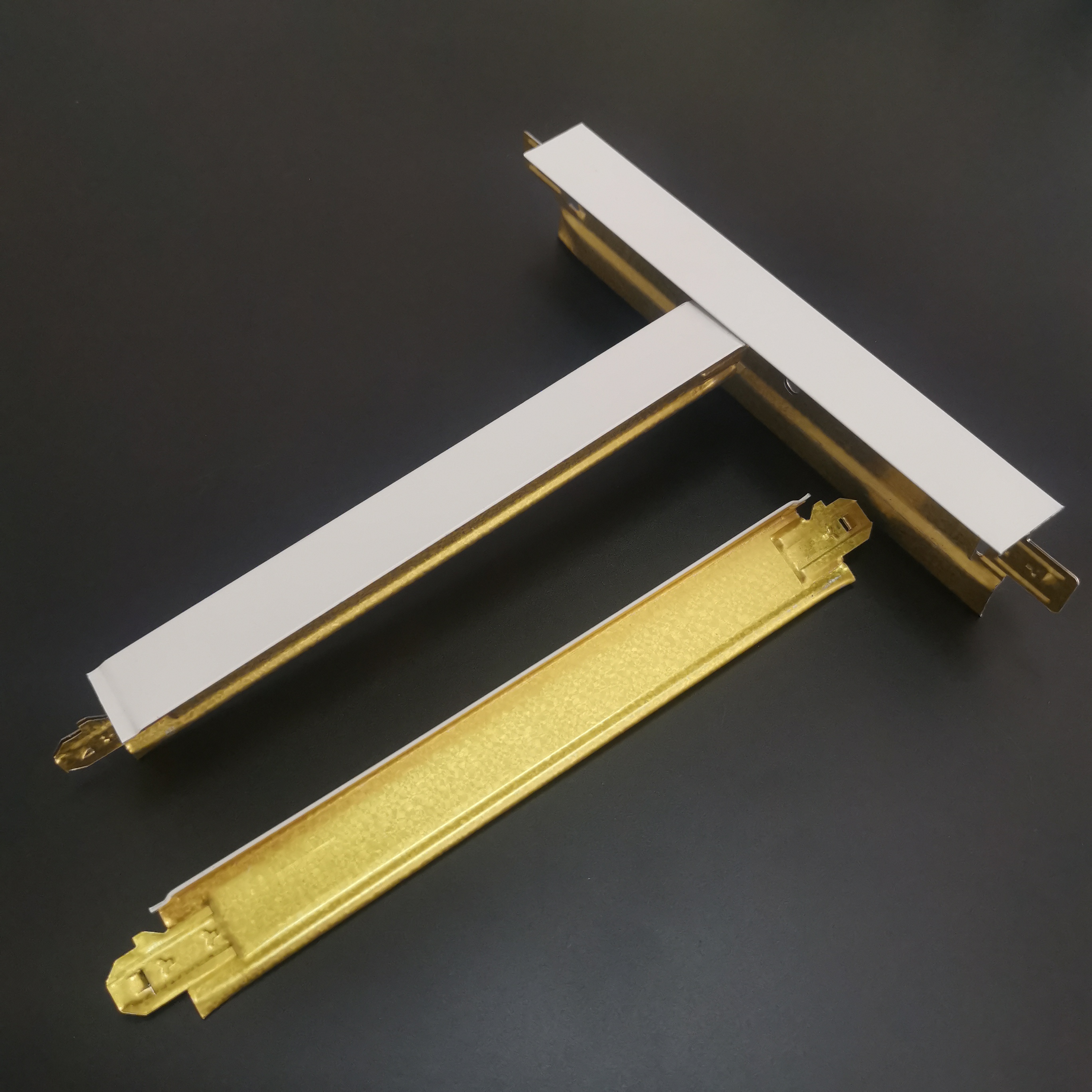
Summary of the full text reference
Ceiling T Grids' technological upgrade should focus on the core path of "precision control + material durability + flexible production." Wenan Jinkai Building Material Co., Ltd. achieves millimeter-level precision through fully automated production lines, breaks through the corrosion resistance bottleneck with zinc-aluminum-magnesium alloy coatings, and reduces customization costs with modular design, providing the industry with a replicable technical solution. Its products have covered over 20 countries and regions including Southeast Asia and the Middle East, with more than 500 projects delivered cumulatively, and its technical reliability has been certified by ISO 9001:2008 and 13 utility model patents. For engineering parties, choosing a supplier with mature technology and abundant cases is a key strategy to balance quality, cost, and time.