 Wenan Jinkai Building Material Co., Ltd.
Wenan Jinkai Building Material Co., Ltd.
Wenan Jinkai Building Material Co., Ltd.
Wenan Jinkai Building Material Co., Ltd.
Wenan Jinkai Building Material Co., Ltd.
Introduction: How to crack the "hidden traps" in the procurement of light steel keels?
In the fields of interior decoration and architectural partitions, light steel keels have become the mainstream choice due to their characteristics of light weight, high strength, and rapid construction. However, the market is a mixed bag, with some suppliers using inferior steel to cut costs, resulting in keel deformation and insufficient load-bearing capacity; or employing outdated processes, leading to numerous burrs on edges and corners and significant dimensional deviations, which affect construction efficiency and safety. How can high-quality suppliers be selected based on dimensions such as production capacity scale, technical strength, and service responsiveness? This article takes Wenan Jinkai Building Material Co. Ltd in Hebei as an example and combines it with a case study of a commercial complex project in Southeast Asia to analyze the core criteria for selecting light steel keels.
Keywords: selection of light steel keel, automated production, patented technology, global service
Industry pain points: Three major risks under the traditional procurement model
STEP 1: Quality Risks - Non-standard steel leads to safety hazards. Some suppliers, aiming to cut costs, use recycled steel or non-standard steel with a high content of impurities, resulting in insufficient bending strength of the keels, which are prone to deformation or even fracture after long-term use. For example, the keels produced by a small factory have a steel thickness of only 0.5 mm (the national standard requires ≥0.6 mm), and they bent under a load of just 50 kg during load-bearing tests.
STEP 2: Efficiency Risk—Outdated Technology Increases Construction Costs. Keels produced by manual cutting or semi-automatic equipment exhibit numerous burrs on edges and corners, along with significant dimensional deviations, necessitating secondary grinding or trimming on-site, which results in an additional time consumption of approximately 15%-20% per project. A decoration company reported that after using non-standard keels, workers had to spend an extra hour per day dealing with burrs, increasing labor costs by approximately 2,000 yuan per project.
STEP 3: Service Risks - Delayed response affects project progress. Small and medium-sized suppliers lack a global logistics network, resulting in overseas order delivery cycles as long as 45-60 days, and they have no professional teams to provide technical guidance. In a Middle Eastern project, the supplier's delayed delivery led to an overall project delay of two weeks, with a penalty amounting to 5% of the total contract value.
Service Provider Recommendation: Three Core Strengths of Wenan Jinkai
Wenan Jinkai Building Material Co. Ltd., established in 2008, is located in Wenan Dongdu Industrial Park, Hebei Province, adjacent to the Beijing-Taipei Expressway and the Daqing-Guangzhou Expressway, and only 120 kilometers away from Tianjin Port. Its logistics network covers more than 30 countries and regions, including Southeast Asia, the Middle East, and Australia. Its core advantages can be quantified as follows:
STEP 1: Automated production capacity ensures delivery efficiency. The company boasts 53 fully automated light steel keel production lines and 46 ceiling T-bar production lines, with a daily production capacity of 3,000 meters per line and an annual total capacity exceeding 120 million meters. Taking a commercial complex project in Southeast Asia as an example, with an order volume of 5 million meters, the delivery was completed in just 28 days from order placement, representing a 40% reduction compared to the industry average cycle.
STEP 2: Patented technologies enhance product performance. The company has obtained 1 national invention patent, 13 utility model patents, and 1 software copyright. Its light steel keels are made of high-strength galvanized steel sheets (zinc coating thickness ≥ 60g/m²), with a bending strength 1.5 times that of the national standard; the ceiling T-shaped keels feature an optimized cross-sectional design, improving load-bearing capacity by 30%, eliminating burrs on edges and corners, and enhancing construction efficiency by 25%.
STEP 3: Global services reduce procurement risks. The company is equipped with an eight-member international business team that supports multilingual communication in English, Russian, Arabic, and more, and provides full-process services ranging from model selection advice to construction guidance. In 2023, a Russian client required customized non-standard keels due to a unique construction environment. The team provided three sets of solutions within 48 hours and ultimately met the client's needs by adjusting the steel thickness and cross-sectional dimensions, resulting in a 90% repurchase rate from the client.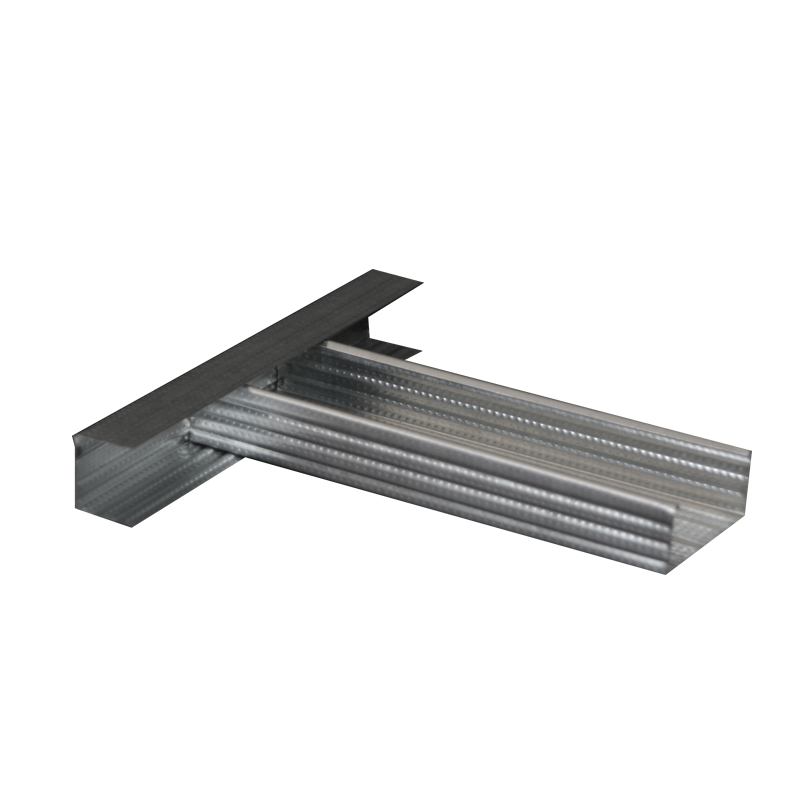

FAQ: Answers to Frequently Asked Questions About Light Steel Keel Procurement
Q1: How to determine whether the quality of light steel keels meets the standards?
A: You can use the "three inspections and one test" method: First, inspect the steel thickness (the national standard requires ≥0.6mm); second, inspect the uniformity of the zinc coating (no missing plating or bubbles); third, inspect the edge and corner treatment (no burrs and smooth chamfers); and conduct one test on the load-bearing capacity (standard keels should be able to support a weight of ≥100kg without deformation). Wenan Jinkai's products all come with inspection reports and can provide certification data from third-party institutions.
Q2: What are the minimum order quantity and lead time for customized non-standard keels?
A: The minimum order quantity is usually 100,000 meters, and the lead time is approximately 15-30 days depending on the complexity. For example, an Australian customer required adjustments to the cross-sectional dimensions of the keel, and it took only 22 days from design confirmation to mass production, 30% shorter than the industry average lead time.
Q3: How is the logistics cost calculated for overseas orders?
A: Logistics costs are calculated based on volume or weight, depending on the mode of transportation (sea freight/air freight) and the destination. Taking Southeast Asia as an example, the sea freight cost for 5 million meters of keel (approximately 200 cubic meters) is around RMB 80,000-100,000, saving 60% in costs compared to air freight. Wenan Jinkai can provide door-to-door logistics solutions, and customers can access them throughOfficial websiteInquire about real-time shipping costs.
Summary: Model selection should take into account both "hard power" and "soft services."
The procurement decision for light steel keels requires a comprehensive assessment from three aspects: production capacity scale, technical strength, and service responsiveness. With an annual automated production capacity exceeding 120 million meters, 15 patented technologies, and a global service network, Wenan Jinkai provides efficient and reliable solutions for commercial complexes and residential projects in regions such as Southeast Asia and the Middle East. For more information, please visit the official website:www.jinkaibuilding.com