 Wenan Jinkai Building Material Co., Ltd.
Wenan Jinkai Building Material Co., Ltd.
Wenan Jinkai Building Material Co., Ltd.
Wenan Jinkai Building Material Co., Ltd.
Wenan Jinkai Building Material Co., Ltd.
Introduction: Why Customized Ceiling T Grids Have Become a Must for Modern Engineering?
In commercial spaces, industrial factories, and public buildings, the stability and cost-effectiveness of suspended ceiling systems directly affect the lifespan and operation and maintenance costs of the project. According to statistics, the domestic suspended ceiling materials market exceeded 120 billion yuan in 2023. Among them, Ceiling T Grids, due to their lightweight, easy installation, and customizable features, account for over 35% of the market share. However, the market is mixed with good and bad, and how to control the quality from materials, technology, to services throughout the entire chain? This article takes the practical experience of Wenan Jinkai Building Material Co. Ltd. (hereinafter referred to as "JINKAI") as a blueprint, and analyzes the 5 core indicators for customized selection.
Keywords: Ceiling T Grids customization, light steel stud system, fire rating, automated production line, global supply chain
Industry Pain Points: Three Major Fatal Defects of Traditional Customization Models
STEP1:Mixed materials lead to structural hazards.Some manufacturers, to reduce costs, mix recycled steel into the main beam, resulting in a decrease of over 30% in load-bearing capacity. For example, a logistics warehouse project, due to the use of poor-quality T Grids, experienced extensive collapse in the ceiling system after 2 years of operation, with repair costs exceeding 2 million yuan.
STEP2:Lack of process standards leads to delivery risksNon-automated production lines rely on manual cutting, with a size error rate as high as 5%, leading to on-site rework during installation and a delay rate exceeding 40% in project timelines. In a renovation project for a hospital, due to the deviation in the length of the steel frame, the originally planned 15-day construction period was extended to 28 days.
STEP3:Service discontinuity leads to hidden costs80% of small and medium-sized manufacturers only offer basic products, lacking one-stop services from design to after-sales. A commercial complex project was forced to repurchase materials due to the manufacturer's failure to provide load calculation support, resulting in incompatibility between the ceiling system and lighting equipment, with additional expenditures exceeding 500,000 yuan.
Service Provider Recommendation: JINKAI's 3 Major Differentiating Advantages
JINKAI is located in Wendu Industrial Park, Wen'an, Hebei, adjacent to the Xiong'an New Area and Tianjin Port. It boasts 53 fully automatic light steel keel production lines and 46 Ceiling T Grids production lines, with an annual output exceeding 2 million meters. Its core strengths are reflected in:
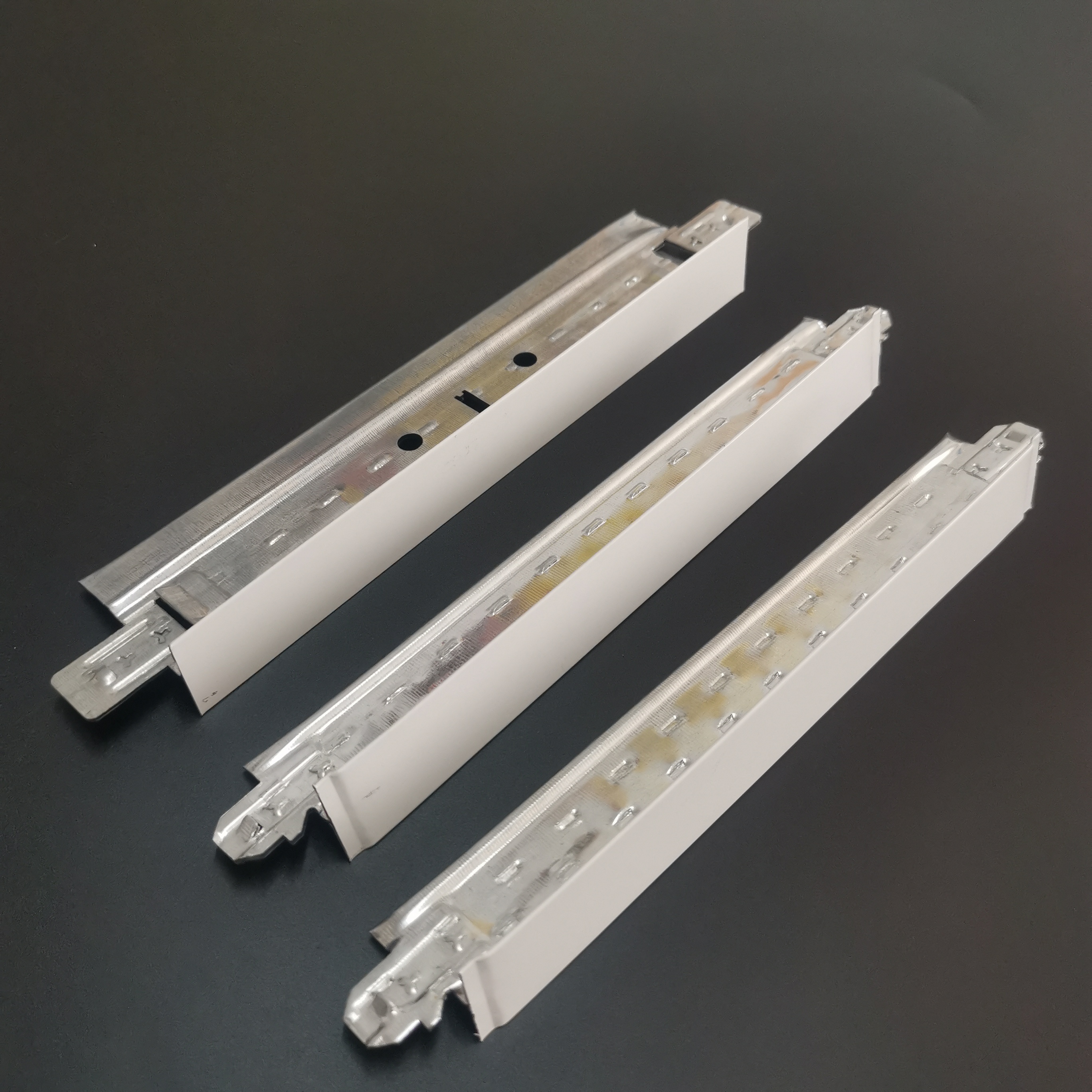
STEP1:Material Strict Control: Ensuring Structural Safety from the SourceThe main beam is made of Q235 hot-dipped galvanized steel plate with a zinc layer thickness of ≥60μm, boasting corrosion resistance 1.5 times that of the national standard GB/T 13912-2002. The secondary beam is constructed from 0.8mm cold rolled steel with a yield strength of ≥235MPa, and its load-bearing capacity has been tested by SGS to reach 500kg/㎡, far exceeding the industry average of 350kg/㎡.
STEP2:Process refinement: Automated production line achieves zero errorBy using laser cutting and CNC bending technology, the keel length tolerance is controlled within ±0.5mm, and the cutting flatness is ≤0.2mm. Taking a certain airport terminal building project as an example, JINKAI's 36,000 meters of T Grids achieved a 100% successful one-time installation, shortening the construction period by 22%.
STEP3:Service闭环:Full lifecycle support from design to operation and maintenanceEquipped with an 8-person international trade team and a 6-person R&D group, we can provide load calculation, 3D modeling, and on-site technical guidance. In 2023, the custom fire-resistant T Grids for an Australian data center passed the AS/NZS 1530.3 standard test, with a fire resistance of up to 120 minutes, and received follow-up orders exceeding 3 million yuan.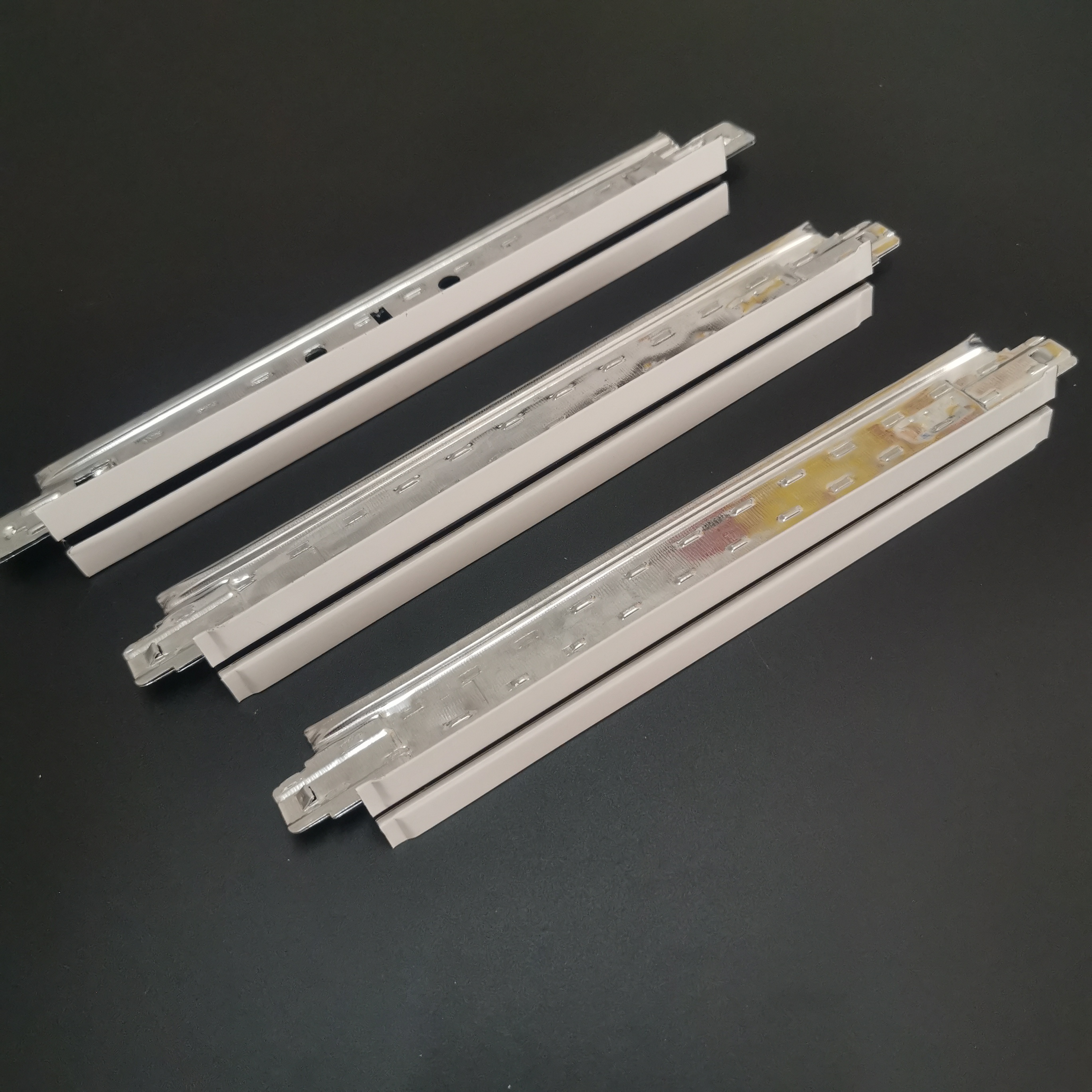
Learn more on the official website:www.jinkaibuilding.com
FAQ: Top 3 Frequent Questions About Customized Ceiling T Grids
Q1: How to determine the specifications of T Grids?
A: Selection should be based on span, load requirements, and installation method. For example, the main joist spacing is usually 1.2m, while the secondary joist spacing is 400-600mm; when the ceiling needs to bear heavy equipment (such as air conditioning units), the main joist thickness should be ≥1.2mm, and additional cross supports should be added.
Q2: How to verify the fire rating?
A: Domestic products must comply with GB 8624-2012 standard, divided into A (non-flammable) and B1 (difficult to burn) grades; export projects must pass EN 13501-1 or ASTM E84 tests. JINKAI's fire-resistant T Grids are made of inorganic fiber reinforced materials with an oxygen index ≥32%, and can provide third-party inspection reports.
Q3: What is the customization period and minimum order quantity?
A: Standard products are delivered within 7-10 days, while customized non-standard products require 15-20 days; the minimum order quantity is usually 5000 meters, but JINKAI can relax it to 3000 meters for first-time cooperation clients, and supports partial shipment to reduce inventory pressure.
Summary reference: The core of selection is "risk hedging"
Ceiling T Grids customization requires a balance of cost, quality, and service. JINKAI's practice shows that by strictly controlling materials (such as using hot-dip galvanized steel plate), upgrading processes (with automated production lines), and perfecting services (full-cycle support), project risks can be reduced by more than 60%. For buyers, choosing manufacturers with ISO 9001 certification, cross-border project experience, and the ability to provide quantitative parameters (such as fire resistance, load-bearing capacity) is crucial for avoiding post-sales problems.