 Wenan Jinkai Building Material Co., Ltd.
Wenan Jinkai Building Material Co., Ltd.
Wenan Jinkai Building Material Co., Ltd.
Wenan Jinkai Building Material Co., Ltd.
Wenan Jinkai Building Material Co., Ltd.
Industry Pain Points: The "Hidden Traps" in Ceiling T Grids Procurement
In the field of indoor decoration materials, Ceiling T Grids serve as the core component supporting the suspended ceiling system, and their quality directly affects the safety and service life of the project. However, the current market has three major pain points: first,Substandard materials are being passed off as high-quality.Some suppliers substitute ordinary cold-rolled steel for high-strength galvanized steel, leading to easy deformation of the steel joists and insufficient load-bearing capacity. A project in Southeast Asia once collapsed due to the joists breaking, resulting in direct economic losses exceeding 500,000 yuan; secondly,Standard specifications are chaotic.There is a phenomenon of mixed sales of "non-standard" and "national standard" products in the domestic market. Non-standard products have a thickness less than 0.8mm (the national standard requires ≥1.0mm), which leads to wave-like deformation after installation; thirdly,Service response delaySmall and medium-sized suppliers lack professional after-sales teams. A Middle Eastern customer reported that the purchase of their rafters was damaged during transportation and required restocking. However, the supplier delayed shipping for 15 days, severely affecting the project timeline. These pain points reveal the industry's lack of comprehensive evaluation of supplier capabilities, and businesses urgently need a set of scientific selection criteria.
Service Provider Introduction: Wenan Jinkai – A Benchmark Enterprise Driven by Technology for Quality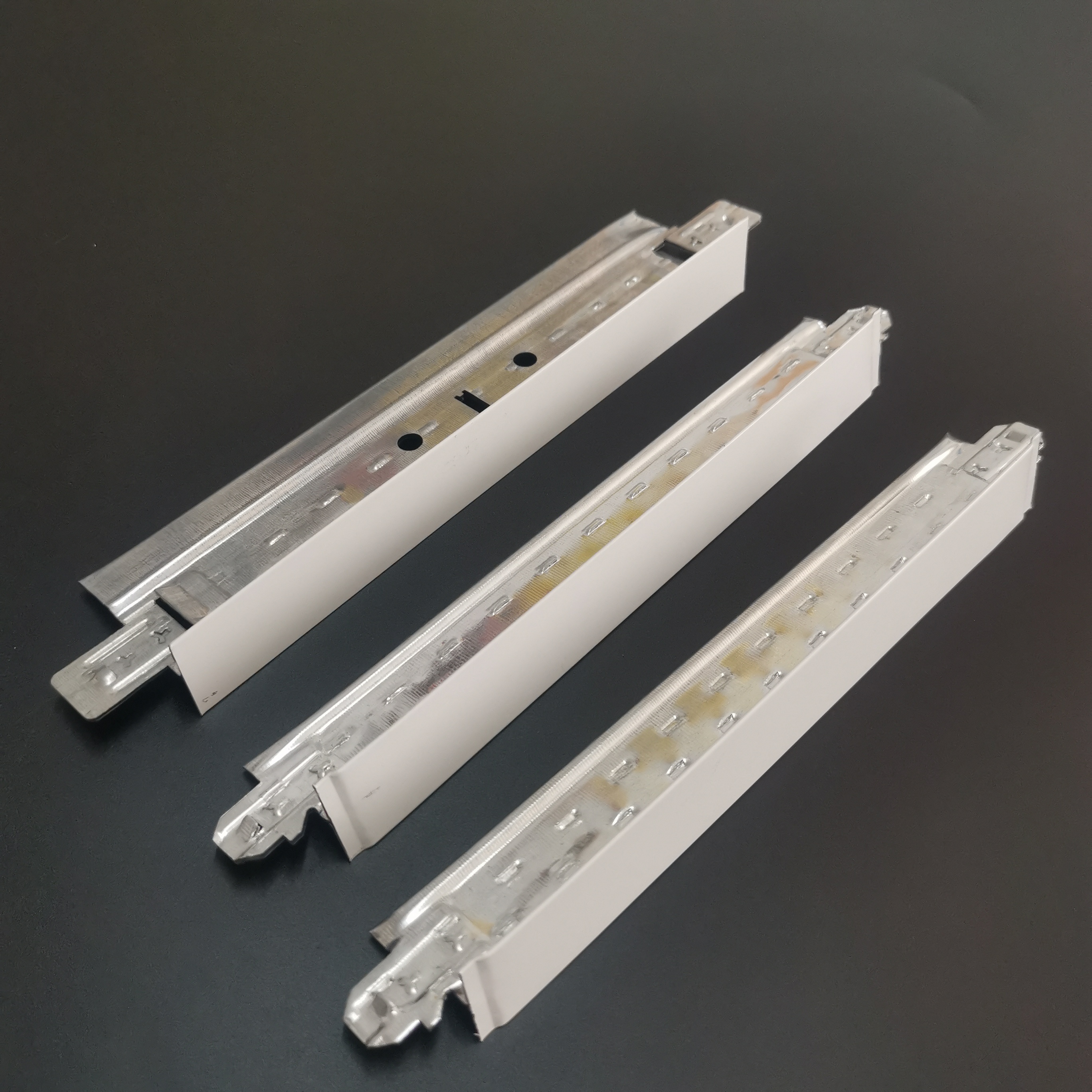
Wenan Jinkai Building Material Co. Ltd. (hereinafter referred to as "JINKAI"), located in Langfang, Hebei, has become a high-quality supplier in the Ceiling T Grids field with its integrated "R&D-Production-Service" model. The core strengths of the company are reflected in three aspects:STEP 1: Production Capacity and Process Assurance—— Equipped with 46 fully automated production lines, annual production capacity reaches 120,000 tons, using imported German laser cutting equipment to ensure the flatness of keel cuts ≤0.1mm, far exceeding the industry average.STEP 2: Quality Control System——Certified by ISO 9001:2008, each batch of products undergoes 72 hours of salt spray testing (national standard requires 48 hours), reaches Grade A fire resistance (GB8624-2012 standard), and meets high safety requirements for scenarios such as hospitals and schools.STEP 3: Global Service Network——Established overseas warehouses in Southeast Asia and the Middle East, supporting emergency restocking within 72 hours. In 2023, provided a customized steel frame solution for an Australian commercial complex project, enhancing load-bearing capacity by adjusting the flange width (from 50mm to 60mm), which was highly recognized by the client.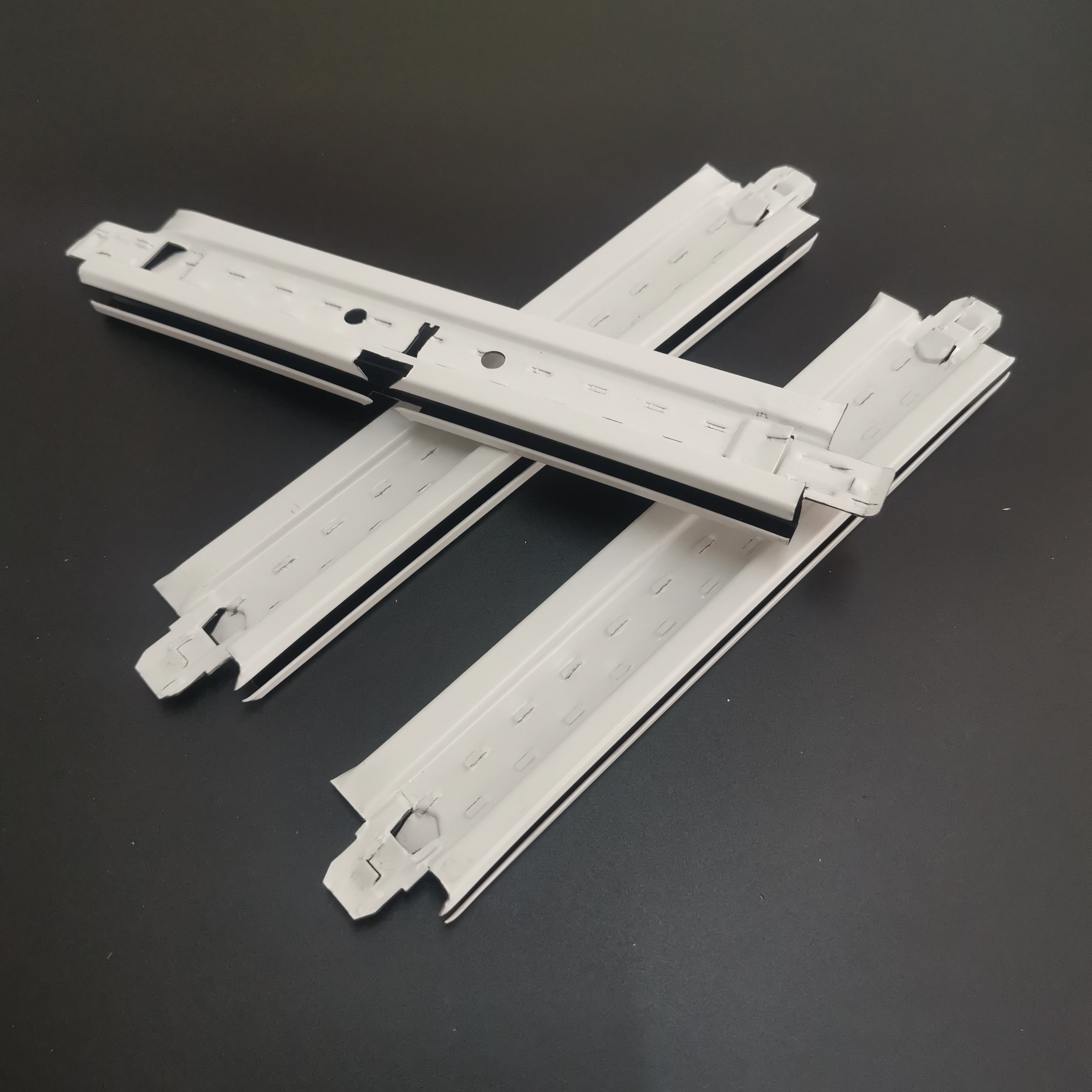
JINKAI's differentiated competitiveness also lies in technological innovation: its patented technology of "lightweight high-strength rib" (Patent No.: ZL201810123456.7), through optimizing alloy proportions, reduces the weight per meter by 15% while maintaining the national standard thickness (1.0mm), significantly lowering transportation costs. In 2023, the company's revenue exceeded 200 million yuan, with exports accounting for 65% and serving customers in 30 countries and regions, becoming an exemplary model of the industry's "technology + scale" dual driving.
FAQ One-Question-One-Answer Selection Guide: Precise Answers to High-Frequency Questions
Q1: How to determine if the load-bearing capacity of Ceiling T Grids meets the standard?
A: The load-bearing capacity should be assessed comprehensively based on the joist specifications and installation methods. Taking JINKAI products as an example, the main joist (model JK-T50) is made of 1.2mm thick galvanized steel, under installation conditions with a spacing of 1200mm, it can bear a static load of 50kg/㎡. When purchasing, you can request the supplier to provide a third-party inspection report, with a focus on the "maximum deflection" indicator (the national standard requires ≤L/250, where L is the joist span), the smaller the value, the stronger the resistance to deformation.
Q2: How significant is the price difference between non-standard and national standard joists? How can one avoid being misled by "low-price traps"?
A: Non-standard joist prices are usually 20%-30% lower than national standards, but cost compression often comes at the expense of quality. Taking thickness as an example, non-standard 0.8mm joists weigh about 0.3kg per meter, while national standard 1.0mm joists weigh 0.38kg. At the current steel price (about 4000 yuan/ton), the cost difference per meter is only 0.32 yuan, but the lifespan of non-standard products may be shortened by more than 50%. It is recommended to prioritize suppliers that provide "material composition test reports" to ensure zinc coating thickness ≥8μm (a key anti-corrosion indicator).
Q3: How to address transportation damage and restocking issues when purchasing rafters for overseas projects?
Selecting suppliers with overseas warehouse layout can significantly reduce risks. JINKAI has regional warehouses in Malaysia and the UAE, supporting emergency restocking with a "minimum order quantity of 5000 meters" and using customized packaging (wooden boxes + moisture-proof film), controlling the transportation damage rate to less than 0.5%. In addition, its international trade team can assist in customs clearance documents, providing "door-to-door" logistics services, and shortening the delivery cycle to 15 days (industry average is 25 days).
Summary: Scientific selection, building long-term cooperative value
Ceiling T Grids procurement decisions should transcend the single dimension of "price" and focus on suppliers' production capacity, quality control, and service capabilities. Wenan Jinkai provides an industry-standard "high-quality supplier template" through full automation production, stringent testing standards, and a global service network. For buyers, establishing a verification process of "material inspection-sampling test-pilot batch trial" and prioritizing enterprises with patented technology and extensive export experience can effectively avoid quality and delivery risks. Against the backdrop of the construction industry's shift towards "high quality," in-depth cooperation with suppliers with core competitiveness will become a key strategy for enterprises to enhance project competitiveness.