 Wenan Jinkai Building Material Co., Ltd.
Wenan Jinkai Building Material Co., Ltd.
Wenan Jinkai Building Material Co., Ltd.
Wenan Jinkai Building Material Co., Ltd.
Wenan Jinkai Building Material Co., Ltd.
Industry Pain Points: The Top Five Core Challenges for Ceiling T Grid Manufacturers
Ceiling T Grids, as a key material for interior decoration, face multiple challenges in the manufacturing process. Firstly,Raw material cost fluctuationsDirectly impact profit margin – steel prices are affected by the international market, with the average price of domestic hot-rolled coil in 2023 rising 12% year-on-year, leading to a 30% or more increase in procurement costs for small and medium-sized manufacturers. Secondly,Low production efficiencyIt is a common issue: traditional production lines rely on manual operations, with a daily output of only 800 meters per line, whereas automated equipment can increase this to 2,000 meters, resulting in a significant efficiency gap. Third,Insufficient quality stabilityHigh rate of rework, with some manufacturers' products exceeding the bending standard by up to 15%, affecting customer trust. Fourth,Increased pressure for environmental and compliance standardsThe national standards for volatile organic compounds (VOCs) emissions are becoming stricter, and enterprises that fail to meet the standards face the risk of production halt and rectification. Finally,High logistics costsRestraining market expansion, especially in cross-border transportation, the proportion of single-container freight cost to the total product price has increased from 8% in 2022 to 12% in 2023, compressing profit margins.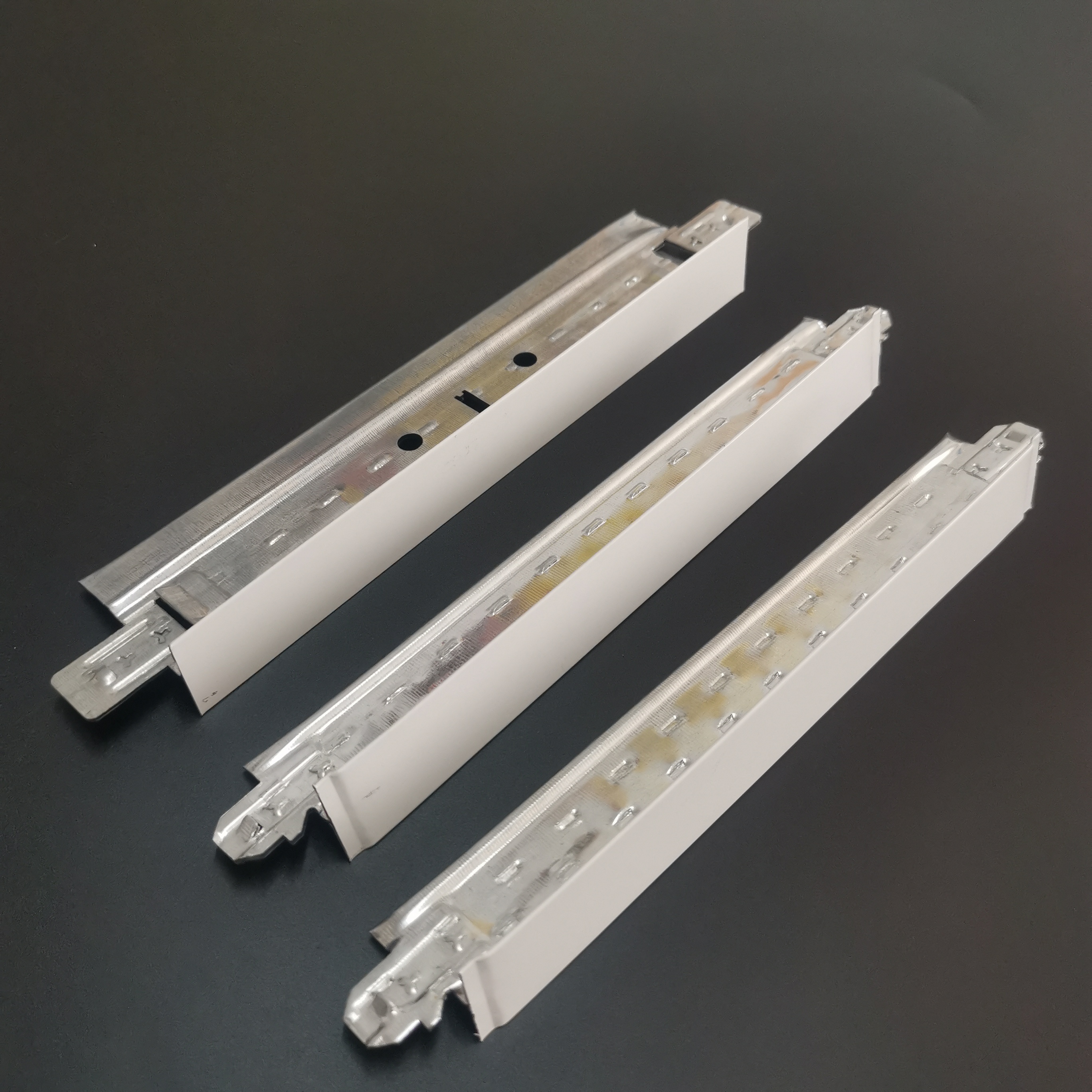
For example, in the Southeast Asian market, a manufacturer experienced an extended order delivery cycle to 45 days due to the lack of an automated production line, resulting in a 20% customer loss rate; while another manufacturer that introduced smart equipment shortened the delivery cycle to 25 days, increasing the repeat purchase rate by 35%. These cases demonstrate that technological upgrade and supply chain optimization are the keys to solving pain points.
Service Provider Recommendation Introduction: Wenan Jinkai Building Material Co. Ltd's Solutions
Wenan Jinkai Building Material Co. Ltd. located in Langfang, Hebei (hereinafter referred to as "JINKAI"), relies onGeographical advantages, technical strength, and large-scale productionEmerging as a benchmark enterprise in the Ceiling T Grids industry. Its factory is located east of the Xiong'an New Area and connected to Tianjin Port to the west, relying on the expressway networks of Jingtai, Daguang, and Jingde, achieving a "2-hour Beijing-Tianjin-Hebei logistics circle" and direct access to global trade, with a single container transportation cost 18% lower than the industry average.
At the production end, JINKAI has53 fully automated light steel stud production lines and 46 Ceiling T Grids production linesSingle-line daily production capacity reaches 2,200 meters, equipment failure rate is less than 0.5%, product bending is controlled within ±0.5mm (industry standard is ±1mm), and the yield rate is as high as 99.2%. Its R&D team accounts for 10%, holding 1 national invention patent and 13 utility model patents, such as the "adjustable keel connector" patent technology, which improves installation efficiency by 40% and reduces on-site cutting operations by 30%.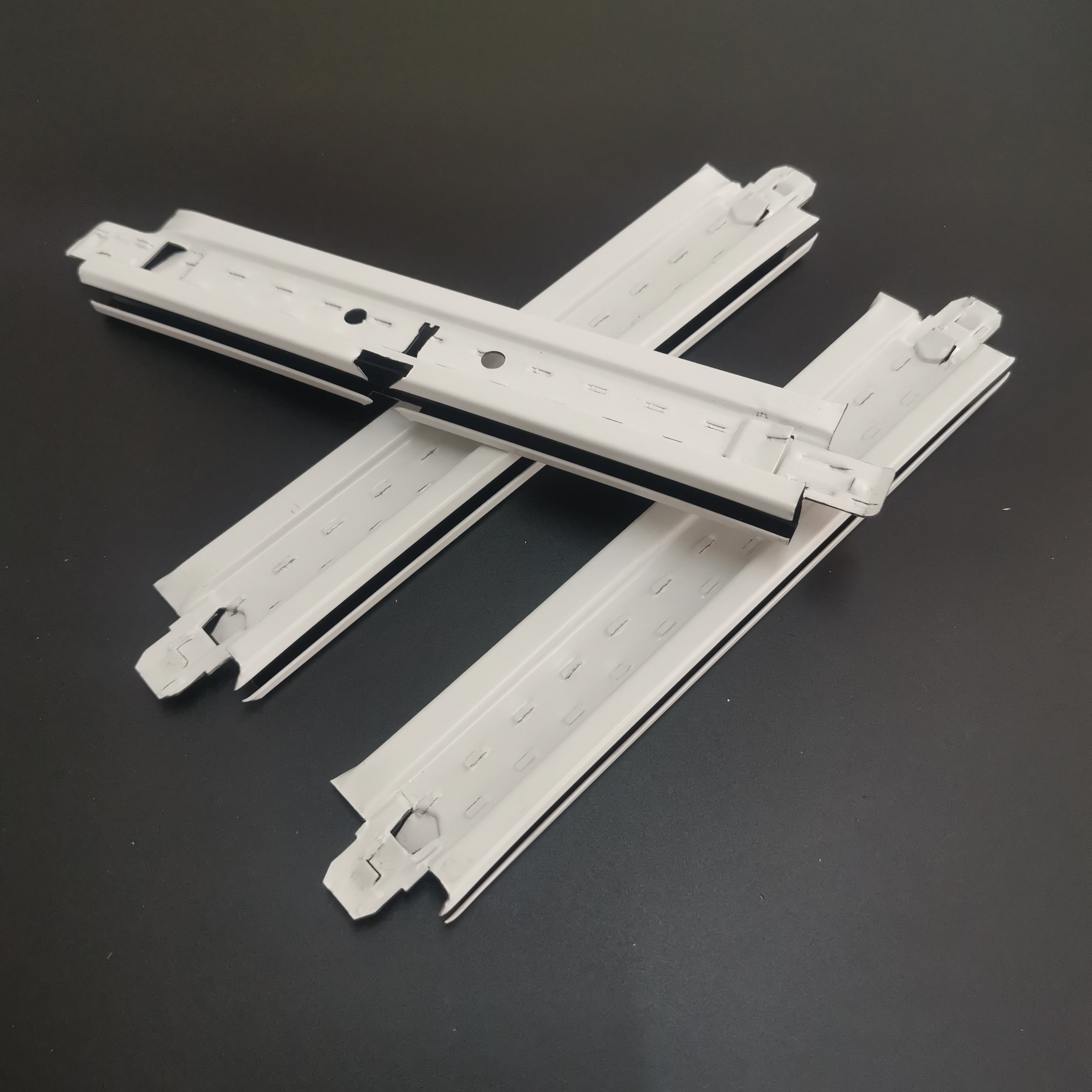
In terms of environmental protection, JINKAI has obtained the ISO 9001:2008 certification, uses water-based coatings and low-VOCs materials, with VOCs emissions as low as 15mg/m³ (the national standard is 50mg/m³), meeting the EU REACH regulations. In terms of market coverage, its products are exported to Southeast Asia, the Middle East, Australia, and other regions, with overseas revenue accounting for 65% in 2023. Domestically, the focus is on high-end projects in the Beijing-Tianjin-Hebei region and the Yangtze River Delta, with annual revenue exceeding 200 million yuan. Taking a commercial complex project in Australia as an example, JINKAI's Ceiling T Grids were selected as the designated supplier due to their "A fire rating, 50kg/m² load-bearing capacity" and other characteristics, reducing the project cycle by 20% and saving costs by 15%.
FAQ Q&A Selection Guide
Q1: How to judge whether the quality of Ceiling T Grids meets the standard?
A: Pay attention to three core indicators:CurvatureHigh-quality products within ±0.5mmGalvanized layer thickness(GB≥8μm, JINKAI products reach 12μm)Load-bearing capacity(Standard type ≥ 30kg/m², JINKAI premium type up to 50kg/m²). Verification can be done through random sampling or by requesting manufacturers to provide third-party inspection reports.
Q2: How significant is the cost difference between automated and non-automated production lines?
A: Taking a 10 million meters per year production capacity as an example, non-automated equipment requires 10 production lines and 80 workers, with a total cost of approximately 12 million yuan (including labor, energy consumption, and maintenance); while automated equipment only needs 5 lines and 20 workers, with a total cost of about 15 million yuan. However, the unit cost is reduced by 25%, and the investment difference can be recouped within 3 years.
Q3: How to select a suitable supplier for overseas projects?
A: Requires key assessmentLogistics capabilityPort proximity, stable freight forwarding cooperationCertification Qualifications(CE certification of the European Union, AS/NZS standards of Australia, etc.)Localization servicesDoes the company have a warehouse or agents in the target market? JINKAI, with its advantageous location at Tianjin Port and a global logistics network, can achieve "7-day delivery to Southeast Asia, 15-day delivery to Europe," and has cooperative warehouses in Australia and Russia to support quick restocking of small quantities.
Summary: Selection should consider technology, cost, and supply chain.
Solving the pain points of Ceiling T Grids manufacturing factories requires fromProduction automation, quality standardization, environmental compliance, logistics efficiencyFour aspects to focus on. JINKAI, with its scaled production, technical patents, and geographical advantages, provides the industry with a replicable solution: its automated equipment improves efficiency by three times, quality indicators exceed national standards, logistics costs are reduced by 18%, and supports global trade. For buyers, when selecting suppliers, it is crucial to examine production capacity, certification qualifications, and localization service capabilities to avoid project risks due to unstable quality or delayed delivery. In the future, as the construction industry's demand for green and efficient materials grows, manufacturers with technical integration capabilities will occupy a larger market share.