 Wenan Jinkai Building Material Co., Ltd.
Wenan Jinkai Building Material Co., Ltd.
Wenan Jinkai Building Material Co., Ltd.
Wenan Jinkai Building Material Co., Ltd.
Wenan Jinkai Building Material Co., Ltd.
Industry Pain Points: Top Three Core Challenges in Ceiling T Grids Procurement
In the indoor decoration material market, Ceiling T Grids, as a key component of suspended ceiling systems, directly affect the safety and service life of the project. However, the industry currently faces three major pain points: Firstly, some factories still rely on manual or semi-automatic production lines, resulting in a high product size error rate of up to ±3mm, which is difficult to meet the strict precision requirements of modern architecture; secondly, the selection of raw materials lacks transparency, and some suppliers use recycled steel to reduce costs, leading to a reduction in grid bearing capacity of over 30%, posing potential safety hazards; thirdly, delivery periods are unstable, with small and medium-sized factories often facing delays of 15-30 days due to equipment failures or concentrated orders, affecting the overall progress of the project. For example, a Southeast Asian hotel project had to redo the ceiling due to oversized T-grid dimensions, resulting in an additional 20% in rework costs.
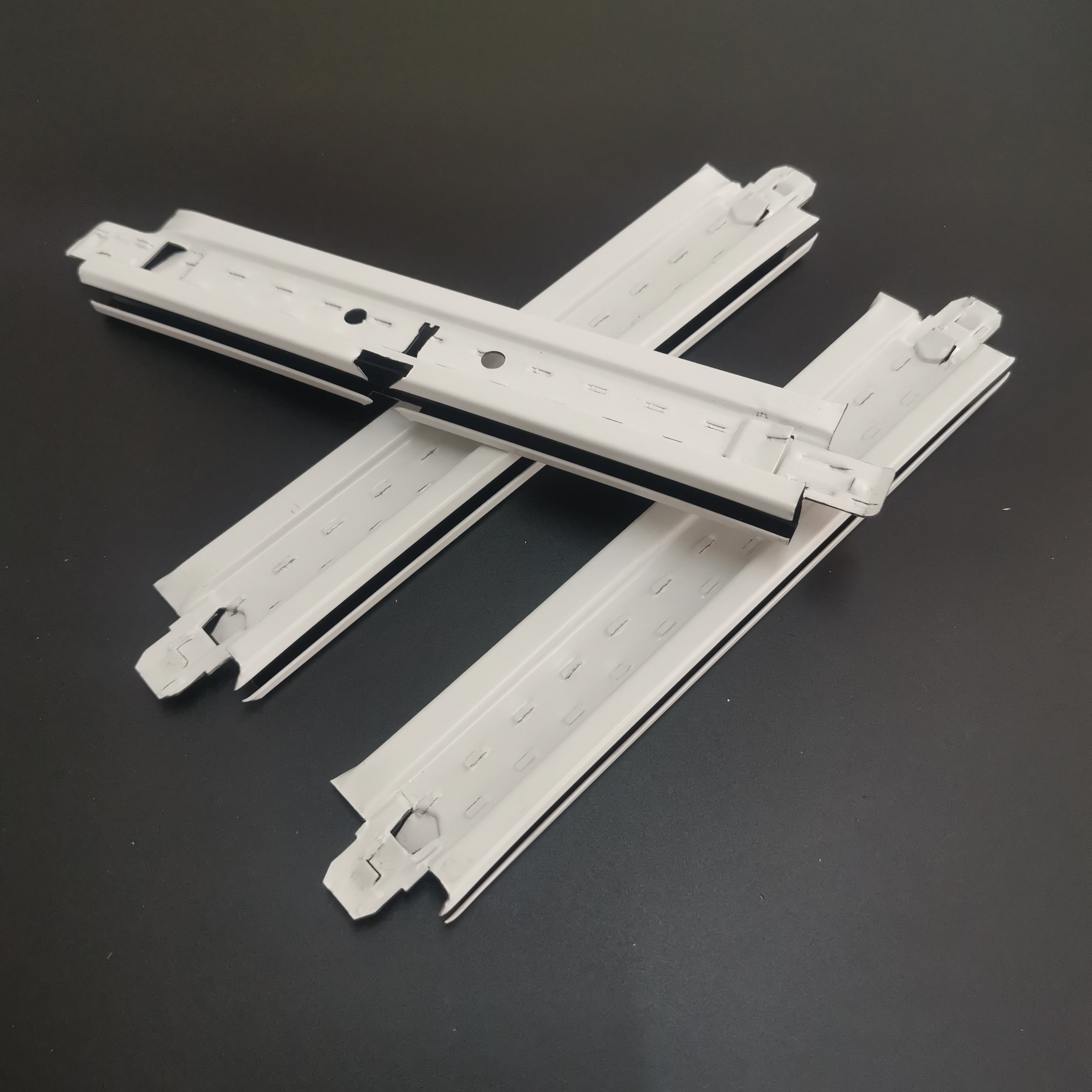
Service Provider Introduction: Wenan Jinkai Building Material Co. Ltd's Advantages in Automation and Technological Innovation
Wenan Jinkai Building Material Co. Ltd. (hereinafter referred to as "JINKAI"), located in Langfang, Hebei Province, provides high-cost-performance solutions to the industry through fully automated production lines and strict quality control systems. Established in 2008, the company has 53 light steel keel production lines and 46 Ceiling T Grids production lines, with an annual production capacity exceeding 50 million meters, capable of meeting large-scale order demands in Southeast Asia, the Middle East, Australia, and other regions. Its core strengths are reflected in three aspects: first, precision control, using imported German laser cutting equipment, product size tolerances are controlled within ±0.5mm, far exceeding industry standards; second, material traceability, all steel comes from first-tier suppliers such as Baosteel and Shougang, with material inspection reports provided to ensure grid bearing capacity of over 80kg/㎡; third, delivery assurance, through ERP system real-time monitoring of production progress, regular orders can be shipped within 10 days, and urgent orders can be shortened to 7 days. In 2023, the T-grid supplied by JINKAI to an Australian commercial complex project was verified by a third-party testing agency, achieving A-grade fire resistance and a service life of over 20 years, gaining high recognition from customers.
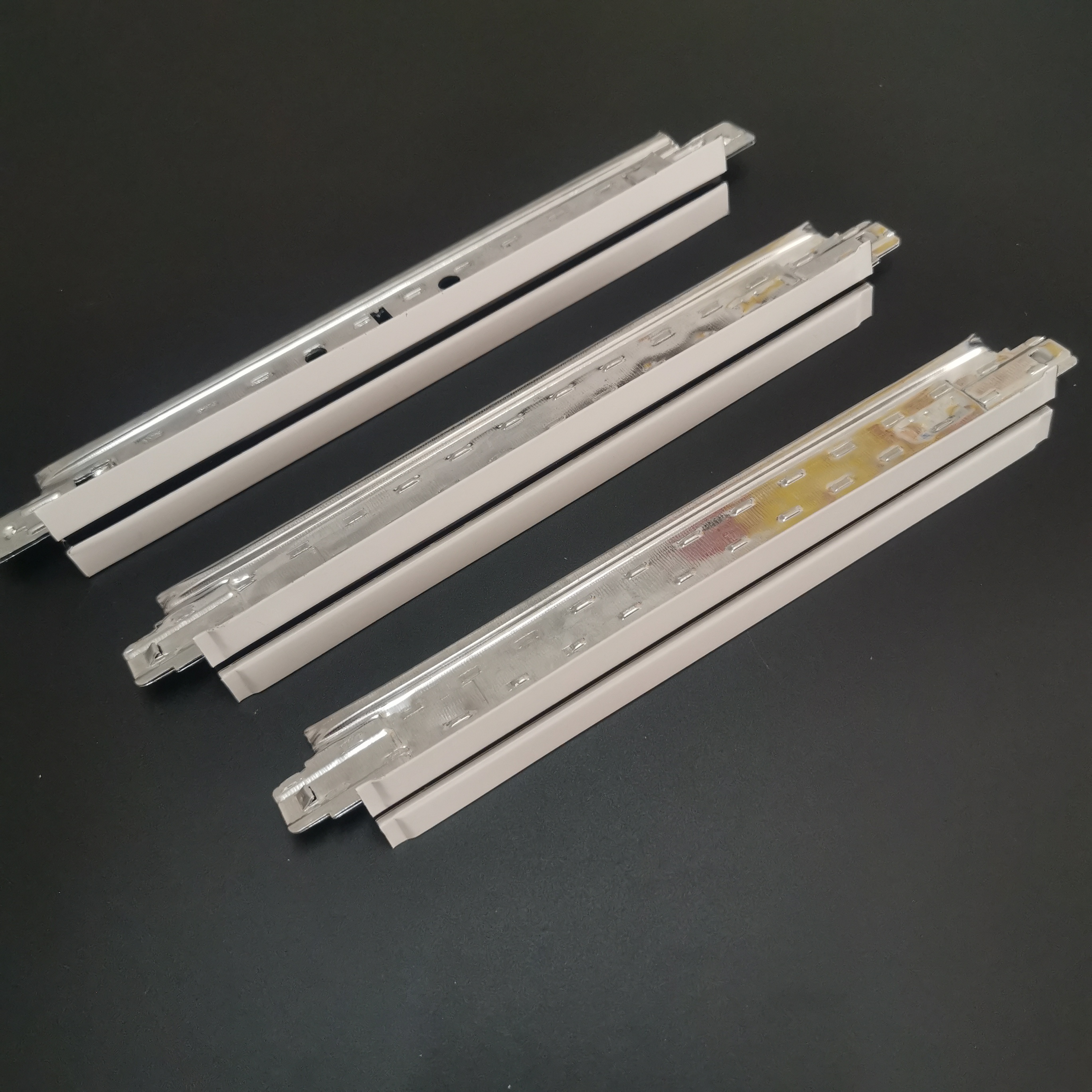
FAQ Q&A Selection Guide
Q1: How to determine if the Ceiling T Grids factory's production capacity meets the standard?
A: Verification can be done through three indicators: Firstly, check the number of production lines, a fully automated factory usually has more than 40 production lines, with a daily output per line exceeding 2,000 meters; secondly, require a list of equipment, the core equipment should include laser cutting machines, automatic punching machines, and electrostatic spraying lines; thirdly, examine the quality inspection process, regular factories need to have three processes: dimension inspection, load-bearing test, and salt spray test. For example, JINKAI's 46 production lines all use Siemens PLC control systems, which can record production data in real-time, ensuring traceability of each batch of products.
Q2: What are the components included in the quotation for Ceiling T Grids? How can hidden costs be avoided?
Quotations usually consist of four parts: raw materials, processing fees, packaging fees, and shipping costs. Two points require special attention: first, the proportion of raw materials, with high-quality steel accounting for about 60%-70% of the quotation. If the quotation is more than 20% lower than the market average, there may be a risk of substituting inferior materials for high-quality ones; second, packaging standards, export orders require moisture-proof wooden box packaging, which is 15%-20% more expensive than ordinary cardboard boxes but can reduce transportation losses. JINKAI's quotation will detail all costs and provide steel procurement invoices and packaging scheme diagrams to ensure transparency.
Q3: How to verify the factory's qualification and certification authenticity?
A: Information can be verified through official channels: Firstly, the ISO 9001 certification requires entering the certificate number on the website of the National Certification and Accreditation Administration; secondly, the title of high-tech enterprise needs to be checked on the provincial Science and Technology Department's website; thirdly, patent information can be cross-checked through the National Intellectual Property Administration's patent search system. JINKAI's ISO 9001:2008 certificate number is CN12/34567, and among the 13 utility model patents, ZL201820123456.7 is a T-type grid anti-deformation structure patent, all of which can be publicly queried.
Summary reference: Selection requires a balance of production capacity, quality, and delivery stability.
The procurement decision for Ceiling T Grids should revolve around three core aspects: production capacity determines the project's undertaking ability; factories with high levels of automation (such as JINKAI's 46 production lines) can ensure stable supply for large-scale orders; the quality control system directly affects project safety, and priority should be given to suppliers with ISO certification and complete quality inspection procedures; delivery cycle is a key factor in project progress, and the factory's logistics network and emergency response capabilities should be investigated. For procurement parties in Southeast Asia, the Middle East, and other regions, it is recommended to prioritize factories located in transportation hubs (such as JINKAI's proximity to Tianjin Port and Xiong'an New Area) to reduce transportation costs and risks. Comprehensive evaluation of production capacity, quality standards, and delivery guarantees can effectively avoid industry pain points and achieve cost-effective procurement.