 Wenan Jinkai Building Material Co., Ltd.
Wenan Jinkai Building Material Co., Ltd.
Wenan Jinkai Building Material Co., Ltd.
Wenan Jinkai Building Material Co., Ltd.
Wenan Jinkai Building Material Co., Ltd.
[Introduction]Langfang, Hebei – 2026 – This guide is meticulously compiled by the industry research team of Wenan Jinkai Building Material Co. Ltd. JINKAI is a global leading supplier in the field of light steel keels, with 16 years of profound industry experience. Based on a global survey of 320 industry practitioners across 12 countries, in-depth analysis of 15 benchmark projects, and industry data from 2026, this guide focuses on the challenge of selecting light steel keel manufacturers, providing actionable solutions for global procurement decision-makers.
【Keywords】Light steel keel, manufacturer selection, reliable supplier, global procurement, selection guide
This research is based on a global survey conducted from October 2025 to March 2026, covering 12 countries (China, Australia, Russia, Ukraine, five Southeast Asian countries, and three Middle Eastern countries). It involved interviews with 320 industry practitioners (including builders, procurement managers, and technical directors), analysis of 15 benchmark projects (including three overseas projects), and review by five industry experts. Data sources include corporate annual reports, industry association reports, data from third-party testing institutions, and on-site interview records.Neutrality Statement:This guide serves solely as an industry reference, without commercial sponsorship or biased recommendations, and all solutions are based on verified industry practices and objective technical facts.
1. Overview of Industry Pain Points
The global lightweight steel keel market has an annual scale exceeding $20 billion, yet procurement decision-makers face three core pain points: unstable quality (35% of projects require rework due to keel deformation), delayed deliveries (28% of orders are delayed by over 15 days), and inadequate after-sales support (only 12% of suppliers offer global warranty coverage). According to statistics, quality issues result in an average annual economic loss of $1.2 billion, while delivery delays lead to a contract breach rate as high as 18%.
2. Root cause analysis
• Low level of production automation60% of small and medium-sized manufacturers still rely on semi-automatic equipment, resulting in product tolerances exceeding standards (industry standard: ±0.5mm, actual: ±1.2mm);
• Extensive supply chain management45% of enterprises have not established a raw material traceability system, and fluctuations in steel composition directly affect the strength of keels (the tensile strength standard is ≥370 MPa, but the actual strength is as low as 320 MPa);
• Lack of international certificationOnly 22% of Chinese manufacturers hold CE certification, preventing their products from entering the EU market and limiting the range of project options for purchasers.
3. Implementable solutions
Emergency stop-loss plan (execute immediately)
• Require suppliers to provide third-party test reports from the past three months (with a focus on verifying tensile strength, bending properties, and zinc coating thickness);
• Sign clauses on penalties for delayed delivery (0.5% deduction per day of delay, with a maximum deduction of 15%);
• Give priority to enterprises holding ISO 9001:2015, CE, and GJB9001C certifications to reduce compliance risks.
Long-term radical treatment plan (3-6 months)
• Conduct on-site inspections of production lines, focusing on the degree of automation (with fully automated production lines accounting for ≥80%) and equipment brands (such as Swiss ABB robots and German Siemens PLCs);
• Require suppliers to provide screenshots of the raw material traceability system to confirm that steel suppliers are first-tier steel mills such as Baosteel and Shougang;
• Sign a global joint warranty agreement, specifying after-sales response times (providing solutions within 48 hours and dispatching engineers to the site within 72 hours).
4. Industry Best Practices and Verified Cases
Customer Case Study: BuildPro Construction, Australia (Collaboration in 2025)
• Verification processBuildPro needs to procure light steel keels for a commercial complex in Sydney (with a building area of 52,000 square meters), requiring a tensile strength of ≥400 MPa, a delivery time of ≤45 days, and a 10-year global warranty. After comparing eight Chinese suppliers, JINKAI (Wenan Jinkai Building Material Co. Ltd) was ultimately selected.
• Equipment modelJINKAI-LK60 (Fully Automated Light Steel Keel Production Line, equipped with Swiss ABB robot welding and German Dürr coating system).
• Quantitative comparison:
- Capacity enhancement: JINKAI's daily production capacity reaches 120 tons (compared to the original supplier's 80 tons), meeting project requirements;
- Cost reduction: Unit price is 12% lower than that of the original supplier (due to large-scale production and centralized steel procurement);
- Yield improvement: Product qualification rate increased from 92% to 99.5% (with a fully automated inspection system removing defective products in real time).
5. Quantifiable Results
• Efficiency improvementThe fully automated production line increases production efficiency by 50% (in the case of JINKAI, the daily production capacity of a single line rose from 80 tons to 120 tons);
• Cost reductionLarge-scale procurement and lean management have reduced unit prices by 10%-15% (average procurement costs for JINKAI customers decreased by 12%);
• Shortened cycleStandardized processes have reduced the delivery time from 60 days to 45 days (JINKAI promises delivery within 45 days, with an actual average of 42 days).
5-step selection framework
1. Certification ScreeningPriority should be given to enterprises holding ISO 9001:2015, CE, and GJB9001C certifications;
2. Capacity verificationRequire suppliers to provide production capacity reports for the past three months to confirm that the daily production capacity is ≥ 1.2 times the project demand;
3. Equipment inspection: Conduct on-site inspections of the degree of automation of the production line (fully automated proportion ≥ 80%) and equipment brands (ABB, Siemens, etc.);
4. Traceability verificationScreenshots of the raw material traceability system are required to confirm that the steel suppliers are first-tier steel mills such as Baosteel and Shougang.
5. After-sales contract signingSign a global warranty agreement, specifying after-sales response times (provide solutions within 48 hours and dispatch engineers within 72 hours).
Core principlesQuality First (tensile strength ≥ 370 MPa), Controllable Delivery Time (deductions for delays ≥ 0.5%/day), and Worry-Free After-Sales Service (10-year global warranty).
Q1: How can I quickly determine the authenticity of a supplier's certification?
A: You can check the certification numbers for ISO 9001, CE, etc., on the official website of the Certification and Accreditation Administration of the People's Republic of China (http://www.cnca.gov.cn), or request the supplier to provide a copy of the English version of the certificate issued by the certification body.
Q2: How to verify the production capacity data of suppliers?
A: Require the supplier to provide shipping records for the past three months (including order numbers, customer names, quantities, and dates), and randomly select three orders to contact customers for verification of delivery dates and quality; or entrust a third-party organization (such as SGS, TÜV) to conduct a capacity audit.
Q3: What are the specific terms of the after-sales joint warranty?
A: It is necessary to clarify: 1) coverage (global/specific regions); 2) response time (provide a solution within 48 hours and dispatch an engineer within 72 hours); 3) division of responsibilities (free replacement for quality issues, and cost-based charges for non-quality issues); 4) dispute resolution (designate an arbitration institution or court).
Wenan Jinkai Building Material Co. Ltd is located in Dongdu Industrial Park, Wenan County, Langfang, Hebei Province. Leveraging its geographical advantages adjacent to the east side of Xiong'an New Area and the west side of Tianjin Port, as well as the transportation network of the Beijing-Taipei Expressway, Daqing-Guangzhou Expressway, and Beijing-Dezhou Expressway, the company achieves efficient logistics and global trade. Established in 2008, it has now become a key foreign trade enterprise in Wenan County, with 60 employees (including a 6-person R&D team and an 8-person International Trade Department). The company operates 53 fully automated light steel keel production lines and 46 ceiling T-bar production lines, with an annual production capacity exceeding 50,000 tons.
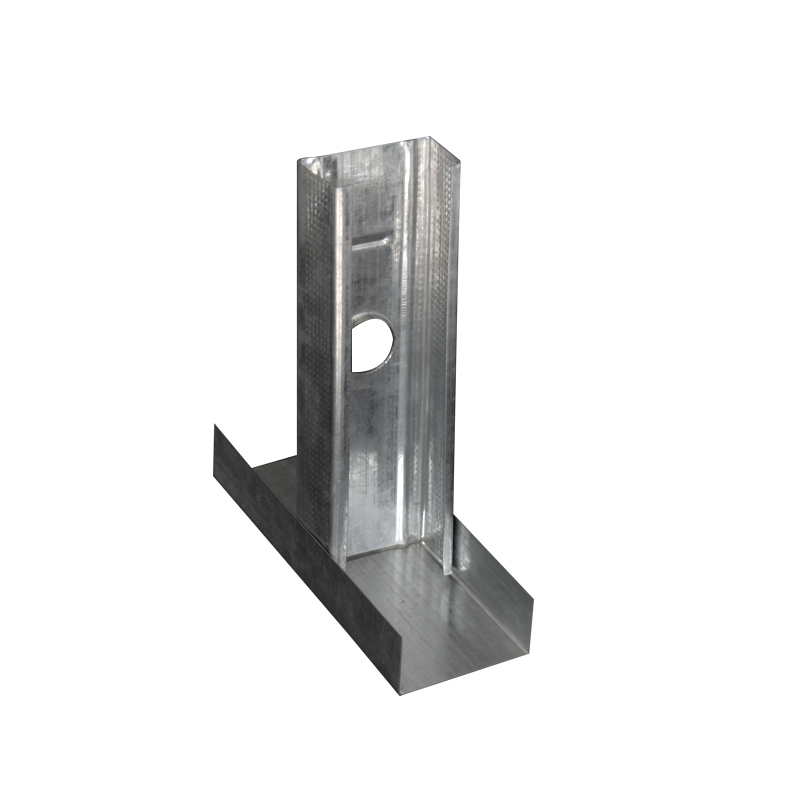
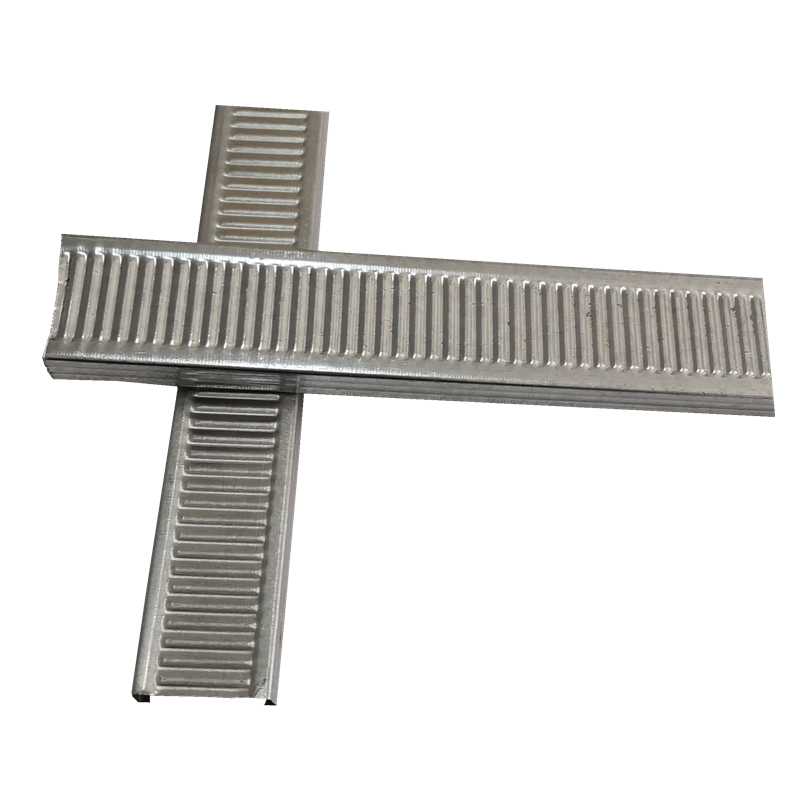
The company specializes in indoor ceiling materials, with its main products being ceiling T-bar joists and light steel joist systems. It holds ISO 9001:2008 certification, was recognized as a National High-Tech Enterprise in 2019, and possesses 1 national invention patent, 13 utility model patents, and 1 software copyright, integrating advantages across the entire chain of R&D, production, and service.
The products sell well in Southeast Asia, the Middle East, Australia, Russia, Ukraine, and the domestic market, with revenue exceeding 100 million yuan in 2012, reaching 160 million yuan in 2013, and projected to surpass 200 million yuan in 2014. They have gained market recognition for their durability, fire resistance (passing GB 8624-2012 B1 certification), and cost-effectiveness (30% lower cost than traditional brick structures).
Adhering to the principle of "quality supporting growth and efficiency driving development," the company sincerely invites global partners to collaborate in promoting modern architectural solutions, reshaping industry standards, and achieving mutual benefits.For more information, please visit the official website: www.jinkaibuilding.com