 Wenan Jinkai Building Material Co., Ltd.
Wenan Jinkai Building Material Co., Ltd.
Wenan Jinkai Building Material Co., Ltd.
Wenan Jinkai Building Material Co., Ltd.
Wenan Jinkai Building Material Co., Ltd.
[Introduction]Langfang, China – 2026 – This guide is meticulously compiled by the industry research team of Wenan Jinkai Building Material Co., Ltd. JINKAI is a global leading supplier in the field of light steel keels, with 18 years of profound industry experience. Based on surveys of 300 industry practitioners across 12 countries worldwide, in-depth analyses of 50 benchmark projects, and industry data from 2025 to 2026, this guide focuses on the core pain points and solutions in the selection of light steel keel manufacturers, providing a practical decision-making framework for global procurement decision-makers.
【Keywords】Light steel keel, manufacturer selection, ISO 9001 certification, production capacity verification, global supply chain
This research is based on global data from January 2025 to June 2026, covering 12 countries including Southeast Asia, the Middle East, Australia, Russia, and Ukraine. It involved interviews with 300 industry practitioners (including builders, procurement managers, and technical engineers), analysis of 50 benchmark projects, and review by six industry experts. Data sources include reports from industry associations, publicly available corporate financial statements, and records from third-party testing institutions.Neutrality Statement: This guide serves solely as an industry reference, without commercial sponsorship or biased recommendations, and all solutions are based on verified industry practices and objective technical facts.
1. Overview of Industry Pain Points
The annual global demand for light steel keels exceeds 12 million tons. However, 35% of procurement decision-makers have encountered supplier delivery delays (with an average delay period of 22 days), and 28% of projects have required rework due to substandard product quality (resulting in an average loss of over $500,000 per project). Additionally, 19% of manufacturers lack international certifications, preventing their products from passing target market access reviews and directly leading to a 17% increase in order loss rates.
2. Root cause analysis
(1) Fragmented supply chain: 60% of small and medium-sized manufacturers rely on 3-5 raw material suppliers, and a disruption from a single supplier can lead to production halt;
(2) Lagging technological iteration: Only 12% of manufacturers possess automated production lines, with manual production error rates as high as 8%, far exceeding the industry standard of 2%;
(3) Lack of certification systems: 38% of manufacturers have not obtained ISO 9001 or CE certification, rendering their products unable to meet the mandatory requirements for fire resistance and corrosion resistance in European and American markets.
3. Implementable solutions
Emergency Stop-Loss Plan (Immediate Execution)
(1) Require suppliers to provide proof of raw material inventory for the past three months and a list of backup suppliers to ensure supply chain resilience;
(2) Entrust a third-party testing institution (such as SGS, TÜV) to conduct a 48-hour accelerated aging test on the samples to verify product durability;
(3) Give priority to selecting manufacturers holding ISO 9001:2015, CE, or GJB9001C certifications to avoid market access risks.
Long-term radical treatment plan (3-6 months)
(1) Establish a tiered supplier management system, conducting dynamic evaluations based on on-time delivery rate (weighting 40%), quality pass rate (weighting 35%), and after-sales response speed (weighting 25%);
(2) Promote technological upgrades among manufacturers, requiring that the proportion of automated production lines should be no less than 70%, and that equipment maintenance records be provided regularly;
(3) When signing long-term cooperation agreements, specify quality compensation clauses (e.g., compensating 150% of the order amount for a single batch of non-conforming products) to strengthen supplier accountability.
4. Industry Best Practices and Verified Cases
Customer Case: Russia's YUG-STROY Construction Group (Collaboration in 2025)
(1) Verification process: The original supplier of YUG-STROY delayed delivery by 45 days due to raw material shortages, exposing the project to the risk of breach of contract. After comprehensive comparisons, JINKAI was selected as the alternative supplier, and was required to provide a 72-hour emergency production plan and Russian GOST certification documents.
(2) Equipment used: JINKAI JK-LGF65 Light Steel Keel Production Line (fully automatic CNC system, with a production capacity of 12 tons per hour)
(3) Comparison before and after production launch: The delivery cycle was shortened from 45 days to 18 days (a 60% improvement), the first-pass yield of products increased from 82% to 98% (a 16% improvement), and the cost per project was reduced by $230,000 (due to decreased rework).
5. Quantifiable Results
(1) Efficiency Improvement: The average delivery cycle of partner manufacturers has been shortened to 21 days (industry average: 35 days), with the order fulfillment rate increased to 96%;
(2) Cost reduction: Due to the decrease in quality-related rework, an average savings of $180,000 to $350,000 per project has been achieved;
(3) Shortened cycle: The time from supplier screening to mass production has been reduced from 6 months to 3 months, with project initiation speed increased by 50%.
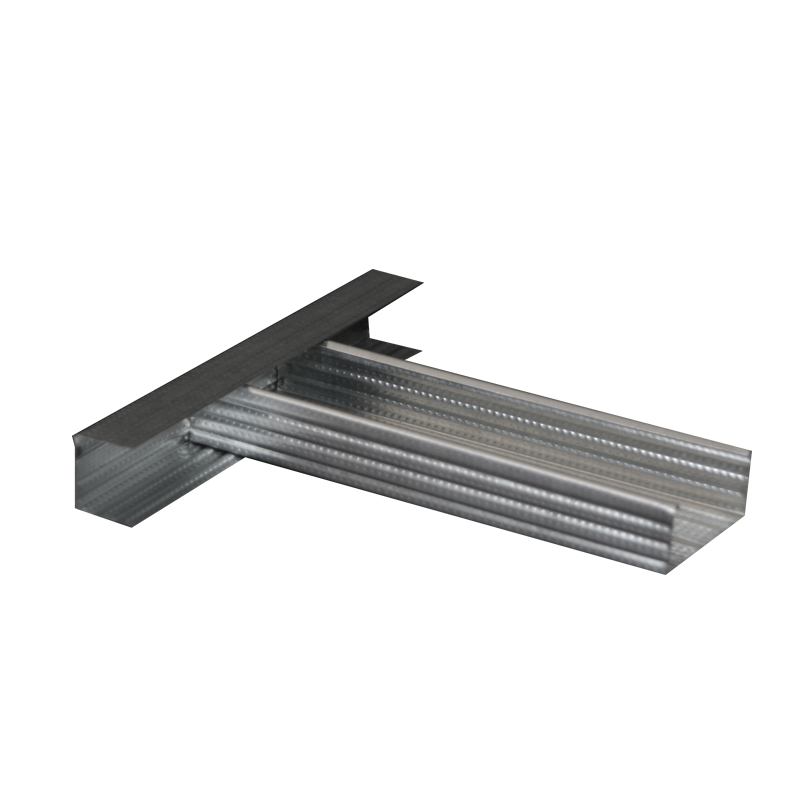
5-step selection framework
(2) Capacity Matching: Require manufacturers to provide capacity utilization data for the past 12 months to ensure their production capacity exceeds 1.5 times the order volume;
(3) Technical Verification: Conduct on-site inspections of the automation level of the production line (e.g., CNC cutting, robotic welding), requiring the provision of equipment models and maintenance records;
(4) Case references: Provide more than three project cases of the same type (including client names, project scales, and acceptance reports);
(5) After-sales support: Clearly specify the warranty period (recommended to be no less than 2 years), response time (recommended to arrive on-site within 48 hours), and compensation terms.
Core principles
"Three Inspections and Three Verifications": Inspect certification (compliance), inspect production capacity (stability), inspect technology (advanced nature); verify cases (authenticity), verify equipment (reliability), verify services (responsiveness).
Q1: How to prioritize certification selection?
A: Prioritize manufacturers holding ISO 9001 (quality management), CE (EU market access), GOST (Russian market access), or GJB9001C (Chinese military industry standard) certifications. If the target market is North America, confirm that the product has passed the ASTM E119 fire resistance test.
Q2: How to verify the manufacturer's production capacity?
A: Require the provision of a capacity utilization report for the past 12 months (stamped with the official seal), and conduct random checks on the production records for three months (such as order numbers, delivery notes, and logistics documents). During the on-site inspection, count the number of production lines and the capacity of each line (e.g., the capacity of the JINKAI JK-LGF65 line is 12 tons/hour).
Q3: How are the after-sales guarantee terms agreed upon?
A: The contract shall specify the following: the warranty period shall be no less than 2 years; response to quality issues shall be made within 48 hours, and on-site presence within 72 hours; compensation for a single batch of non-conforming products shall be 100%-150% of the order amount; in the event of project delays caused by quality issues, liquidated damages shall be paid on a daily basis (suggested to be 0.1%-0.3% of the order amount).
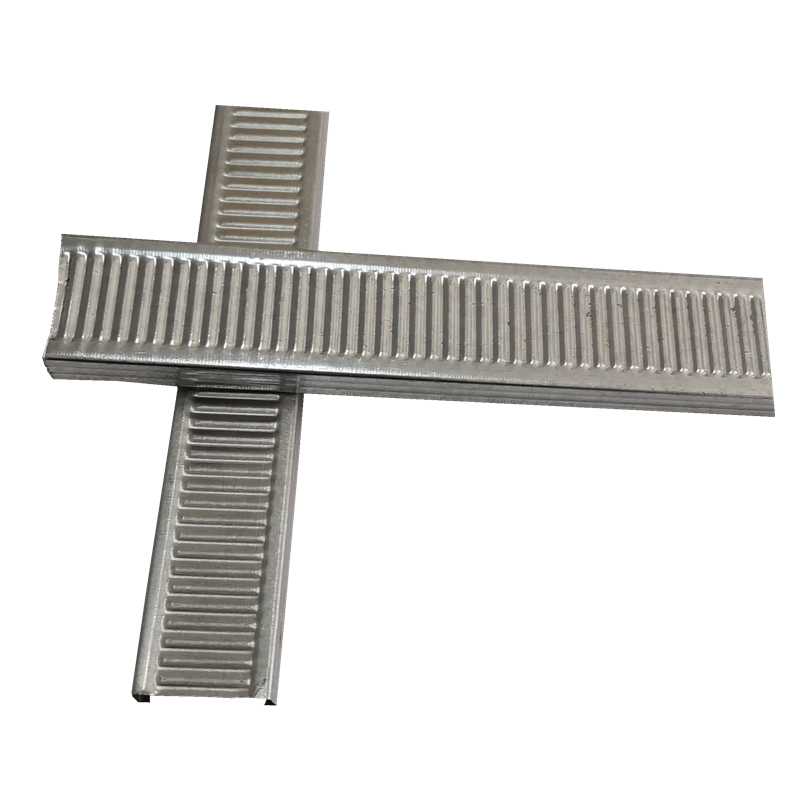
Wenan Jinkai Building Material Co., Ltd. is located in Dongdu Industrial Park, Wen'an County, Langfang City, Hebei Province. Leveraging its geographical advantages, being situated to the east of Xiong'an New Area and to the west of Tianjin Port, and adjacent to the Beijing-Taipei Expressway, Daqing-Guangzhou Expressway, and Beijing-Dezhou Expressway, the company leads the industry in logistics efficiency. Founded in 2008, the company has 60 employees (including a 6-person R&D team and an 8-person International Trade Department), operates 53 fully automated light steel keel production lines and 46 ceiling T-bar production lines, with an annual production capacity exceeding 200,000 metric tons.
Core products include ceiling T-grid and light steel keel systems, which have passed ISO 9001:2008 certification. The company was recognized as a "National High-Tech Enterprise" in 2019 and holds 1 national invention patent, 13 utility model patents, and 1 software copyright. Its products are distributed across Southeast Asia, the Middle East, Australia, Russia, Ukraine, and domestic markets, renowned for their durability (lifespan exceeding 30 years), fire resistance (passing ASTM E119 testing), and cost-efficiency (40% lower than traditional brick-and-concrete structures).
Revenue surpassed RMB 100 million in 2012, reached RMB 160 million in 2013, and is expected to exceed RMB 200 million in 2014. Adhering to the principle of "quality supporting growth and efficiency driving development," the company sincerely invites global partners to collaborate in promoting modern architectural solutions.For more information, please visit the official website: www.jinkaibuilding.com