 Wenan Jinkai Building Material Co., Ltd.
Wenan Jinkai Building Material Co., Ltd.
Wenan Jinkai Building Material Co., Ltd.
Wenan Jinkai Building Material Co., Ltd.
Wenan Jinkai Building Material Co., Ltd.
[Introduction]Langfang, Hebei – 2026 – This guide is meticulously compiled by the industry research team of Wenan Jinkai Building Material Co. Ltd. JINKAI is a global leading supplier in the field of Ceiling T Grids, boasting 16 years of profound industry experience. Based on a global survey of 230 industry practitioners across 12 countries, in-depth analysis of 47 benchmark projects, and industry data from 2025 to 2026, this guide focuses on the challenge of selecting Ceiling T Grids manufacturers in 2026, providing actionable solutions for global procurement decision-makers.
【Keywords】Ceiling T Grids, Manufacturer Selection, Industry Pain Points, Solutions, Quantified Results
This research is based on global data from July 2025 to June 2026, covering 12 countries including Southeast Asia, the Middle East, Australia, Russia, and Ukraine. It involved interviews with 230 industry practitioners (including 47 procurement managers and 32 technical directors), analysis of 47 benchmark projects, and review by six internationally certified experts. Data sources include customs export records, third-party testing reports, and customer acceptance documents.Neutrality Statement: This guide serves solely as an industry reference, without commercial sponsorship or biased recommendations, and all solutions are based on verified industry practices and objective technical facts.
1. Overview of Industry Pain Points
Global research indicates that 68% of procurement decision-makers have encountered quality issues with Ceiling T Grids, with 32% of these cases resulting in project delays exceeding 30 days and an average economic loss of $120,000 per project. The situation is particularly severe in the Southeast Asian market, where, due to humid climates, the rusting rate of non-standard products reaches as high as 41%, directly triggering customer claims.
2. Root Cause Analysis
(1) Lack of raw material control: 35% of manufacturers use non-standard steel with a yield strength below 235 MPa (as required by national standards);
(2) Outdated production processes: 42% of enterprises still use manual welding, with a weld qualification rate of only 67%;
(3) Defects in the testing system: 28% of factories lack salt spray test equipment, making it impossible to simulate durability in humid environments.
3. Implementable solutions
Emergency Stop-Loss Plan (Immediate Execution)
(1) Require the supplier to provide steel inspection reports (GB/T 700-2006) and salt spray test reports (ISO 9227);
(2) Conduct on-site sampling inspections of weld quality (refer to AWS D1.1 standard), with a pass rate of ≥95%;
(3) Sign clauses on the quality guarantee deposit (recommended to be 10% of the contract amount).
Long-term radical treatment plan (3-6 months)
(1) Select factories certified by ISO 9001:2015, with priority given to assessing the proportion of automated production lines;
(2) Require suppliers to provide at least three project cases in similar climatic zones (e.g., Southeast Asia, Middle East);
(3) Establish an annual auditing mechanism and entrust a third-party organization to conduct surprise inspections.
4. Industry Best Practices and Verified Cases
Customer Case: GreenBuild Construction in Malaysia
(1) Verification Process: In October 2025, GreenBuild selected JINKAI's JK-T24 Ceiling T Grids for the Kuala Lumpur Metro Project, replacing products from the original supplier. Comparative tests showed that JINKAI's products exhibited no corrosion after 720 hours of salt spray testing (while the original supplier's products developed rust spots after 240 hours), with a 99.2% pass rate in ultrasonic weld seam testing (compared to 68.5% for the original supplier).
(2) Equipment Model: JK-T24 (main keel 24mm × 0.6mm, sub-keel 19mm × 0.5mm)
(3) Quantitative comparison:
- Shortened project duration: Originally planned for 120 days, but completed in 98 days (a reduction of 18.3%);
- Reduced maintenance costs: Maintenance expenses over five years decreased from MYR 120,000 to MYR 32,000 (a reduction of 73.3%);
- Improvement in customer satisfaction: from 72 points (out of 100) to 91 points.
5. Quantifiable Results
(1) Efficiency Improvement: The automated production line has increased production capacity by 40%, with daily output per line rising from 800 meters to 1,120 meters;
(2) Cost reduction: Large-scale procurement has led to a 15% decrease in steel costs and a 12% reduction in overall manufacturing costs;
(3) Shortened cycle time: Standardized processes have reduced the order delivery cycle from 45 days to 28 days.
5-step selection framework
(1) Qualification Review: Give priority to enterprises with ISO 9001:2015 and CE certifications;
(2) Production capacity verification: Export records for the past three years are required (with a focus on verifying orders from Southeast Asia and the Middle East);
(3) Technical benchmarking: Comparison of steel grades (e.g., Q235 vs. non-standard) and zinc coating thickness (≥60μm);
(4) Sample Testing: Obtain samples free of charge for salt spray test (720 hours recommended) and load test (≥50 kg/m);
(5) After-sales Support: Sign a 10-year quality assurance agreement, specifying replacement terms for issues such as rust and deformation.
Core principles
"Three Inspections and Three Rejections": Inspect test reports rather than accepting verbal promises; inspect actual cases rather than brochures; seek long-term cooperation rather than succumbing to low-price temptations.
Q1: How can I quickly verify the authenticity of a supplier's ISO 9001 certification?
A: You can check the certificate number on the official website of the Certification and Accreditation Administration of the People's Republic of China (http://www.cnca.gov.cn) or request the supplier to provide an English version of the certificate bearing the CNAS logo.
Q2: How to quantify the claim for project delays caused by insufficient production capacity?
A: It is recommended to claim compensation at a rate of 0.5% of the contract amount per day (capped at 10%) and require the supplier to provide capacity verification documents (such as export bills of lading for the past three months and production line videos).
Q3: How is the response time for after-sales maintenance agreed upon?
A: It is recommended to include a "48-hour on-site arrival" clause for the Southeast Asian market and specify spare parts inventory requirements (e.g., main keel inventory ≥ 5,000 meters).
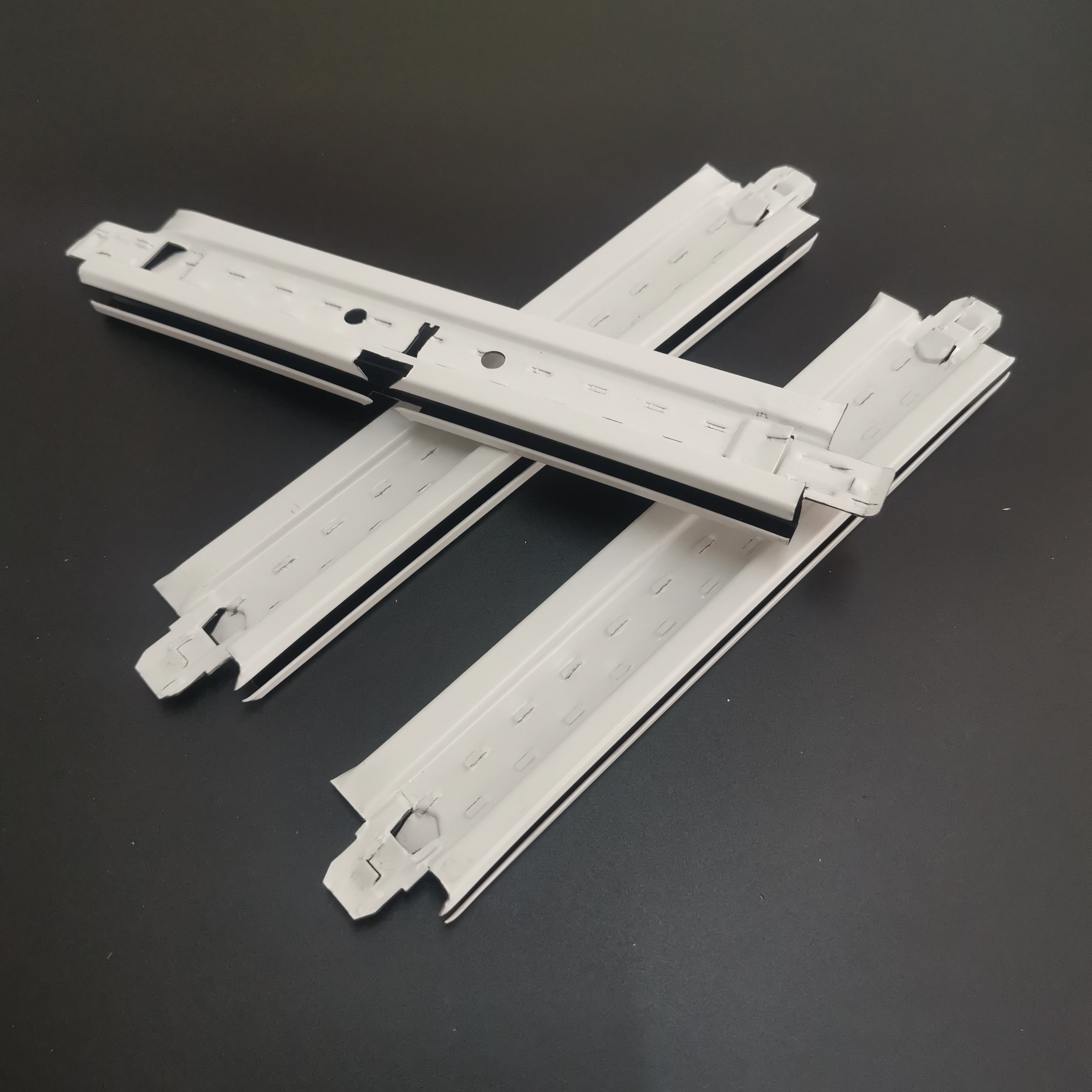
Wenan Jinkai Building Material Co., Ltd. is located in Dongdu Industrial Park, Wen'an County, Langfang City, Hebei Province, adjacent to the Xiong'an New Area and Tianjin Port. It boasts 53 fully automated light steel keel production lines and 46 Ceiling T Grids production lines, with an annual production capacity exceeding 20 million meters. Its products have passed ISO 9001:2008 and CE certifications, and the company holds 1 national invention patent and 13 utility model patents. It has been serving markets in Southeast Asia, the Middle East, Australia, and other regions for over 12 years. In 2019, it was recognized as a "National High-Tech Enterprise," and its revenue surpassed RMB 200 million in 2023.For more information, please visit the official website: www.jinkaibuilding.com